The US state of Tennessee failed to execute 50-year-old Christa Gail Pike, sentenced to death for murder committed at the age of 18. During the attempt, two doses of pentobarbital were administered to Pike, but she remained alive and was transported to hospital.
Journalists who witnessed the execution stated that Pike was strapped to the gurney in the execution chamber. At one point, she raised her head and asked the prison staff if her arm was supposed to feel that way, complaining that her arm felt as though a vein in it was 'going to burst'. She later stated that one spot on her arm was pulsing strongly. The drug did not act as expected, with witnesses describing loud exhalations, gasping, and the movement of her legs. Pike moved the sheet covering her so forcefully with her legs that it fell off. One journalist described the sound as if she were choking.
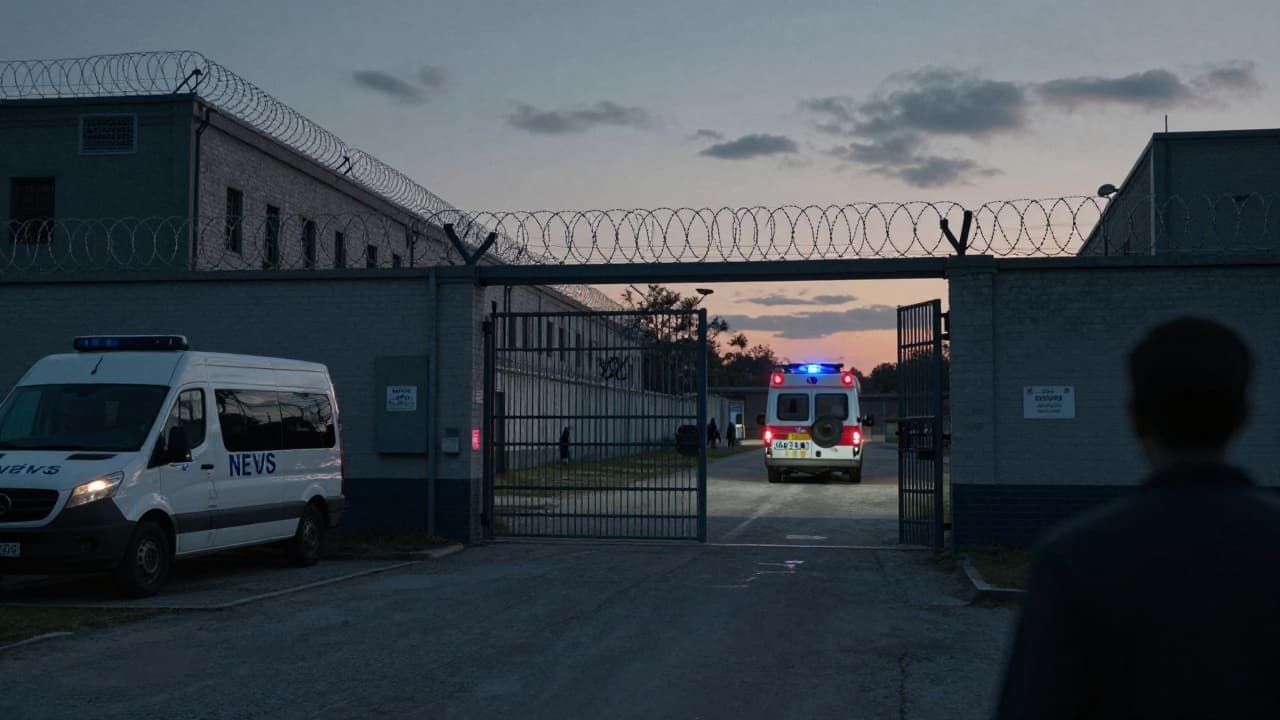
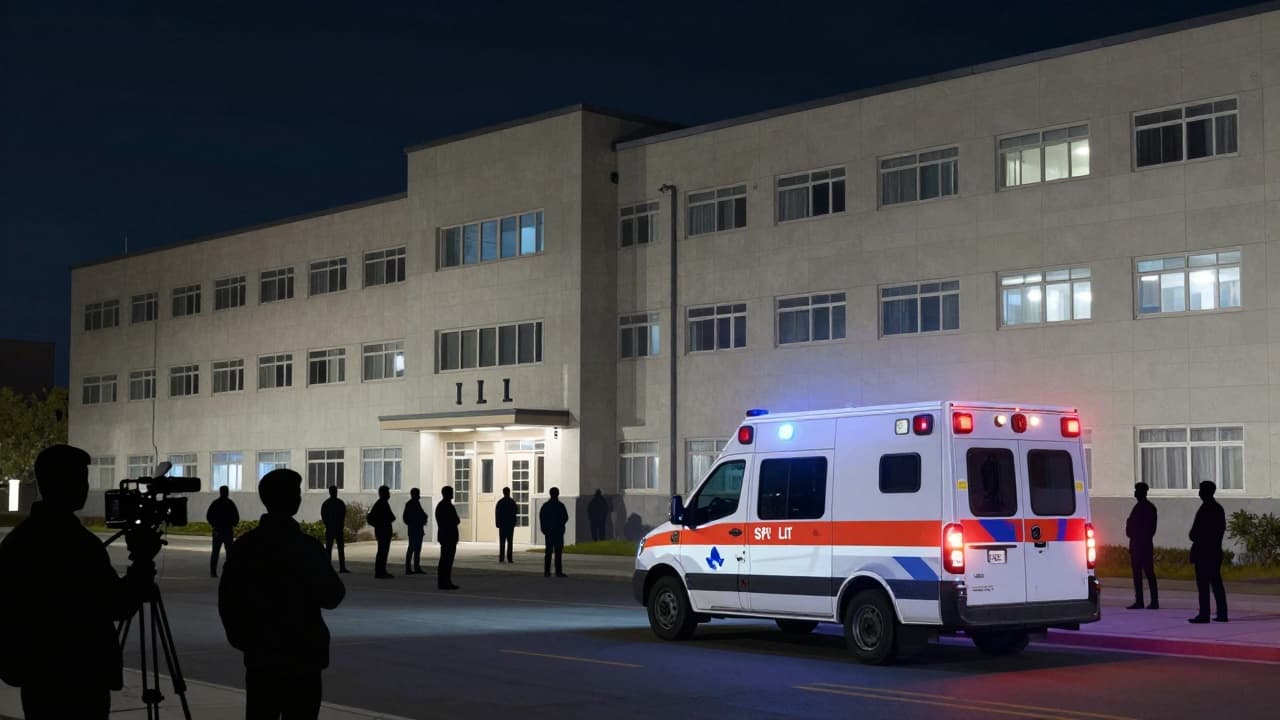
By 8.26 pm local time, Pike had received a second dose of pentobarbital. Her lawyers claim that even after this, she had not lost consciousness and that her heart continued to beat. The second dose was provided for in Tennessee's protocol in the event that a prisoner was not declared dead after the first dose, but according to available information, the protocol did not cover what to do if a person remained alive after the second dose. The curtain between the execution chamber and the room where witnesses were located was then closed. Witnesses continued to hear her breathing from behind the curtain, and then her loud snoring. This continued for almost an hour. The microphone in the chamber was switched off at 8.53 pm, after which journalists were required to leave the room. A short time later, vehicles from emergency services appeared outside the prison. The Tennessee Department of Correction subsequently confirmed that Pike had been taken to a medical facility outside the prison.
Pike's lawyers sent urgent requests to the courts, seeking an injunction to halt the proceedings and provide medical assistance to their client. Robin Mah, executive director of the Death Penalty Information Center, stated that there are several cases where inmates have survived unsuccessful attempts to establish an intravenous line prior to the administration of lethal drugs. According to her, there is no known case of an inmate remaining alive after lethal drugs have been injected. Pike's case was described as unique and unprecedented.
Pike's lawyers had previously warned of the possibility of complications. They stated that it was not clear whether medical staff could administer the lethal drugs without causing excessive pain. In a petition to the Supreme Court, they stated that the procedure could cause 'unnecessary agony'. Pike suffers from essential thrombocythaemia, a condition in which the body produces an excessive number of platelets. Due to her condition, a three-day evidentiary hearing was held in August to determine whether Tennessee could safely execute her by lethal injection. Experts hired by the defence warned that her condition could increase the risk of problems with intravenous access and blood clotting. A state expert refuted these claims, stating that Pike had previously had blood drawn successfully and that the pentobarbital should cause loss of consciousness within 20 to 30 seconds.
The attempted execution was preceded by a legal battle that lasted until the last moment. The federal appellate court had paused the execution of the death penalty just an hour before the scheduled time. The three-judge panel made the decision two to one to allow additional time to consider the defence's claims that evidence of Pike's childhood sexual abuse had not been sufficiently considered in the sentencing. The Tennessee Attorney General's office immediately appealed to the Supreme Court, requesting the overturning of the stay. After approximately nine hours of uncertainty, the Supreme Court allowed the execution to proceed. The decision was made by a vote of six to three, with three judges in the minority. Justice Sonia Sotomayor wrote that the majority was 'unnecessarily preventing' the appellate court from fully considering Pike's arguments. Tennessee authorities, following the decision of the highest court, attempted to carry out the execution before the end of the day.
Pike had previously sought to avoid the death penalty by requesting a pardon. Republican Governor Bill Lee denied this on Monday. Her lawyers stated in their petition that she had endured a difficult childhood, including sexual abuse and neglect. Pike was subsequently diagnosed with bipolar disorder and post-traumatic stress disorder. The defence argued that the bipolar disorder and post-traumatic stress disorder affected her mental state at the time of the crime. Pike had previously spoken to The New York Times about the approaching execution date. She said: 'Every day I go through this execution all over again in my head. Whatever happens on September 30, this will no longer be my hell.'
Pike was convicted of the murder of 19-year-old Colleen Slemmer in January 1995. She was 18 years old when, along with her then 17-year-old boyfriend Tadaryl Shipp and Shadell Peterson, they lured Slemmer. Christa Pike was sentenced to death for the murder of her schoolmate three decades ago. Pike survived the attempt by Tennessee to execute her by lethal injection late on Wednesday, prison officials said. It was the first attempt in two decades to execute a woman in the US. Her legal team filed an urgent request to halt the execution while it was still in progress, stating: 'Mrs Pike has lost consciousness, but her heart is still beating and she is audibly snoring.' One of her lawyers told the BBC that measures were being taken to save Pike's life after she had been injected with two doses of pentobarbital.
The state agency, the Department of Correction, defended the execution. Human rights groups had opposed the execution, citing Pike's age at the time of the crime, the fact that she had been a victim of sexual abuse as a child, and her mental health issues. The TDC stated: 'The TDC followed every step in the legal and established state protocol for executions, which was approved by the Attorney General's office. The chemical in the protocol was consistently effective, and the protocol does not allow for additional procedures beyond what was done this evening. Christa Pike was transferred to a medical facility' outside the prison. The lawyers for Pike had requested that the federal court halt the execution, citing witnesses' claims that 'the execution team injected both syringes of the lethal chemical and that Pike was still alive and snoring'.
The failed attempt occurred a few hours after the US Supreme Court overturned the lower court's decision to suspend the execution. This opened the way for the execution of 50-year-old Pike, who was involved in the torture and murder of 19-year-old Colleen Slemmer in 1995. Pike was 18 at the time. The TDC stated after the court's decision that it would 'carry out the execution' later that day. The process began at around 8 pm local time. Journalists present at the execution described how Pike was snoring, gasping, and complaining of pain, but also kicking so hard that she threw off the sheets. On several occasions, a screen was placed so that journalists could only hear the sounds from behind. John North, a reporter for WBIR-TV in Knoxville, said: 'It looked as though this was not going as they thought it should. But we don't know that. When we left the building, as far as we know, she was still alive.' A vehicle arrived at the prison, which then left. Tennessee prison officials had previously halted attempts to execute a man convicted of murder after failing to find a suitable vein for the lethal injection.
Note: The previous translation was rejected (hero caption dropped). Translate again, strictly: keep every number exactly as in the source, never add figures, examples or explanations of your own, and keep the same paragraph structure.