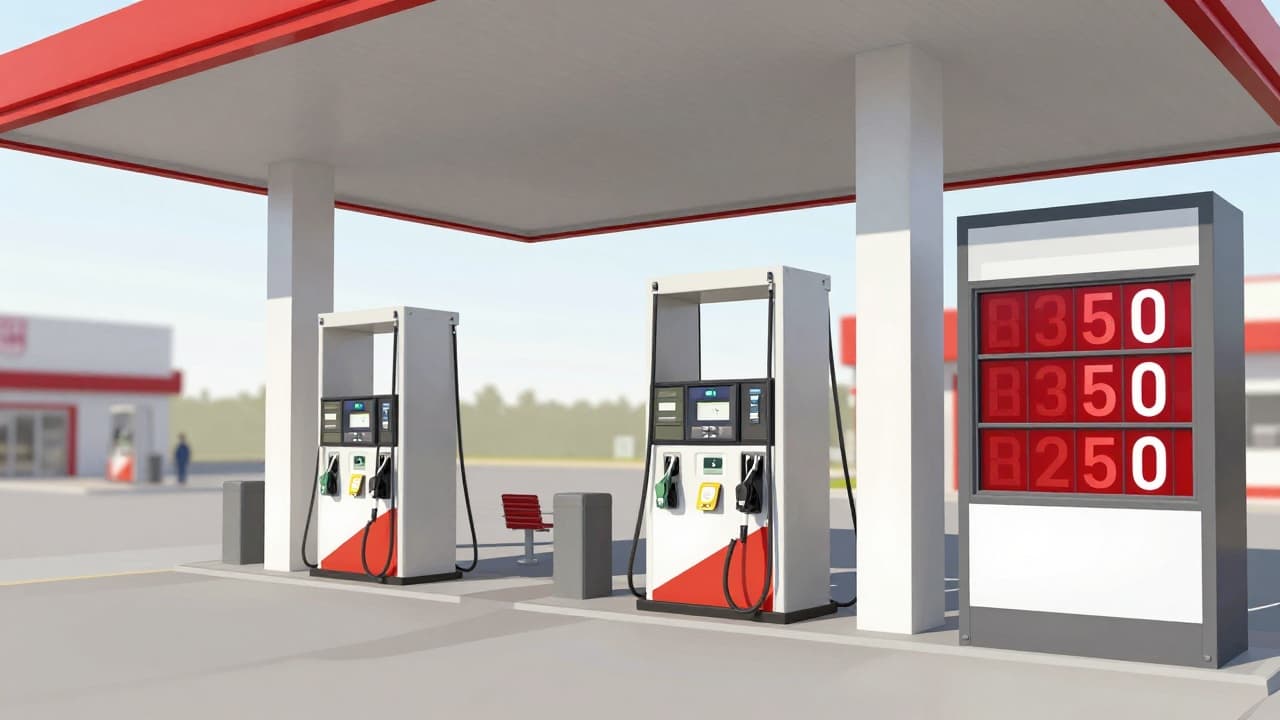
Eurodiesel prices in Herzegovina are recording daily increases, a direct consequence of new spikes in oil prices on global exchanges. The price hikes at petrol stations in western Herzegovina are due to renewed problems on key global oil and maritime routes, which have driven market dynamics.
In Bosnia and Herzegovina, there are no government measures to cap fuel prices, leaving the market entirely to market forces. Nevertheless, legally defined margin limits exist. The maximum wholesale margin per litre is 0.06 KM (or 0.028 euros), while the retail margin is capped at 0.25 KM (or 0.11 euros).
Earlier, at the start of June, there was a temporary drop in fuel prices. This trend was the result of the US-Iranian conflict and the closure of the Strait of Hormuz. During that period, prices fell below three convertible marks, and in some locations, eurodiesel could be purchased for 2.80 KM (1.43 euros). For comparison, before the outbreak of the conflict, the same fuel cost 2.29 KM (1.17 euros).
The situation on the ground has changed drastically. At the time of writing, eurodiesel could be found for under three convertible marks at only two locations. In Ljubuški, for example, a litre of eurodiesel costs 2.95 KM (1.51 euros), indicating the local market's rapid adjustment to global price trends.