Matej Mišić (SDP), President of the Zagreb City Assembly, stated that the death of Kristijan Josip Periš could have been prevented, based on all the information available to them. He also questioned why the inspection was not carried out earlier, and why a tragedy had to occur before it was conducted.
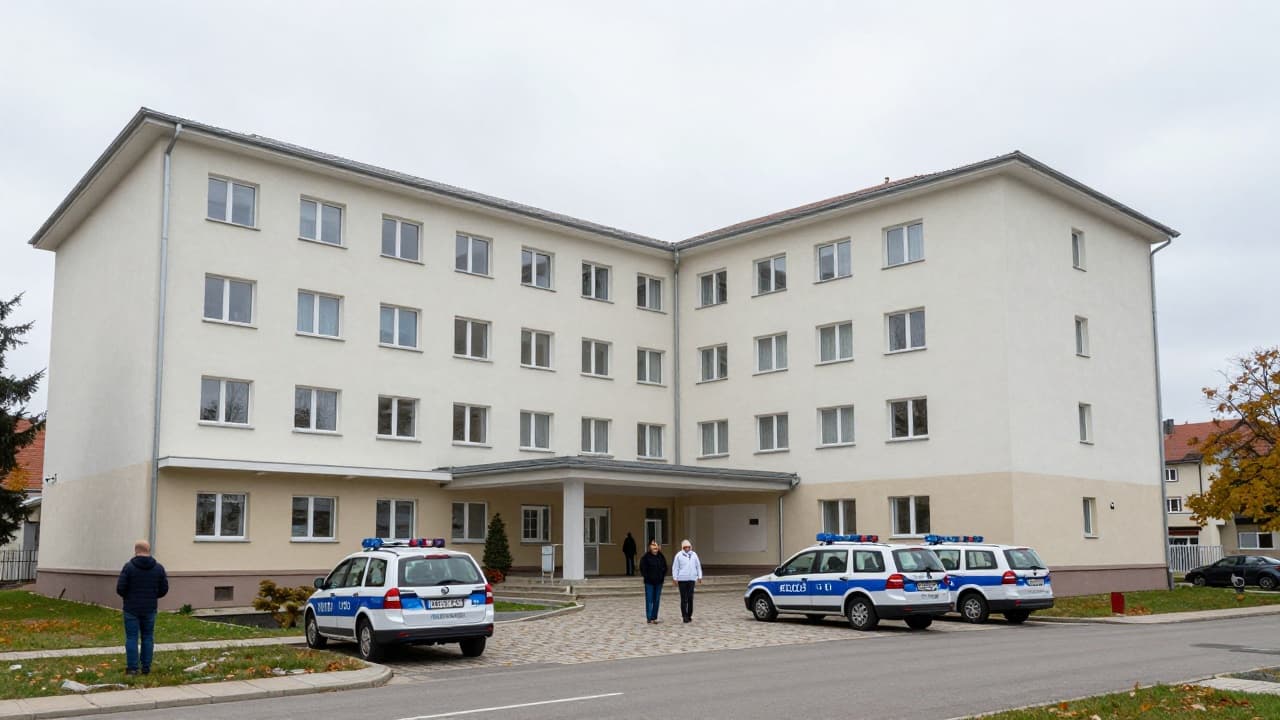
A health inspection of the Sveti Ivan Psychiatric Clinic following the death of patient Periš identified serious failures in operations and procedures. The clinic was ordered to implement five groups of corrective measures. The failures relate to patient monitoring during the application of coercive measures, the keeping of medical and nursing documentation, procedures and reporting after a patient's death, the education of healthcare workers, and compliance with staffing norms.
During the application of restraint measures, data on regular monitoring of the patient's vital functions, visits, overall care and safety measures, as well as prescribed breaks from the application of coercive measures, were not recorded. The records also lacked complete data on the doctor who ordered or continued the application of the measure, as well as the corresponding signatures of healthcare workers.
Mišić sent a message that all measures can and must be taken today to ensure this never happens again, not only in that clinic, but in any psychiatric hospital. He reiterated three questions which he believes the public deserves answers to, regardless of the inspection.
The first question concerns former clinic director Majda Grah, who, from the moment of the fatal incident, did not view the footage for almost two weeks. Mišić asked why it took almost two weeks to review the footage. The answer to the second question, Mišić believes, must be given by the police and the State Attorney's Office. The deceased's family filed a report for negligent treatment two days after the fatal incident, but neither the police nor the State Attorney's Office seized the footage from the hospital in almost two weeks. Mišić asked why they did not do so and whether anyone bears responsibility for it, noting that the then-director of the clinic herself took the footage to the police.
Mišić addressed the third question to the Ministry of Health and the health inspection, asking why the inspection was not carried out earlier, and why a tragedy had to occur for the Ministry, i.e. the health inspection, to come out with an inspection and its decision.
Investigative detention was ordered on Tuesday for a doctor, two nurses and a technician, suspected of participating in the aggravated murder of 32-year-old Periš on 21 October by omission. Investigative detention had previously been ordered for four medical technicians suspected of the same murder.
Davorka Vukadin from the Croatian Association of Mental Health Associations warned that the death of a patient at the Zagreb Sveti Ivan Psychiatric Clinic has seriously undermined trust in psychiatric institutions. She emphasised that the associations had been calling for changes in the system before the tragic event.
Representatives of the Croatian Association of Mental Health Associations were scheduled to meet with Health Minister Irena Hrstić on Thursday to request changes in psychiatric care. The meeting, which began this morning, was quickly interrupted, and its continuation is scheduled for 16:00. The associations are asking the Ministry for concrete measures to improve psychiatric care and protect patient rights, including changes in the application of mechanical restraint.
Vukadin said that the associations had requested a dialogue with the Ministry back in May, following the report of the Ombudsman published in March, and had repeated the request immediately before the patient's death in Jankomir. She sent a message that political decisions must be made to change the situation in the care system for people with experience of mental health difficulties.
She warned that the World Health Organization and Council of Europe bodies have been sending recommendations to Croatia for years regarding necessary changes in psychiatric care. The recommendations relate to procedures in hospitals, protocols, documentation of applied measures, and the education of healthcare workers to prevent the escalation of crisis situations.
Vukadin emphasised that changes must not be limited to procedures in hospitals, but must include prevention and the availability of help after hospital treatment ends. She reminded of plans to develop mobile teams, mental health centres and peer support from people with their own experience of mental health difficulties, which have not yet been sufficiently implemented.
She sent a message that mental health centres should be opened at health centres, where people can get help before their illness and the consequences of the illness escalate. She also warned about long waiting times for psychiatric examinations and insufficient availability of professional help, asking whether one cannot wait months to see a psychiatrist, only to be seen for five or ten minutes.
She said that fear has taken hold among people with mental health difficulties and their families, and that people are calling them at three or four in the morning because they do not know what to do.