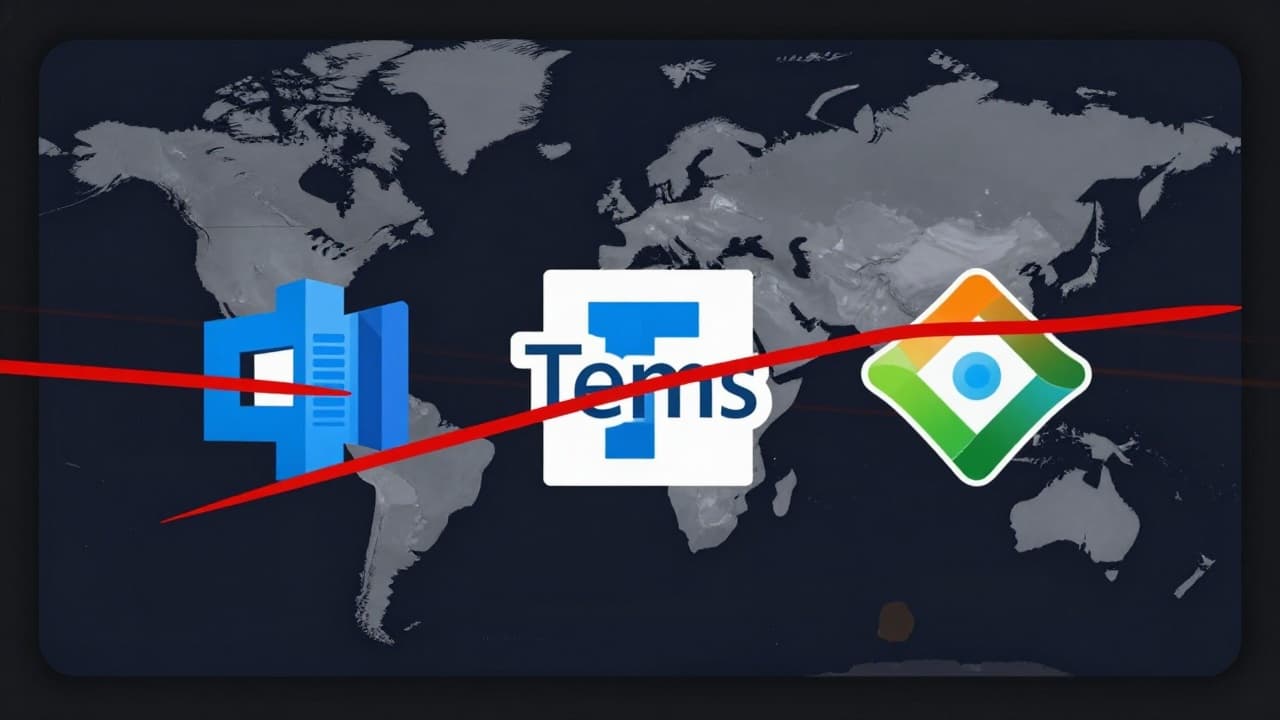
Millions of users around the world are facing serious difficulties with Microsoft tools, including Outlook, Teams and Copilot. The global system outage has lasted more than 10 hours, and according to Downdetector data, the problem spread to 74 countries in just one hour. In late Thursday afternoon Central European Time, nearly 140,000 reports of Outlook issues were recorded, which is more than 2,000 times the usual average.
Microsoft has ruled out the possibility of a hacker attack, explaining that the cause is not a cyberattack but an internal problem in their infrastructure, specifically "increased load" in multiple regions. The system did not fail due to an excessive number of users, but because a portion of the servers suddenly stopped working. The overload on the remaining servers meant they could not process all incoming requests. The company initially announced that repairs were yielding "positive results", but soon had to admit that recovery was not proceeding as planned. They warned that services, even after being temporarily restored, could crash again as soon as a large number of users attempt to connect. They are currently testing alternative solutions to enable access to the tools without re-clogging the network.
The outage has affected users on all continents. Microsoft applications are used by more than 430 million people, and their AI assistant Copilot is used by over 90 per cent of the world's largest corporations. The difficulties did not spare leading tech firms such as OpenAI and Anthropic. In countries like Singapore and Australia, serious disruptions occurred in public services. Singaporean authorities urged citizens to rely on call centres in emergencies, while the Australian state of New South Wales asked residents to postpone visits to their offices.
The difficulties also affected the Australian healthcare system. The local medical association reassured the public with a message that patient care is not at risk, as hospitals can revert to issuing paper prescriptions at any time. The US House of Representatives announced that their systems were also affected by the outage. In Australia, the difficulties also hit the intelligence agency and the federal police. Australian Cyber Security Minister Tony Burke stated that Microsoft considers the situation "similar to what we saw in the case of the company CrowdStrike, where an update went wrong".
Renowned cybersecurity expert Troy Hunt emphasises that Microsoft constitutes a significant part of the internet's "backbone". Hunt explains how this failure directly prevents users from booking appointments, confirming online purchases and accessing numerous user accounts. Paul Spain from Gorilla Technology assesses that such an outage indicates "incredible incompetence" due to which many companies have practically lost an entire working day. Experts warn that this outage could become one of the worst in history, with damages measured in billions of dollars.
Banks, universities and other institutions around the world are warning their users to exercise increased caution due to the possibility of fraud. Cybercriminals are already exploiting the resulting panic by sending fake emails and SMS messages posing as "IT support". The goal of the scams is to steal sensitive data or install malicious software. Users on social media are turning the situation into a joke. A popular post on the X platform wittily suggests a return to the early 2000s and sending messages via an Excel spreadsheet. One US real estate agency summed it up with a cynical remark: "Days like this remind you that your entire job is exclusively about sending emails."