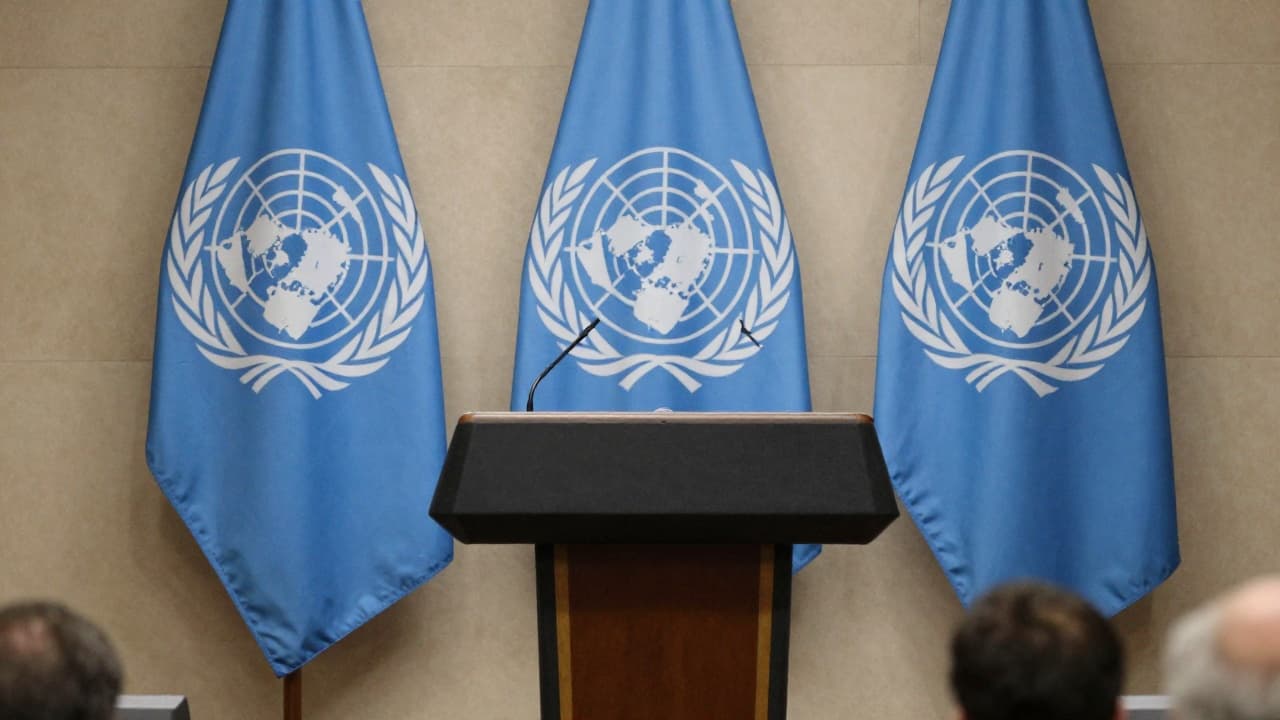
The prime minister, Anthony Albanese, has launched Australia’s bid for a two-year term on the United Nations Security Council in 2029 and 2030. Australia is competing against Finland for the seat, with the vote on the position not to take place until mid-2028.
Albanese told journalists in New York, according to Australian time, on Monday, that engagement in the world is important because it affects the cost of living, inflation and the way of life of Australians. He said that Australia cannot afford not to be engaged in the world, as this directly affects the quality of life of its citizens. According to him, there is an opportunity for Australia, through a potential seat on the Security Council, to play a key role in shaping global issues that are important to Australians.
Alongside the presentation of the candidacy, Albanese introduced the former head of broadcasting at News Corp, Siobhan McKenna, as the next Australian ambassador to New York. McKenna is currently the chair of Australia Post, having previously served as chair of NBN. She will take up the role later this year, with Albanese stating that Siobhan will bring significant financial and economic capability to the role.
Albanese highlighted that Australia’s role on the Security Council could benefit ordinary citizens. Australia, he noted, has served on the Security Council five times since the United Nations was established after the Second World War. The most recent term was in 2013 and 2014, when it led the response to the downing of Malaysia Airlines flight MH17, which was carried out by Russia. Albanese assessed that the role Australia played then was proof of what a seat on the council can achieve.
According to him, there is room for middle powers to engage, which Australia has done by participating in the war in Ukraine as part of a coalition of the willing. Lobbying will intensify during the prime minister’s visit to New York in connection with the United Nations General Assembly.
Two states are elected to the Security Council from the group of Western European and other countries, of which Australia is a member. So far, only Australia and Finland have declared for the seat, although other countries in the group could yet launch their candidacies. Even if two countries stand without a challenger, Australia would need the support of two-thirds of the 193 member states of the United Nations to succeed.
The Security Council has 15 members. China, France, the United States, the United Kingdom and Russia are permanent members, while the others serve two-year terms. Albanese expressed optimism that he would receive the support of Pacific states, as well as countries in the Association of Southeast Asian Nations (ASEAN) gathered together.
Part of the campaign will seek to leverage Australia’s role in the Pacific and action in the region on climate change. The campaign is titled “we listen, we partner, we protect”, and will focus on strengthening the voices of middle powers and smaller states in the United Nations. In the foreground of the campaign will be Australia’s move to ban social media use by people under the age of 16, as well as recent efforts to introduce restrictions on the growing use of artificial intelligence.