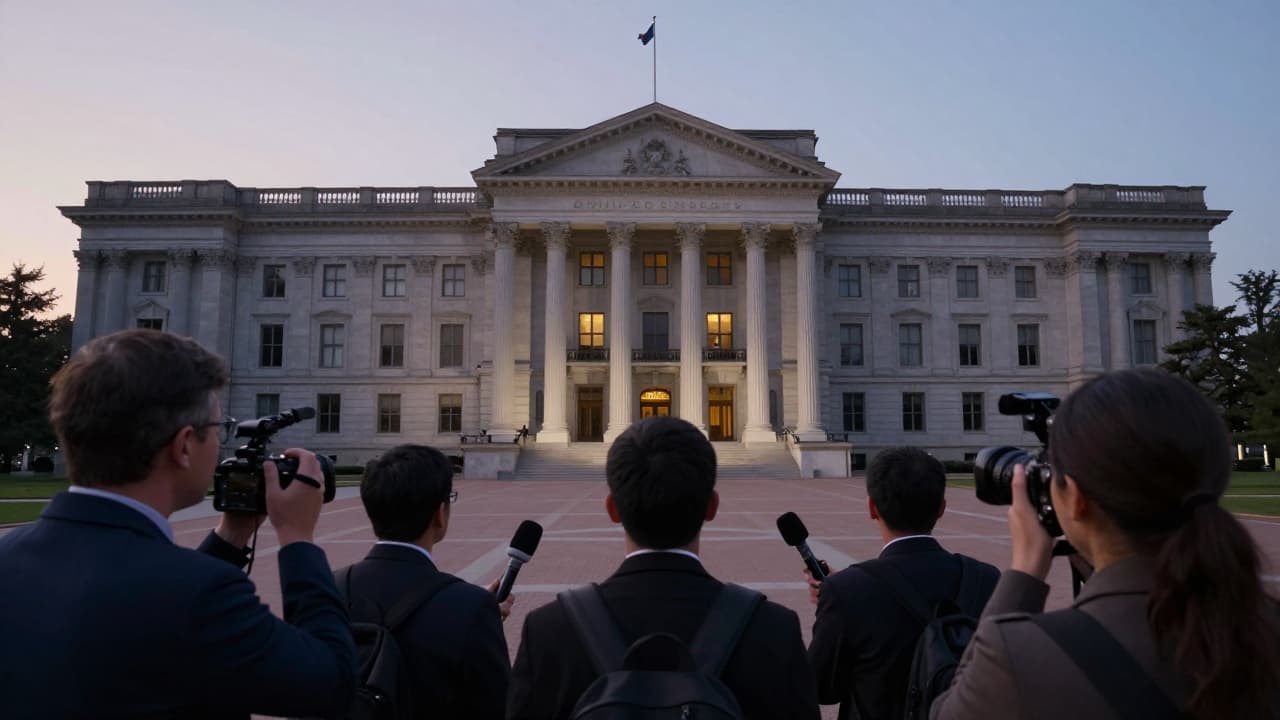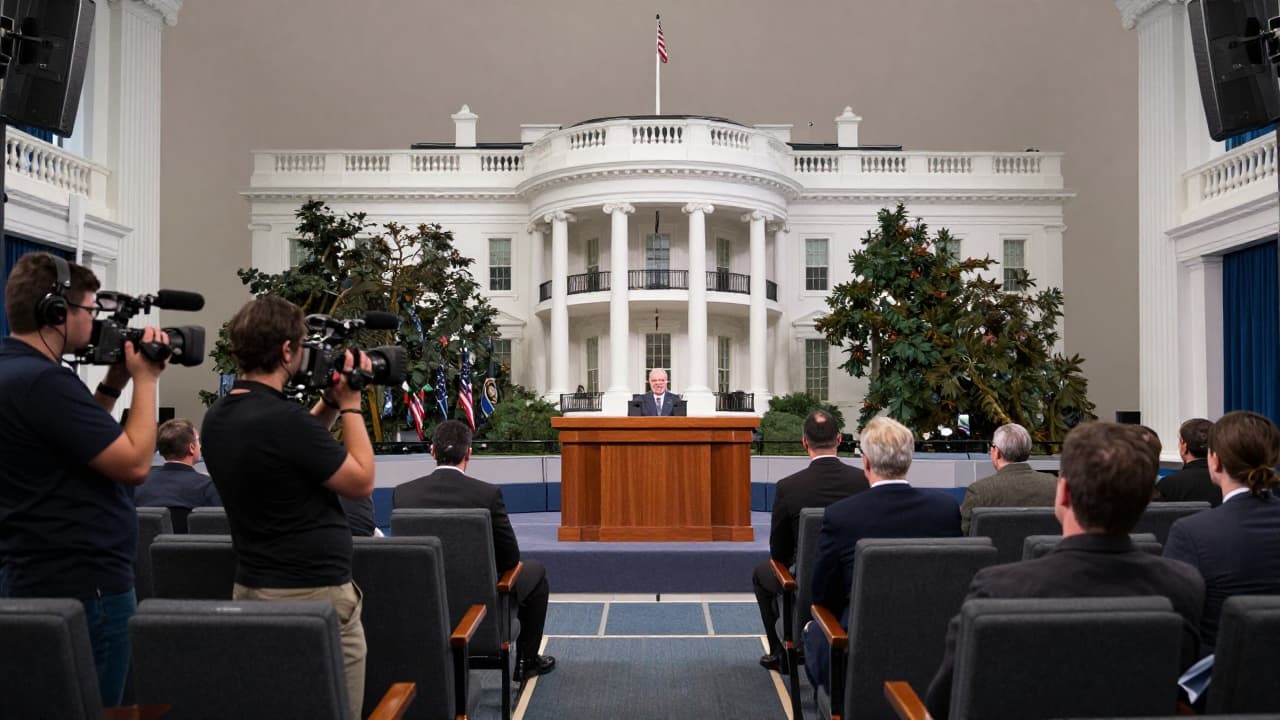
The attorney general stated on Sunday that the administration has the right to bar access to the White House by three media outlets, stating that 'staying there is a privilege, not a right'. Appearing on ABC News' This Week, Blanche defended the administration's decision to bar access to CNN, MS Now, and Politico.
Blanche said the president was 'sitting and tired' of what he perceived as inaccurate reporting by those media outlets. 'The president has not barred access,' Blanche said, adding that 'that is not the right way to describe it.' He reiterated the administration's stance that the reporting by the three outlets presented a 'national security issue'.
Blasse highlighted that it was not unusual for a media outlet to be denied access. 'The White House routinely decides who can go on Air Force One,' he said. 'This was not a one-off denial to CNN.' He noted that various situations arise where individual journalists do not fly or fly, adding that it is common for the president and his team to decide which journalists travel with them.
On Thursday, Judge Timothy Kelly issued a temporary restraining order, ordering the White House to temporarily restore the credentials of the affected journalists for 14 days. Kelly stated in his ruling that there was nothing in the record to suggest that the revocation of the press credentials was motivated by concerns for national security. 'Certainly, this is not what President Trump said when he announced that [the media] were barred from the White House – instead, he focused on the alleged inaccuracy and negative nature of their reporting,' Kelly wrote.
Despite the court's decision, CNN reported on Saturday that its journalists were prevented from joining the press pool traveling with the president on Air Force One. Media outlets briefly suspended the broadcast of television signals from the presidential pool in solidarity with CNN, MS Now, and Politico.
Trump stated that there was 'no special reason' for the action against the three media outlets, but asserted that they 'deliberately write negative news and do so because they want to diminish Republicans and the Republican administration'.
Blasse was asked what the first amendment to the US Constitution, which guarantees freedom of the press, meant to him. 'The law says – what free press can do is freely report on whatever they wish,' he said. 'Of course they can. But when it comes to the White House, this is the people's house. Staying there is a privilege, not a right.' He added that it was 'the president's duty to ensure that the American people hear accurate news'.
The dispute is unfolding in the second week of dispute over press credentials and access. Former President Bill Clinton addressed the dispute between what media outlets see as an arbitrary attempt to censor and deny constitutional rights, and what the White House considers unfair negative reporting. 'There have been many times when I wanted to ban the press pool from the White House,' Clinton said at the Clinton Global Initiative 2026 summit. 'And there is a reason we have a constitution – because none of us is immune to being angry. But I am glad I did not do it and I am glad I did not. And these people should not. The law should be as it is.'
The context of the dispute is further complicated by the political situation: Trump is facing a gloomy political landscape just over a month before the mid-term elections in November. A recent Reuters/Ipsos poll showed his overall public support at 32 per cent, the lowest level to date. According to a 2025 poll, only 28 per cent of respondents expressed 'high' or 'fairly' trust in newspapers, television channels, and radio stations to report news fully, accurately, and fairly.