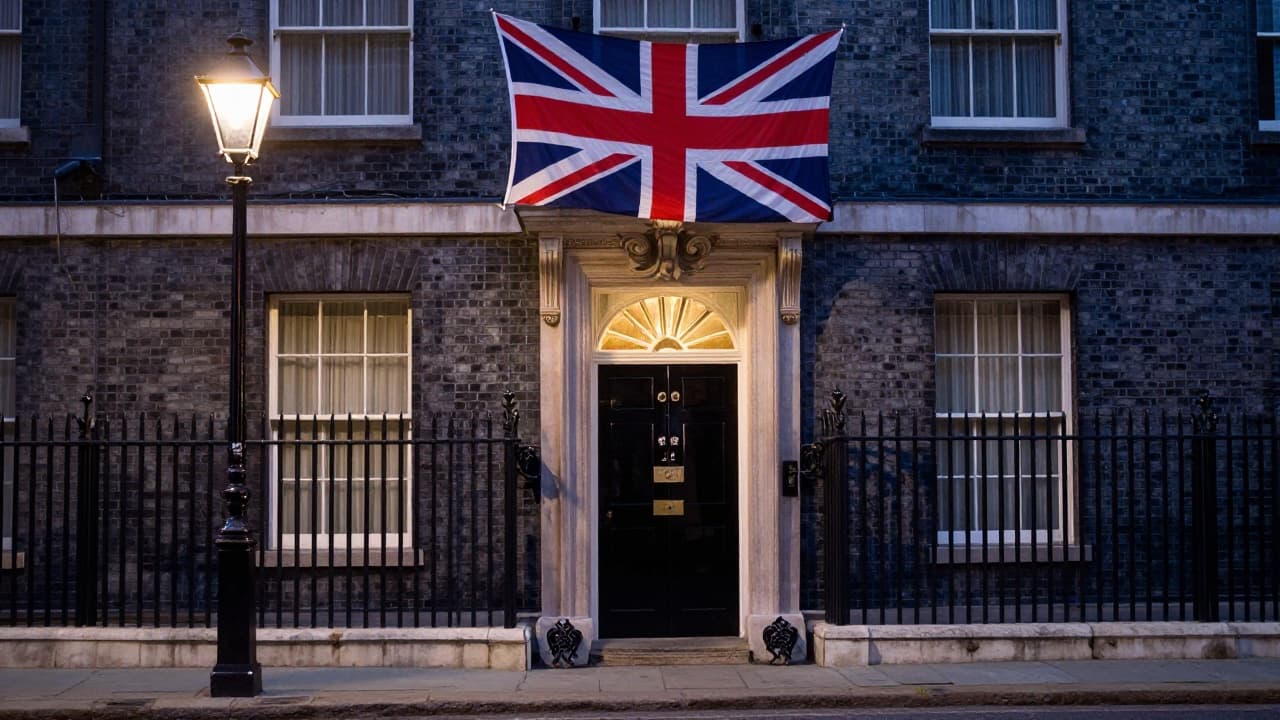
British Prime Minister Andy Burnham’s team is polling public opinion on the possibility of the UK’s return to the European Union, with the Prime Minister confirming that full membership is one of the options being considered. Senior officials at Downing Street have contacted polling agencies to gauge public sentiment on the potential return of the country to the EU.
The Prime Minister’s team is consulting EU analysts on the public’s likely reaction to a pledge of re-entry, and there are growing calls to include such a plan in the next Labour Party manifesto. Some officials in Downing Street are advocating for a pledge that Labour would initiate re-entry negotiations. Burnham previously stated that he hoped to see this happen, but some of his staff are concerned that such a pledge could politically strengthen Nigel Farage, leader of the Reform UK party.
At his first speech at the party conference as leader, Burnham announced a review of the UK’s relationship with Europe, clarifying that the options include full membership, which his predecessor Keir Starmer had explicitly rejected. The Prime Minister told delegates: “Brexit has done more harm than good. Therefore, ahead of the UK-EU summit, I will present to you and the whole country the options for the UK’s relationship with our European partners.” In an interview with BBC Radio 4, he stated: “We can stay where we are. That is certainly one of the options, if people believe that is the right choice for us. We can consider the proposal by former Chancellor George Osborne for a customs union, we can consider the proposal by the Liberal Democrats for a single market, and we can also consider the option of full membership.”
Burnham’s comments were met with approval from EU supporters, who see the return as the best path for economic growth, but were met with sharp criticism from political opponents. Alex Burrough, Deputy Leader of the Conservative Party, stated: “Labour cannot blame the democratic decision made by voters more than ten years ago for the consequences of their own economic decisions.”
Burnham’s comments are part of a wider initiative by Downing Street to assess whether there is consensus on a return to the EU, so that such a pledge can be included in the next manifesto. Officials are in contact with several prominent think tanks and polling agencies, refining arguments for a return to the EU. The Tony Blair Institute published a document last week stating that Burnham should request negotiations with Brussels on re-entry, but on the condition that Europe softens its regulations in the sectors of energy and technology. The pro-European campaign Best for Britain published the results of a large YouGov poll, according to which Labour could more than double the number of seats if they went to the next election with a pledge to return to the EU. In the coming weeks, the influential Institute for Public Policy Research (IPPR) will publish a document calling for the country’s return to the EU, while the Think Labour organisation has been researching the complexity of such a process.
Some officials in Downing Street are encouraged by polls showing that a pledge to return to the EU does not result in a significant increase in support for the Reform UK party. They point out that Farage’s reaction to the Prime Minister’s speech was to criticise the proposed changes to the pension system, rather than the comments on Europe. Some in the ruling party have argued that the Prime Minister should promise to launch the process of returning to the EU immediately after the next election, rather than simply announcing a review, but this option was rejected. The party was already preparing for political debates on pensions and did not want to open up space for Farage, who is facing allegations of receiving multi-million pound donations. From Downing Street, it was stated that the Prime Minister had never considered such a promise for his speech, and that it was not in any draft.
There are views that it would be difficult to convince Brussels to reopen negotiations, given the numerous rounds of negotiations that have already taken place on relations with the UK. French President Emmanuel Macron welcomed Burnham’s comments. “Welcome back,” said the French President in English during a press conference in Madrid, then in French continued: “If the British want to return and the Prime Minister is going in that direction, I think it is good news, for his country and for Europeans.”
Burnham’s willingness to consider all options coincides with the new European law on “Made in Europe”, which threatens to exclude British goods from supply chains in the continent. Downing Street has sought to have British manufacturers treated as European for the purposes of this law, with officials having previously indicated that the UK government would delay the UK-EU summit until London received indications of a possible agreement from the EU. After Burnham’s speech, the date for the summit was set for 20 November. One EU diplomat stated that the old Starmer plan for resetting relations needed to be completed before discussions on a real reset could begin, confirming support for the summit to take place in the near future. The other diplomat added that the government is in a good position as Burnham is now considering all options and seeking consensus, which is “something the EU has always wanted to see.”
Note: The previous translation was rejected (hero caption dropped). Translate again, strictly: keep every number exactly as in the source, never add figures, examples or explanations of your own, and keep the same paragraph structure.