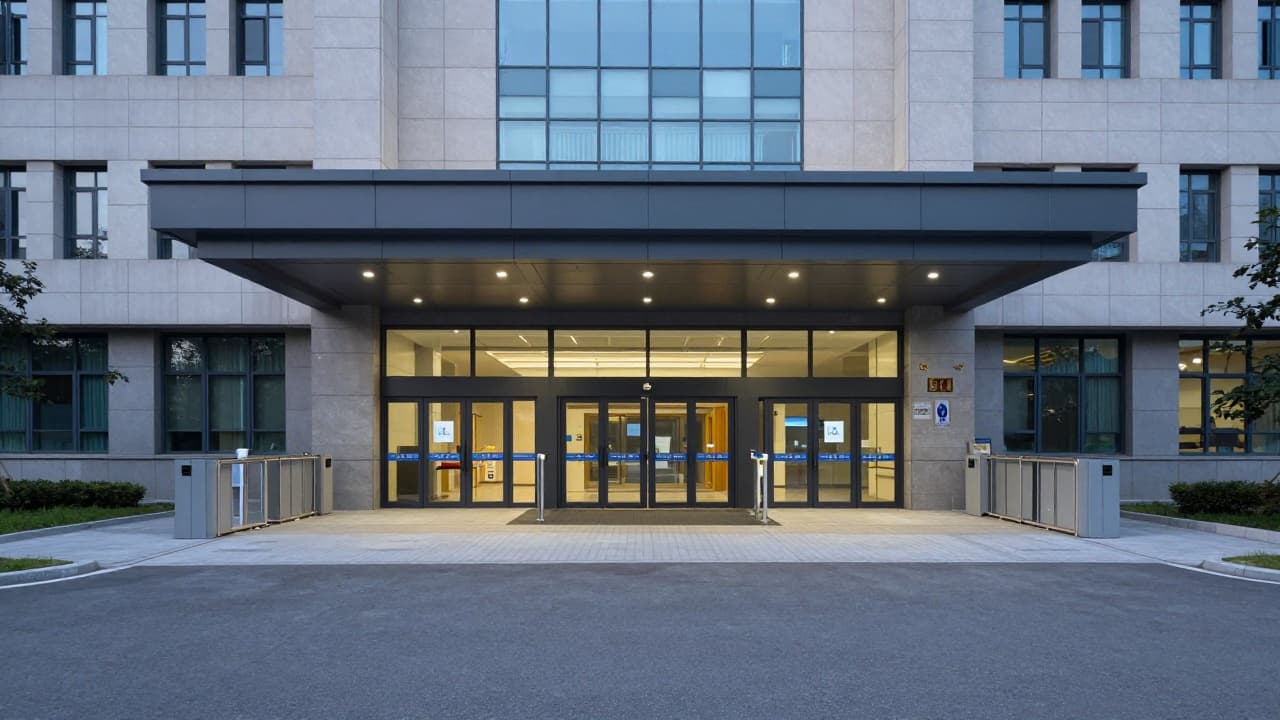
Pope Leo XIV was operated on on Tuesday, 13 October, in the afternoon at the Agostino Gemelli University Polyclinic in north-west Rome. The press office of the Holy See announced that the operation was completed successfully, on time and as planned, and the Vatican confirmed that the Pope had returned to his room after the procedure.
Pope Leo XIV had the lower lobe of his right lung removed, using a video-assisted surgical technique. The operation lasted around 90 minutes, and the Pope spent approximately three hours in the operating theatre. The operation proceeded without complications. The Pope returned to his room on the tenth floor of the hospital after waking up and a short period of observation. Further information on his health condition will be released later.
The diagnosis of lung adenocarcinoma was confirmed by an immediate histological examination, following suspicions raised during pre-operative tests. The nodule, identified as lung adenocarcinoma, the most common form of lung cancer, was removed. The surgeons removed the malignant growth, along with the lower lobe of his right lung.
On Sunday, 11 October, the Pope announced that he would undergo surgery for the nodule discovered during recent medical examinations. He highlighted that the change was detected in its very early stages and was well-localised. He thanked the faithful for their spiritual support and asked them to pray for him.
Lung adenocarcinoma accounts for around 40 per cent of all lung cancer cases. It is a type of non-small cell lung cancer, which typically grows and spreads to other parts of the body more slowly than small cell lung cancer. Surgery is usually the first step in the treatment of this form of cancer. The right lung, which is larger, consists of three parts, or lobes, while the left has two. Doctors often remove the lobe containing the tumour to remove the cancer and increase the chances of a cure, with the body adapting over time to compensate for the loss of part of the lung function.
It is not always clear what causes this type of lung cancer. Smoking increases the risk, but other risk factors include exposure to radon gas, which is the second most common cause of lung cancer after smoking, and air pollution from airborne particles. Lung adenocarcinoma is most often diagnosed in people who have never smoked, is more common in women, younger patients and those of East Asian descent, and is one of the leading causes of cancer-related death as it is often detected by doctors only at an advanced stage.
Based on the information available so far, the Pope is expected to have a good prognosis, according to Dr Juanita Mora, the national spokesperson for the American Lung Association. She said that the fact that the Pope’s adenocarcinoma was localised and detected early was in his favour, especially following surgical removal. She highlighted that his recovery might take slightly longer as his lungs would need to adjust to the removal of one lobe. She explained that he would initially find it slightly harder to breathe as his left lung adjusted to compensating for the loss of the other, but added that the reduced lung capacity might not significantly affect his breathing.
According to her, the Pope is in a favourable position as he is a non-smoker and, despite being 71, is in good health, plays tennis and is regularly physically active. Dr Mora said that the Pope would need to undergo respiratory therapy exercises and would need to be particularly careful to avoid respiratory infections, as these, given the removed part of the lung, could have more serious consequences following the operation. She noted that his predecessor, Pope Francis, had also undergone removal of a lung lobe in his youth following a severe infection with tuberculosis, adding that it is clear that many people can live and function completely normally even after having a lung lobe removed.
Following such an operation, patients usually remain in hospital for a few days until their vital signs and blood oxygen levels are stable, after which they usually recover at home. As this involves a lobectomy, or surgical removal of a lung lobe, some pain is expected after the procedure. Dr Mora said that the possibility of the Pope’s planned trip to Latin America next month would depend on the results of the tests to be carried out in the next few days.
In such cases, doctors analyse samples of the lung tissue, in addition to the lung tissue itself, to determine the stage of the adenocarcinoma. The presence of cancer cells in the lymph nodes or any signs of the spread of the disease will help determine whether the Pope requires additional treatment after the operation, such as chemotherapy or radiation. Doctors will also conduct genetic tests and biomarker testing to determine further treatment for the cancer, should it be necessary. Knowing the patient’s specific biomarkers can help in selecting targeted immunotherapy, and Dr Mora added that testing has significantly improved the treatment of lung cancer. In the United States, only 15 states require health insurance companies to cover the cost of such testing, even when the patient is suffering from lung cancer.
Dr Mora said that they hope the tumour is isolated and has been completely removed, and that additional treatment will not be necessary. In such cases, a survival rate of 80 to 98 per cent is observed after surgical removal, she said, concluding that they must now wait for the results of those tests.