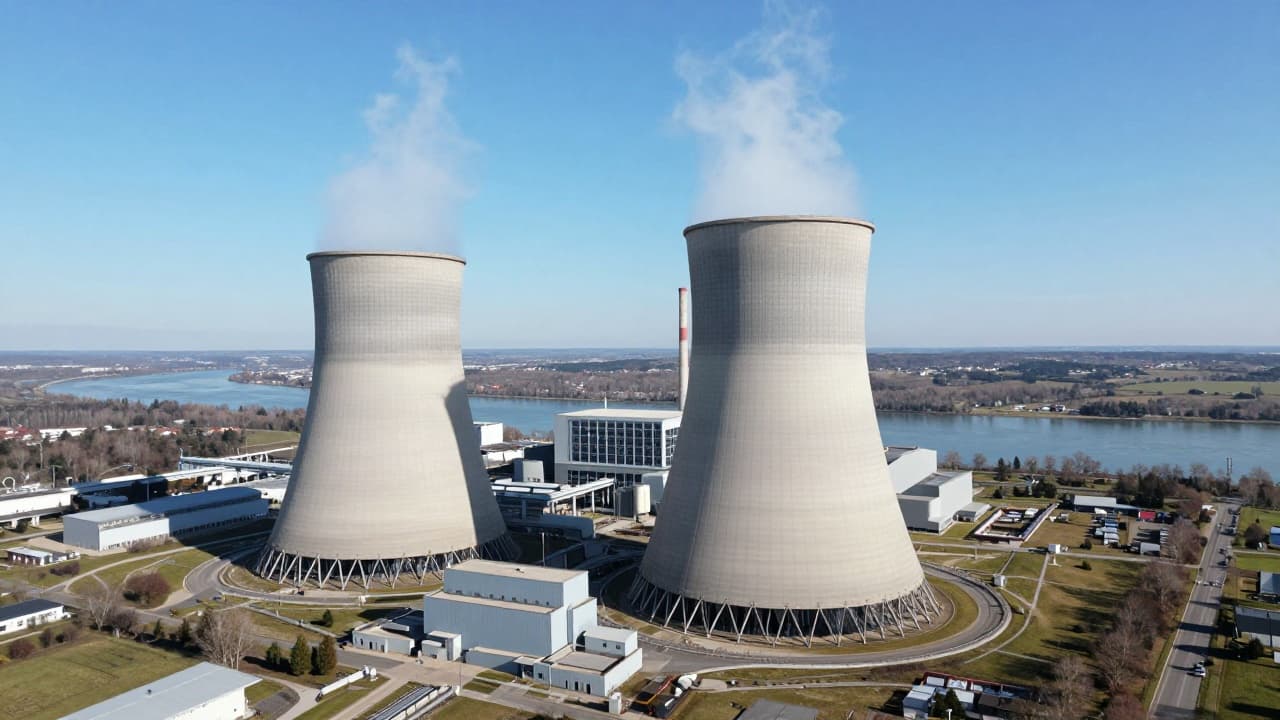
The Krško nuclear power station has resumed full-power operation as of Tuesday evening, completing the process of ramping up capacity following spring and summer restrictions. The return to maximum output was enabled by improved weather conditions and a drop in the temperature of the Sava river, which is a key factor in the safe cooling of the reactors.
The plant’s management has stated that the entire cooling system will continue to be used to fully comply with environmental restrictions. This measure is critical, as the use of all cooling towers significantly reduces the need to draw water from the Sava for the tertiary cooling system, thereby minimising the thermal impact on the watercourse.
The power station was forced to reduce the output of its reactors to 80 per cent on 6 August due to dry conditions and prolonged high temperatures that threatened to breach environmental standards. The reduction was implemented solely to limit the negative impact on the Sava river. Last week, following an improvement in hydrological conditions, power output was temporarily increased to 90 per cent, but the full capacity of 100 per cent was only reached following rainfall earlier this week.
The current temperature of the Sava river is 24.3°C, which is well below the legal limit. According to regulations, the daily average temperature of the S river at the point of complete mixing in the downstream section of the Brežiče hydropower plant must not exceed 28 degrees. Furthermore, the daily temperature rise must not exceed three degrees, and the current daily rise is 2.8 degrees, placing this parameter right on the edge of the permitted limit.
The chair of the board of NEK, Gorazd Pfeifer, stated that despite the return to full power, the hydrological conditions are not yet optimal. This warning indicates that the power station will likely continue to monitor hydrological changes with caution, maintaining strict protocols to prevent a recurrence of disruption to the river ecosystem.