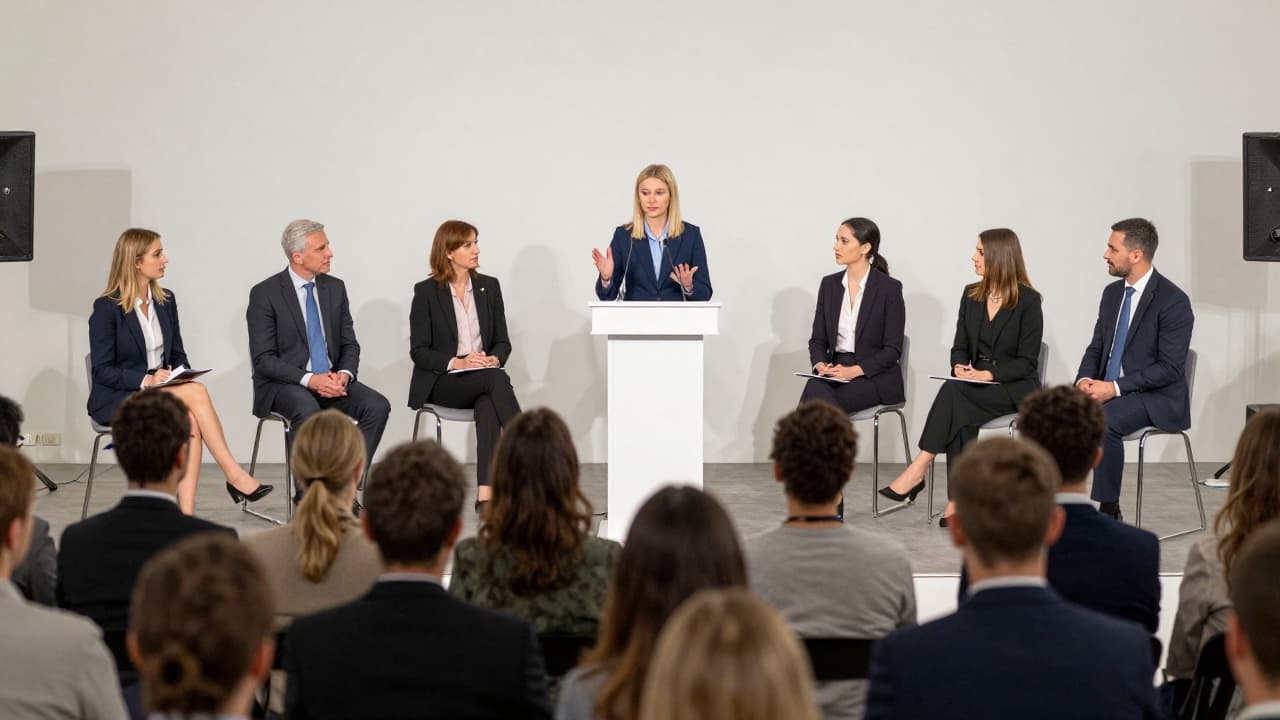
Local media are the infrastructure of a community, and their weakening leads to "media desertification" in which parts of Croatia could become spaces without reliable and regular sources of local information, it was said at a panel by the Croatian Journalists' Union (Sindikat novinara Hrvatske) titled "Local and Open".
Hrvoje Zovko, president of the Croatian Journalists' Association (Hrvatsko novinarsko društvo), highlighted on Monday the importance of the local media financing models developed by the HND and the SNH. He reminded the audience that some cities, including Križevci, Split and partially Zagreb, had accepted those models, but that the proposal had not been systematically adopted at the state level. He explained that these models envisage the allocation of funds through public calls and professional criteria, the evaluation of applications by independent committees instead of direct or opaque deals, and the preservation of editorial independence and public oversight of budget spending.
Zovko said that local media, due to unresolved financing, are left to local sheriffs and their caprice. "The majority of local media have turned into service units for local sheriffs, regardless of which party is in power," he said. He advocated for the adoption of a transparent financing model and for the HND and SNH models to be included in the criteria for the distribution of funds from the Fund for Encouraging Pluralism and Diversity of Electronic Media, managed by the Agency for Media (Agencija za medije).
Josip Popovac, director of the Agency for Media and president of the Media Council, confirmed that it is extremely important to quickly find a solution for financing local media, emphasising that local self-governments still have the main say in this matter. "Local media in Croatia today are perhaps in the biggest crisis of their business model. There is a lack of money in the market, local advertising is constantly declining, and local television and radio stations have had problems with their financial operations for years. I think that local self-governments should invest much more attention, but also money, in local media," Popovac said. He assessed that the future of traditional media is "not bright", but also that local media are of exceptional importance for preserving the democratic culture of the whole society.
Paula Martinović, a master's student at the University of Zagreb Faculty of Political Science, presented a study on possible "media desertification" using the example of the challenges faced by journalists and editors of local media in Brod-Posavina County. The study highlights the danger of the potential creation of "media deserts" – areas that do not have functional media, i.e. areas where local media exist in theory, but in practice, quality and independent local reporting is lacking.
Nives Zvonarić, director of the Directorate for Media and Development of Cultural and Creative Industries in the Ministry of Culture and Media, and Antonija Čuvalo, a professor at the University of Zagreb Faculty of Political Science, also spoke about models for possible financing of traditional media and the problems of local journalism. Ivica Krčelić, editor and journalist at the Jaska.hr portal, and Silvija Šeparović from Yammat FM radio spoke about the experiences of local media journalists. The panel was moderated by Maja Sever, president of the European Federation of Journalists and the Croatian Journalists' Union.