The World Health Organization (WHO) estimates that approximately 39 million deaths are expected over the next 25 years as a direct consequence of antibiotic resistance. Efforts to date in addressing this issue have yielded poor results, warned Jean Pierre Nyemazi, head of the WHO’s Department of Antimicrobial Resistance, during the organization’s virtual press conference.
Nyemazi stated that the threat is immense and that, when looking at current trends, investments and measures taken, he does not believe we are on the right path. The explicit goal of WHO member states is to reduce the mortality rate caused by antibiotic resistance by 10 per cent by 2030.
Can Imirzalioglu, professor and head of the Institute of Medical Microbiology at Justus Liebig University in Gießen and an expert on antibiotic resistance and the One Health concept, warns that a world in which antibiotics no longer work would be like a return to an era when even minor infections posed a threat to life. In such a world, he says, modern medicine as we know it today would no longer be possible.
The One Health concept views the health of humans, animals and the environment as an interconnected whole. Antibiotics and antibiotic-resistant bacteria are found in livestock facilities, animal-derived products, wastewater, fertilisers and, consequently, on plants. Imirzalioglu explains that the One Health concept aims to view all of this as a whole.
In hospitals and general practitioners’ surgeries, antibiotics should be used as sparingly and targeted as possible, in line with treatment needs. To this end, possibilities for developing better and faster diagnostics are primarily being investigated. According to Imirzalioglu, in Germany antibiotics are often prescribed for respiratory and urinary tract infections, although they act exclusively against bacteria. If the cause of the infection is viruses, antibiotics cannot act against the specific disease.
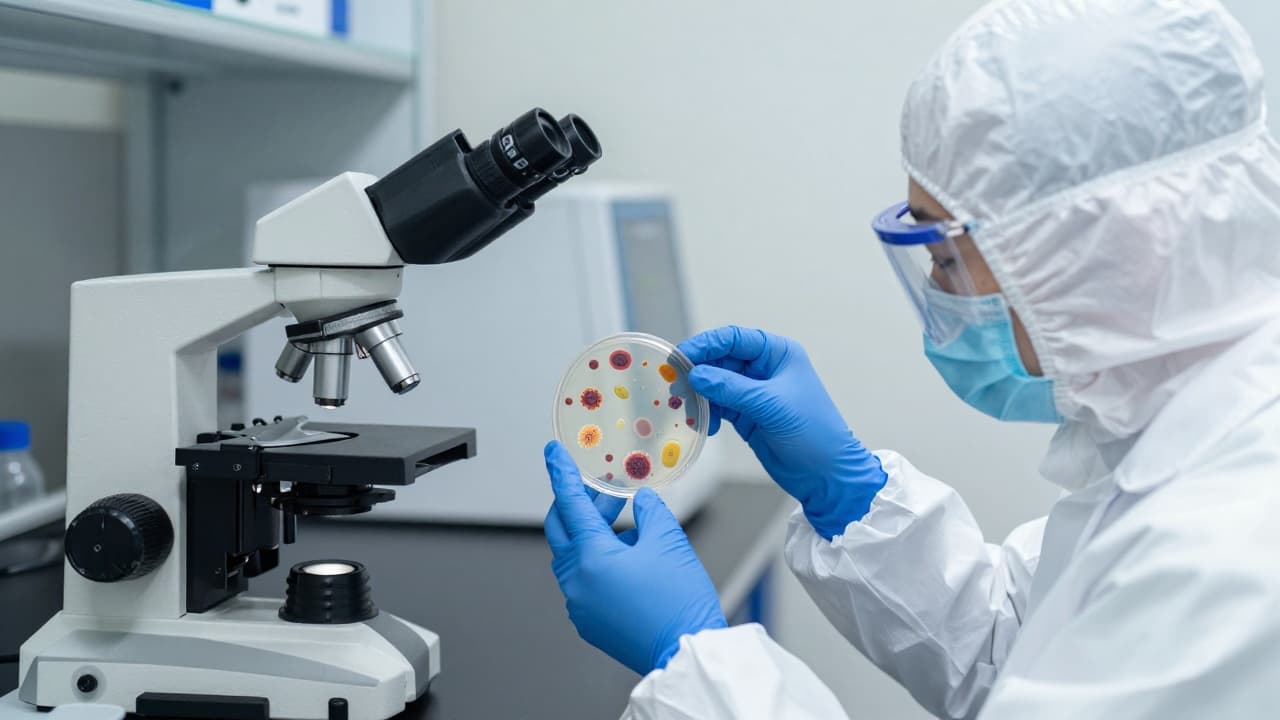
Every use of antibiotics has consequences: it damages the gut microbiome, which consists of billions of microorganisms, primarily bacteria, with a key role in digestion, metabolism and immune system function. Imirzalioglu explains that if we damage these bacteria, resistant pathogens can spread and take their place. An additional problem, he highlights, is that the spread of resistant pathogens in the gut often occurs unnoticed and without causing symptoms. People thus become carriers of resistant pathogens, which they then release back into their environment.
In this way, resistant pathogens from hospitals end up in wastewater, and from there in the Baltic Sea, where they are taken up by wild birds. This path was tracked by Katharina Schaufler, a veterinarian and microbiologist from the Helmholtz Institute. Schaufler highlights that antibiotics have not only been intensively used in human medicine over a long period, but their overuse in veterinary medicine has also led to the existence today of bacteria resistant to almost all available antibiotics.
In 2006, a ban on the use of antibiotics as growth promoters in animal feed came into force at the European Union level. Since then, antibiotics may only be applied when an animal requires treatment for medical reasons. The problem is that intensive animal farming constantly creates a need for antibiotic use in veterinary medicine. The mere fact that animals live in very small spaces leads to the rapid spread of infections. Lack of space and boredom cause animals to injure each other, in an environment where there is already high bacterial pressure, as described by Schaufler.
Resistant pathogens also enter the environment via fertilisers. It has been proven that resistant bacteria can be found even on a head of lettuce, says the veterinarian, and they are regularly found on meat as well. The One Health concept also implies that national solutions are not sufficient. In many countries, antibiotics are still routinely added to animal feed, says Schaufler, and Imirzalioglu highlights that antibiotics can be purchased in drugstores without a prescription. Both experts believe that such circumstances significantly hinder the global fight against antibiotic resistance.
An additional problem is the fact that the development of new antibiotics is almost entirely economically unviable for pharmaceutical companies. The reason is simple: new antibiotics would represent a reserve treatment option, so they would not be sold or used in large quantities. Schaufler says that incentives need to be offered to pharmaceutical companies so that they continue to invest in efforts in this area. Political will is necessary to curb antibiotic resistance.
Can Imirzalioglu participates in the GUARDIAN project, which is funded by the German Federal Ministry for Research, Technology and Space. The aim of the project is to prevent outbreaks of diseases caused by resistant bacteria by monitoring and analysing wastewater in the Central Hesse region. Imirzalioglu also serves as an advisor at the European Union level within the Antimicrobial Resistance One Health Network, which deals with antimicrobial resistance. Based on his experience of working with politicians, he says that experts and various groups have good ideas.