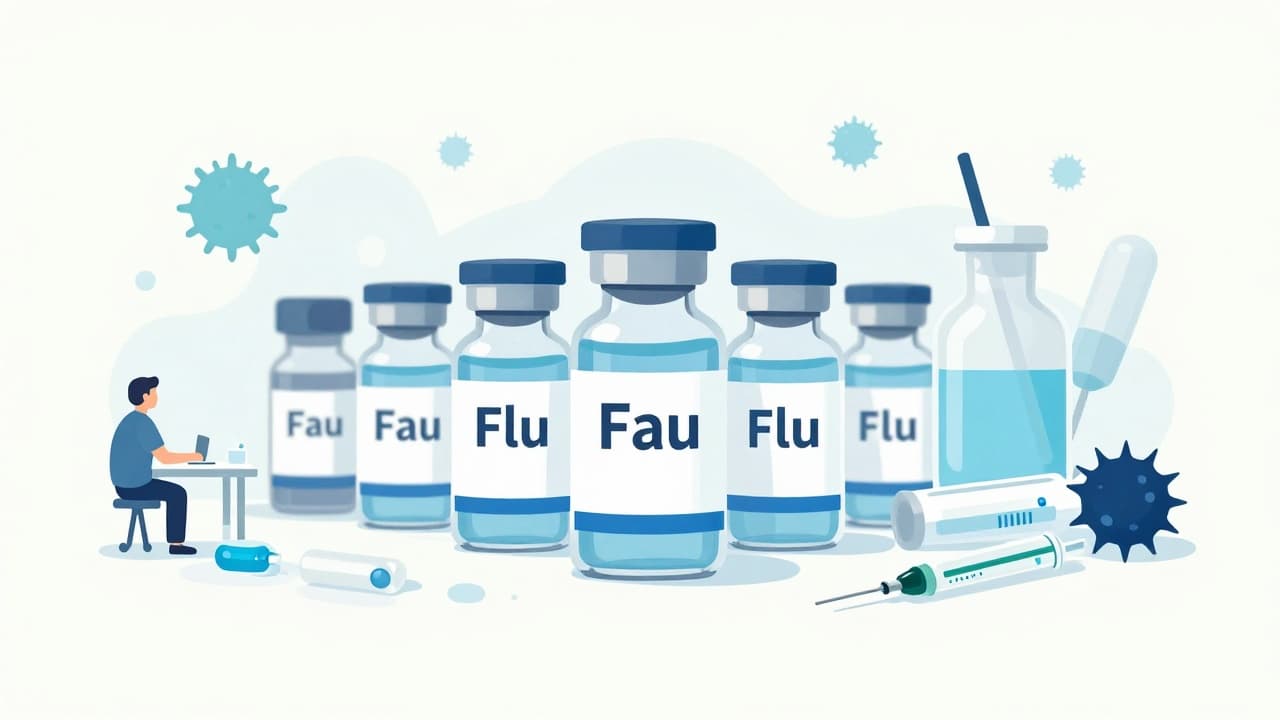
A vaccine long used to protect against seasonal flu may have another unexpected benefit. New research by American scientists has shown that flu vaccination, particularly with a higher-dose antigen vaccine, is associated with a significantly lower risk of an Alzheimer's disease diagnosis. The study was conducted by researchers at the University of Texas Health Science Center in Houston.
People over 65 who received the high-dose flu vaccine had up to a 22 per cent lower risk of developing Alzheimer's disease over the following two years compared with those who received the standard dose. When these results are viewed alongside earlier studies comparing vaccinated and unvaccinated individuals, the difference in risk reaches nearly 55 per cent. Scientists caution that this is an association, not proof that the vaccine directly prevents Alzheimer's disease.
The study analysed health data from nearly 165,000 adults aged 65 and older. Researchers were interested in whether there was a difference in Alzheimer's risk between people who received the standard flu vaccine and those who received the high-dose vaccine. Results showed that in the group receiving the high-dose vaccine, the risk of an Alzheimer's diagnosis during the two-year follow-up was up to 22 per cent lower. For individuals who received the high-dose vaccine multiple times during the observation period, the association with lower risk lasted slightly longer. The association was more pronounced in women than in men.
The high-dose flu vaccine contains four times more flu virus antigen than the standard vaccine. Its purpose is to stimulate a stronger immune response, particularly in older people whose immune systems may react less effectively with age. The US Centers for Disease Control and Prevention (CDC) has recommended since 2022 that people over 65 prioritise certain flu vaccines, including the high-dose vaccine.
One of the study's authors, neurologist Paul Schulz, admitted that he himself had not previously known of this vaccination possibility. "I was stunned that as a doctor I did not know a higher dose was offered," Schulz said, recalling conversations with public health officials that prompted the new research. The same research team had analysed data from nearly 1.9 million Americans over 65 in 2022. They then found that receiving any dose of the flu vaccine was associated with a roughly 40 per cent lower risk of Alzheimer's disease compared with unvaccinated individuals. The new study is the first to specifically compare the high-dose and standard vaccines.
According to the researchers, the combination of previous and new results suggests the possibility that the high-dose vaccine is associated with nearly a 55 per cent lower risk compared with no vaccination. This percentage was not directly measured by comparing high-dose vaccinated and unvaccinated individuals in the new study. Scientists have been investigating a possible link between vaccination and reduced dementia risk for some time. In addition to the flu vaccine, vaccines against herpes zoster, respiratory syncytial virus (RSV), pneumococcal diseases, tetanus and diphtheria have been linked in certain studies to a lower risk of dementia. One possible explanation is that protection from infections may reduce inflammatory processes that could affect brain health.
Because Alzheimer's disease develops over years, or even decades, before the first symptoms appear, people diagnosed with the disease during the study likely already had certain changes in their brains before vaccination. This means that if the vaccine does have a protective effect, it might delay the onset of symptoms rather than necessarily prevent the disease itself. Experts emphasise that this research cannot conclude that the vaccine causes a reduction in Alzheimer's risk. Epidemiologist Erin Abner, who was not involved in the study, warned that people receiving the high-dose vaccine may have different health habits or be generally healthier than those receiving the standard dose. Such differences could partially explain the results obtained.
When researchers excluded individuals who had been vaccinated against the flu in the previous two years from the analysis, the association between the high-dose vaccine and lower Alzheimer's risk largely disappeared. The association was no longer statistically significant after approximately two years of follow-up. Alzheimer's disease develops over a much longer period, making it difficult to link short-term results to long-term prevention. There is currently insufficient evidence to recommend the flu vaccine as a means of preventing Alzheimer's disease. Its confirmed purpose remains protection against the flu and its complications, particularly in older people. Researchers hope that future studies will help clarify whether there is a true causal link between vaccination and brain health.