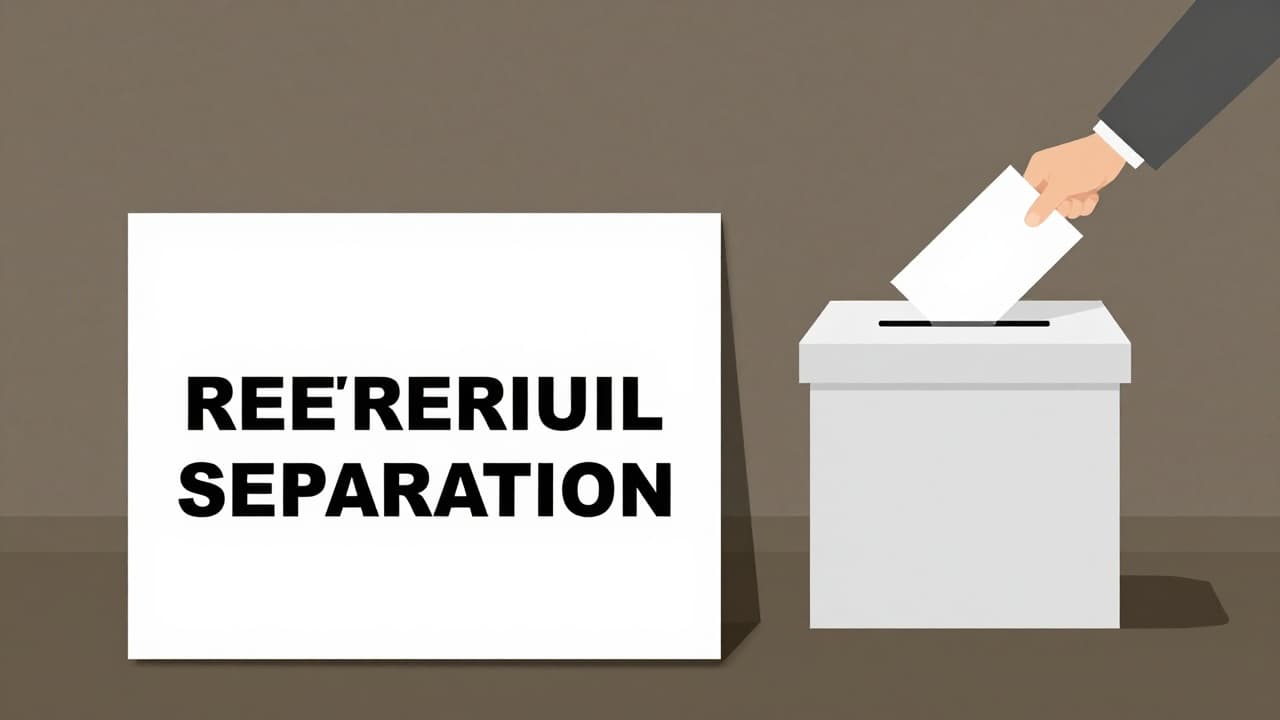
Albertans voted to remain part of Canada in the province's first-ever secession referendum, CBC News announced late on Monday, after 33 per cent of votes had been counted. At the time of the announcement, 76 per cent of the counted votes were in favour of the option to stay in Canada, while 23 per cent of voters supported launching the process for holding a binding referendum on the province's secession. The referendum itself was not legally binding.
Premier Carney stated that Albertans had made a clear decision. "They chose unity, building a future together and caring for one another. Canada is more than the sum of its parts," Carney said. Carney, who spent most of his childhood in Alberta, acknowledged that residents of the province often felt neglected by Ottawa. He also highlighted that his government had approved a proposal to build a new pipeline, adding that Alberta plays a key role in helping Canada reduce its dependence on the United States.
Alberta Premier Danielle Smith announced the referendum in May, explaining that it was "time to hold a vote, determine the will of Albertans on this issue and move on". Late on Monday, she posted on social media that she was "very pleased" that the initial results showed broad support for remaining in Canada. She also announced that she would address Albertans on Tuesday to discuss the results and "the direction our province will take from here".
A small but vocal group of separatists had campaigned for months for an independent Alberta, arguing that the province's energy wealth subsidises poorer parts of Canada and that Alberta would be significantly wealthier if Ottawa's bureaucracy did not stand in its way. Analysts had repeatedly dismissed the possibility of a victory for secession advocates, and data showed that approximately one-third of residents in the western province supported holding a future referendum on leaving Canada. Last week, Carney said at a rally in Calgary that voting to leave Canada would be a "dangerous bluff that will lead to years of deep divisions", urging Albertans to "vote as if Canada's survival depended on it".
The referendum in Alberta followed two secession referendums in Quebec, a province where the majority of the population are French speakers. In both cases, Quebecers voted to remain in Canada. Indigenous groups in Canada also opposed the idea of an independent Alberta, as their land treaties with the federal government in Ottawa predate the establishment of Alberta as a province within Canada. CBC News reported high voter turnout among Indigenous peoples. At one polling station in southern Alberta, in an area where the Siksika people live, ballot papers temporarily ran out, and the polling station then remained open until after 22:00 local time to allow everyone waiting in line to vote.
Ahead of the referendum, some separatist leaders stated that they would continue to seek a new vote even if the majority of Albertans supported remaining in Canada. According to data published on 16 October by polling agency Angus Reid, 62 per cent of Albertans believe that "the separatist movement in the province will never disappear". In the Alberta referendum, voters were also asked nine other non-binding questions, among others on immigration, access to provincial public services - such as education, social care and healthcare - and voter identification requirements. The results of those questions were still being released gradually.