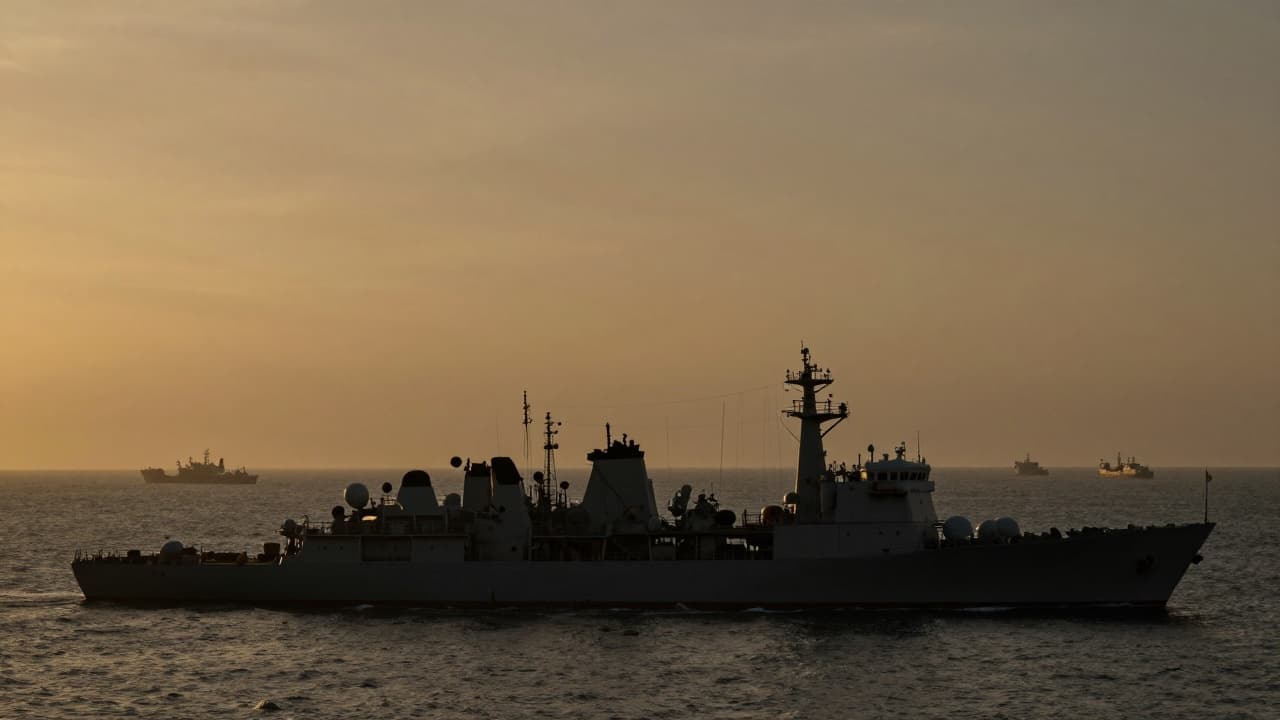
Eight members of the US Marine Corps were injured in an attack by an Iranian cruise missile on a vessel they were on in the Strait of Hormuz, according to sources close to US officials. The attack took place two weeks ago, but details of the incident and the injuries to the marines had not previously been known to the public.
According to officials, the marines were not seriously injured, but suffered the effects of inhaling smoke. There is a possibility that they sustained traumatic brain injuries. Officials stated that the marines exhibited symptoms of concussion, such as headaches. All the soldiers returned to duty shortly after the attack on 14 September.
The marines were part of a landing team at the time of the Iranian attack by a cruise missile on board. They were not on a US Navy ship, and officials did not specify the type of vessel involved. The US Department of Defence did not report attacks on US forces in the region.
The spokesperson for US Central Command (CENTCOM) declined to comment on the incident, while the spokesperson for the Department of Defence directed journalists to CENTCOM when asked for a comment. Since the war between the US and Israel against Iran began, there have been many ambiguities regarding the number of injured US soldiers.
The Pentagon maintains a database called the Defense Casualty Analysis System (DCAS), in which injuries and fatalities of members of the US armed forces are recorded. According to data from this database, as of last Wednesday, 861 members of the US armed forces had been injured. Eight marines were added to the list of injured personnel deployed in overseas operations on Wednesday, almost ten days after the attack.
One of the US officials noted that there is often a delay in recording injuries because symptoms are not always reported immediately, and the system does not update in real time. The DCAS database does not contain basic data on the eight injured marines, including the place, time and circumstances of their injuries.
More than 50,000 members of the US armed forces are deployed in the area of responsibility of CENTCOM. Among them are two strike groups of aircraft carriers, led by the USS George Washington and the USS George H. W. Bush. The US military is continuing to enforce a blockade on ships attempting to enter Iranian ports or exit them.
Within the framework of the blockade, the US military coordinates with commercial ships to ensure safe passage through the strait, using multiple shipping lanes. The US forces are also continuing to intercept Iranian projectiles and ensure that the shipping lanes are cleared of mines. These actions have led to a gradual increase in the number of ships passing through the Strait of Hormuz, where traffic had previously come to a complete standstill.