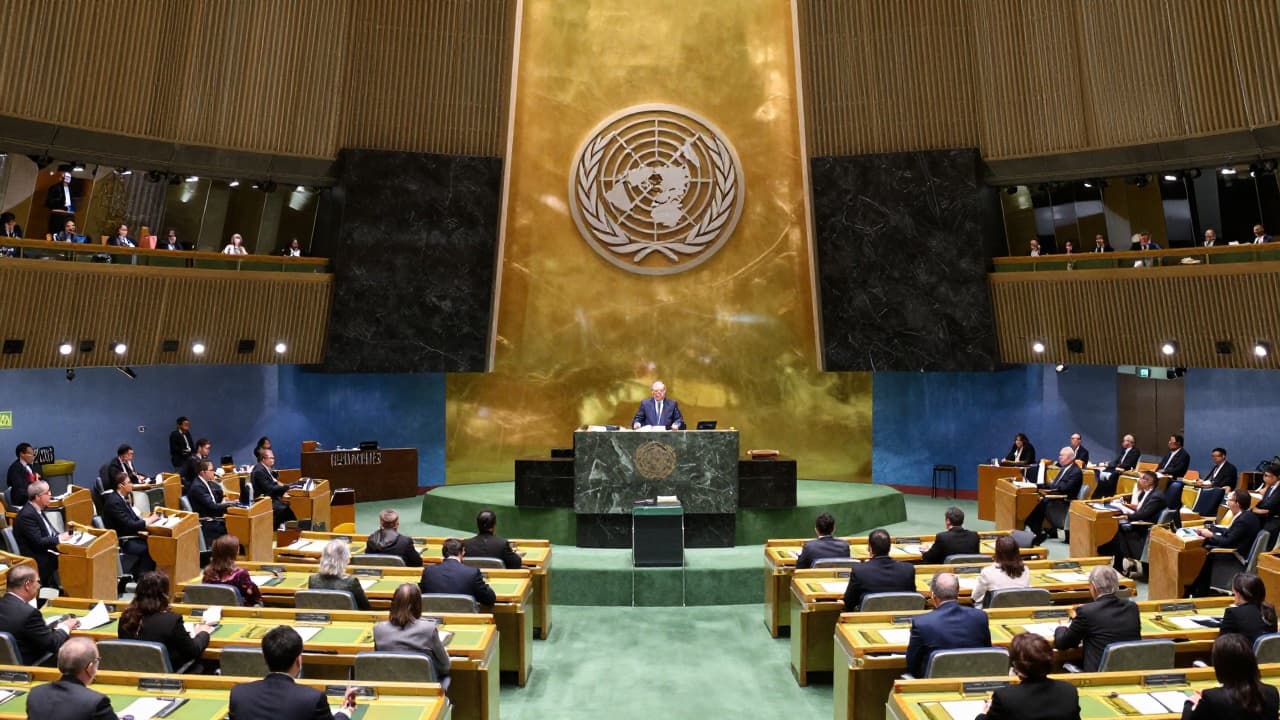
The six-day General Debate concluded on Monday, with the podium of the United Nations General Assembly hearing from numerous global themes. Yet one word stood above all others: peace.
The President of the General Assembly stated that leaders were facing a world of conflict, stalled development, deepening inequality, and rapidly accelerating technological change. He highlighted that leaders expressed a shared belief that the United Nations remains essential. Leaders spoke of peace as a urgent defence of the UN Charter, international law, and the protection of civilians.
The President warned that only a fraction of the Sustainable Development Goals (SDGs) were on track. Countries facing the heaviest burdens of debt, climate vulnerability, and fiscal constraints have the least influence over the institutions shaping the global economy. He specifically pointed to the treatment of civilians, minorities, migrants, and refugees, as well as the exclusion of women and girls from education, employment, and public life.
Artificial intelligence was the subject of debate for more delegations than climate change or human rights. Just four years ago, only five delegations mentioned artificial intelligence in the Assembly Hall, whereas this year 128 delegations did so. The President highlighted: "No machine possesses democratic legitimacy. No algorithm inherits constitutional responsibility." Governance must remain human-centric, inclusive, and accountable to developing countries.
Africa remains excluded from permanent membership in the Security Council, which the President described as an injustice. He delivered a message that multilateralism must be judged by results, not by process. "Trust cannot be commanded. It must be earned through consistency between words and deeds," he said.
According to the Assembly President, 194 speakers took to the floor during the 2026 General Debate. Among the speakers were 113 heads of state and government, one crown prince, 11 vice-presidents, seven deputy prime ministers, and 48 ministers.
Monday marked the close of the General Debate, not the session of the General Assembly. From 1 October to December, the 193-member Assembly will delve into its substantive work, debating global issues, electing key officials, and considering the UN budget. Most detailed negotiations and drafting will fall to the six main committees, in which each member state is represented, covering themes from disarmament and international security to economic, financial, humanitarian, and social issues.
Following the recommendation of the Security Council, the General Assembly will appoint the next UN Secretary-General, who will succeed António Guterres on 1 January 2027. The President concluded the debate with the words: "This is only the beginning of the session."