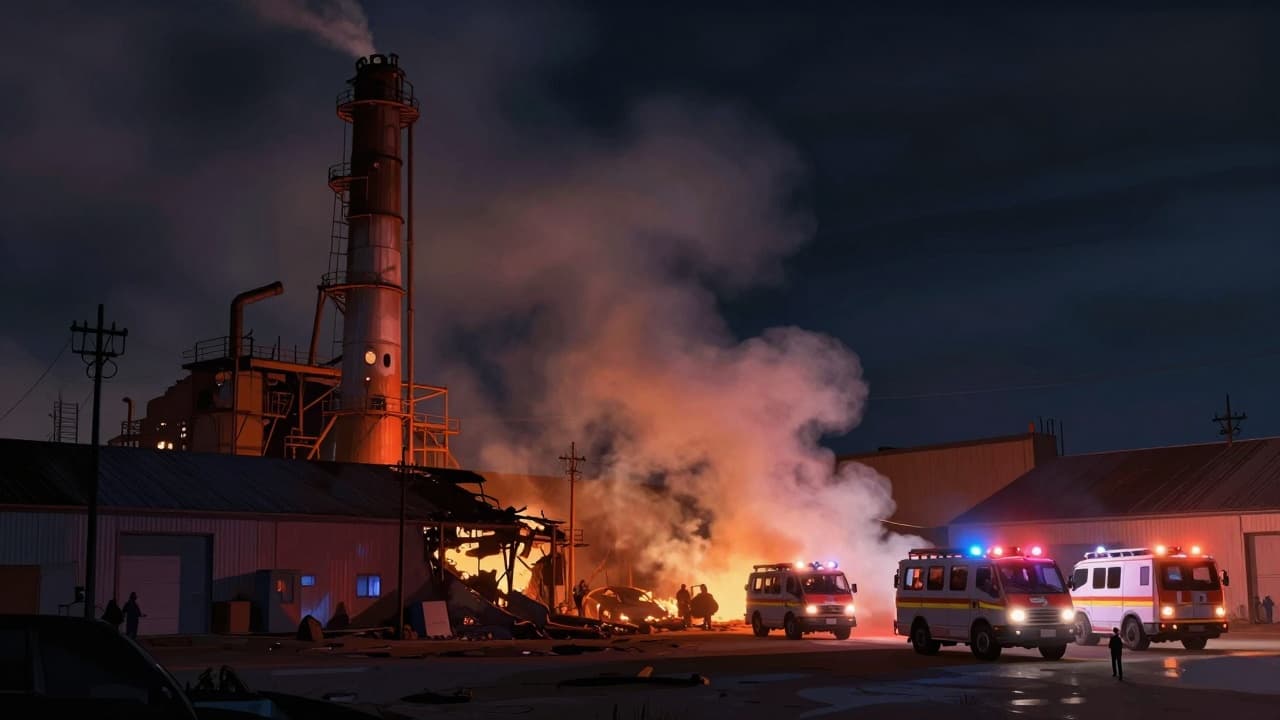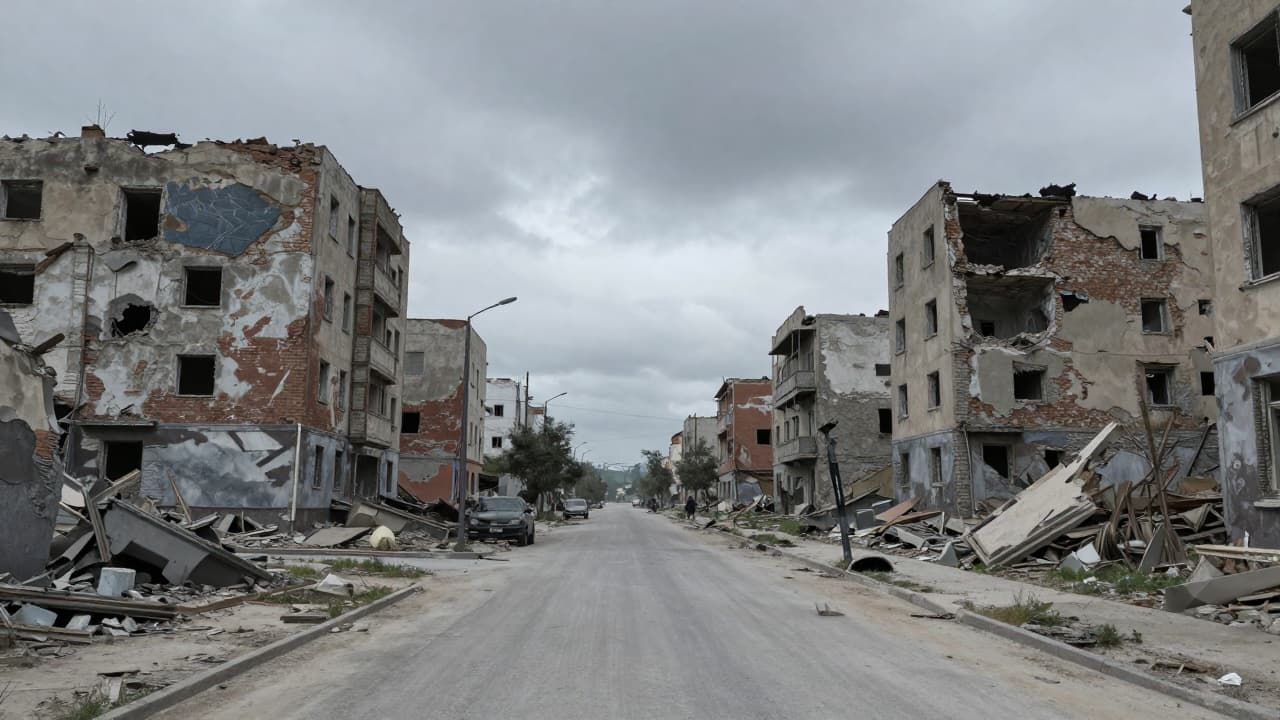
Russian President Vladimir Putin has proposed a humanitarian mission in the city of Kostiantynivka in the Donbas, modelled on the recent operation in Oleshky. Putin claims that Russia controls the city and that the remaining civilian population should be evacuated, adding that clearing access routes would take five days.
Under Putin’s proposal, representatives of Ukrainian and Russian human rights institutions, as well as foreign media representatives, would be included in the mission. Russia announced in July that it had captured the city, but offered no evidence for this claim. The Ukrainian side states that fighting for Kostiantynivka is still ongoing, while experts from the Ukrainian analytical project DeepState highlight that the city is under the control of the Ukrainian army, but that the situation there is “extremely difficult”.
Ukrainian President Volodymyr Zelensky stated that Putin wants to induce Ukraine to abandon Kostiantynivka, after which Russian forces would enter the city and take full control of it. He emphasised that Ukraine has always allowed the civilian population to leave the city. He added that the Oleshky case showed that Moscow used the ceasefire achieved there to deliver military equipment and weapons into the city, and according to satellite imagery, Russians deployed numerous different weapon systems in Oleshky and strengthened their positions.
Putin’s proposal comes at a time when contacts are taking place between Russian leadership and US representatives, who are negotiating the end of Russia’s war against Ukraine. The idea of a mission in Kostiantynivka is also being promoted through American mediators. According to experts, Moscow is showing a willingness to reach an agreement, but at the same time is promoting its own interpretation of the situation on the battlefield.
Oleksandr Kovalenko, a military expert at the Dmytro Tymchuk Centre for Security Studies, sees a contradiction in Putin’s statements. He believes that if Russia allegedly fully controls the city, it should carry out the appropriate humanitarian operation itself. In his view, Putin’s statements about the city do not correspond to the actual state of the battlefield, and Moscow simply wants to use the humanitarian issue for manipulation and to strengthen its negotiating position. Kovalenko also believes that the Russian army wants to buy time to strengthen the units fighting for the city.
Yevhen Zaharov, head of the Kharkiv Human Rights Group, stated that he fears the Russian proposal has entirely different goals than those stated. He assessed Putin’s initiative as suspicious and advises the Ukrainian side to approach it with extreme caution.
Military analyst Denis Popovych stated that if Ukraine rejects the mission, it will be accused of rejecting peace proposals, of not caring for its own citizens, and of Zelensky wanting to continue the war. The ceasefire in Oleshky lasted from 27 October to 1 November, and the Ukrainian General Staff reported that during that ceasefire, the Russians carried out a rotation of units, fortified their positions, strengthened anti-drone defence measures and delivered ammunition. Popovych warns that the shelling of Kherson is currently being monitored and that there is a danger that the enemy could significantly intensify operations in the direction of Kherson. He cited the Easter ceasefire declared by Putin in 2025 as another example, after which the Russians continued to advance towards Pokrovsk.
Kovalenko is convinced that the Russians want a breather because they are gradually losing positions in Kostiantynivka. He claims that the Russian army, which is attacking the city, urgently needs reinforcements, but cannot obtain them due to the fighting. He warns that the so-called humanitarian mission in Kostiantynivka would be a catastrophe for Kyiv because Russia would use that time to concentrate forces that would enable it to capture the city.
Kostiantynivka is the southernmost city of the so-called fortified belt of Donetsk Oblast, which also includes Druzhivka, Kramatorsk and Sloviansk. Capturing Kostiantynivka would open the way for the Russians towards Druzhivka, and then towards the Sloviansk–Kramatorsk urban agglomeration. Kovalenko compares the strategic role of Kostiantynivka with that of Bakhmut, Avdiivka and Chasiv Yar, whose defensive systems have successfully stopped Russian forces for years.
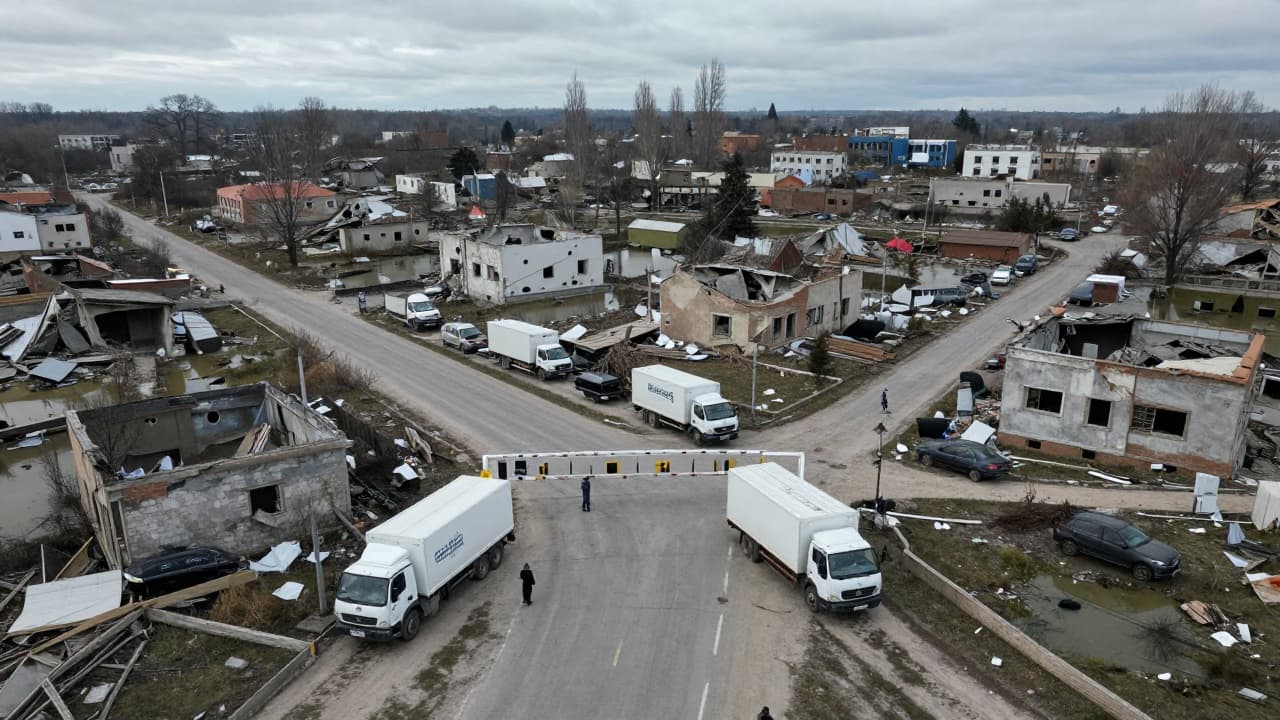
Before the Russian invasion, the city of Kostiantynivka had a population of around 70,000. According to local authorities’ data, approximately 340 civilians remain in Kostiantynivka. The city has no centralised water, electricity or gas supply, and public transport is not operating. Since spring 2026, evacuation from Kostiantynivka has been possible only on foot.
Denis Popovych says that people who have remained in Kostiantynivka need evacuation and a chance for a better life. Without a ceasefire, evacuation from Kostiantynivka is almost impossible because Russian forces have occupied the road between Kostiantynivka and Druzhivka, and drones are operating across the entire area. Ukraine cannot carry out such an operation independently.