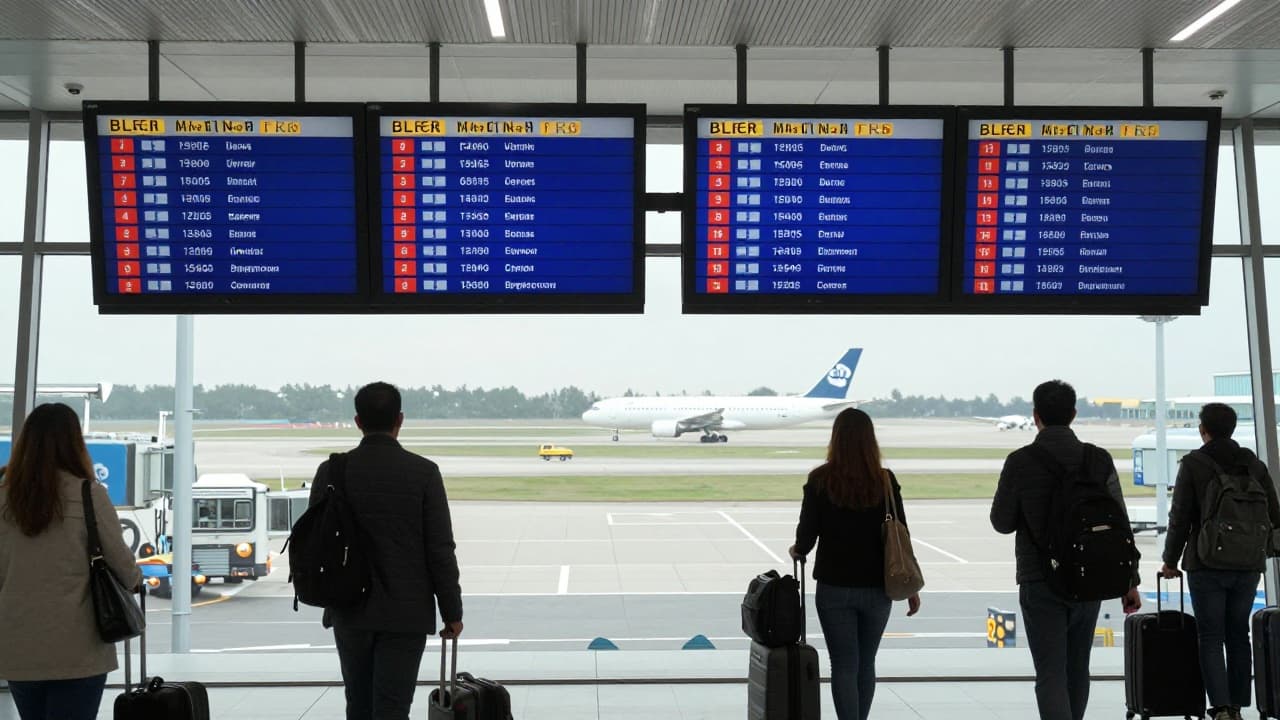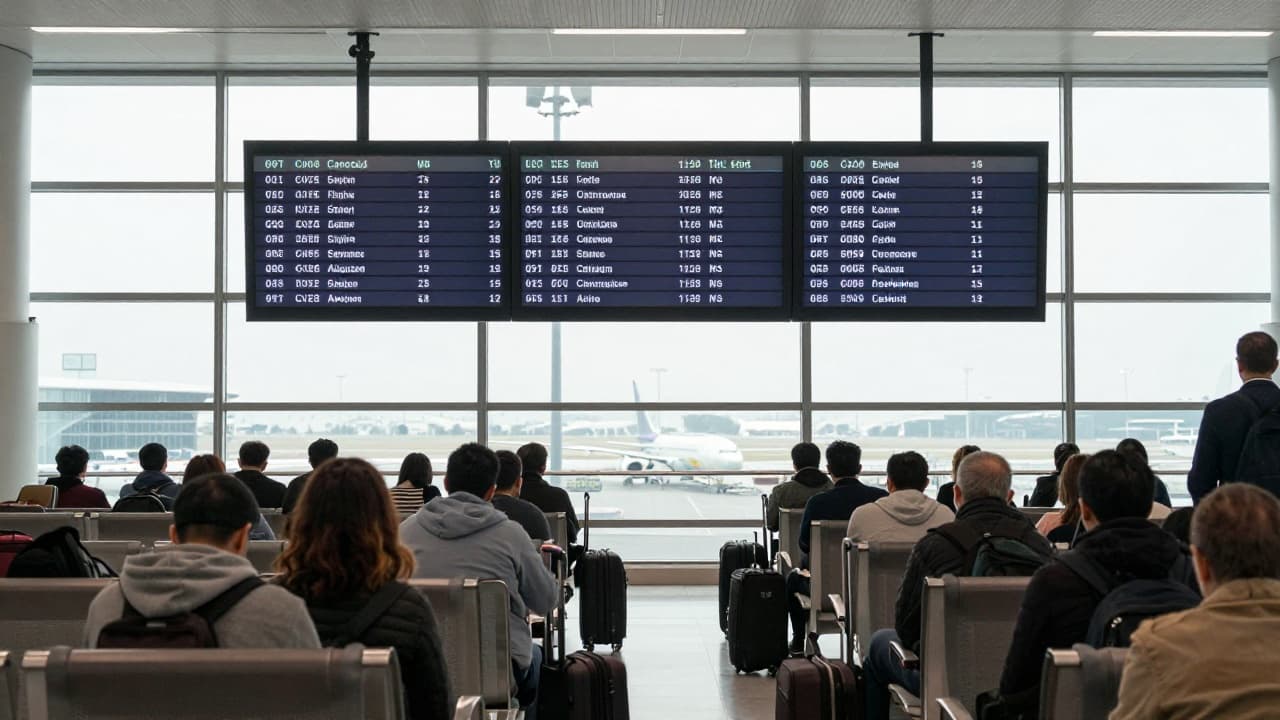
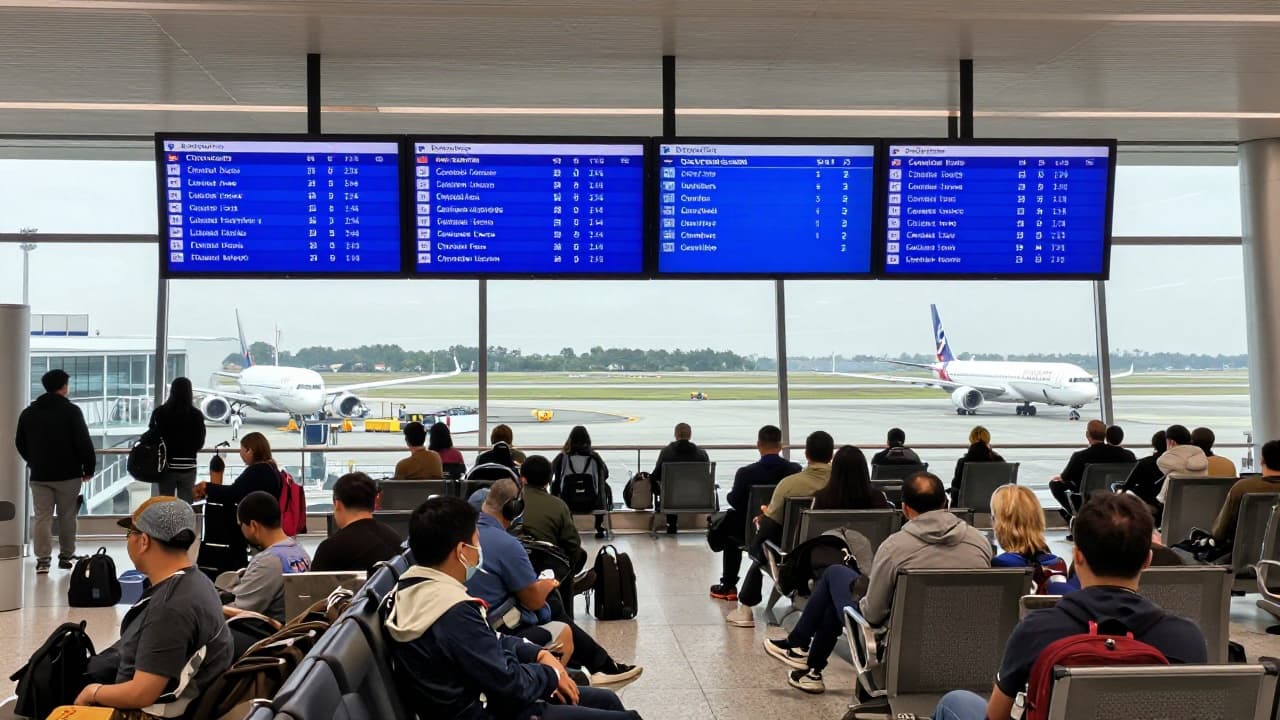
Disruptions to air traffic in the United States continued for a third day, with more than 5,200 flights affected on Sunday alone, according to data from the website FlightAware. More than 1,600 flights were cancelled across the country on Sunday, while nearly 3,600 flights were delayed. The day before, on Saturday, airlines cancelled more than 6,400 flights, and more than 8,000 flights were delayed.
Transportation Secretary Sean Duffy predicted a return to normal conditions by Monday. In an interview on ABC's "This Week", he stated that there is no evidence of a cyberattack or other malicious intent, but emphasised that the cause of the incident remains unclear. Duffy said that air traffic would "return to normal" on Sunday, and would "likely return to full normality" on Monday. He also stressed that the priority of the Federal Aviation Administration (FAA) is passenger safety.
Airlines are attempting to restore their regular flight schedules following the complete suspension of air traffic. On Sunday, 27 per cent of JetBlue's flights and 13 per cent of American Airlines' flights were cancelled. Southwest, United Airlines and Delta reported cancelling between 3 and 5 per cent of their flights.
The FAA issued an order on Friday to completely suspend air traffic nationwide. Due to this order, nearly all departing flights were grounded for almost five hours. It was the longest suspension of air traffic in the US since the Al-Qaeda terrorist attacks on the United States on 11 September 2001.
The installation of at least one new router in a remote facility, carried out by an external FAA contractor, the company L3Harris, resulted in overloading at other air traffic control centres. The systems were flooded with data, which disrupted communication systems. On Sunday, Duffy explained that the replacement of a router at the FAA facility in El Dorado, Arkansas, caused problems with another recently replaced router in Amarillo, Texas. That device began transmitting data that overloaded routers at other air traffic control centres across the country.
"Functionality of the original routers" was disabled, the Federal Aviation Administration (FAA) announced on Sunday. The FAA added that the same was done for another approximately 60 similar routers in the air traffic control system. The FAA still does not know exactly what caused the problem during the maintenance work. Maintenance work has been carried out thousands of times previously without any difficulties, Duffy said. He also said that the worker who installed the router is considered a "good American patriot and veteran" and that they do not believe anyone attempted to sabotage the network during the installation. Duffy added that they have not yet determined the true cause of the problem.
The outage, observed on Friday, is the latest and most drastic indicator of the strain on the US air traffic control system. The US air traffic control system faces outdated technology, equipment and communication system problems, as well as a shortage of several thousand air traffic controllers. The routers that experienced problems were purchased in 2001 and were already outdated by 2006, Duffy said.
Since Friday, Duffy has called for $50 billion to be secured for the upgrade of the air traffic control system, an increase from his earlier request of $30 billion. Congress approved $12.5 billion last year, but Duffy said that those funds were intended exclusively for certain costs and do not include funds for new air traffic management software.