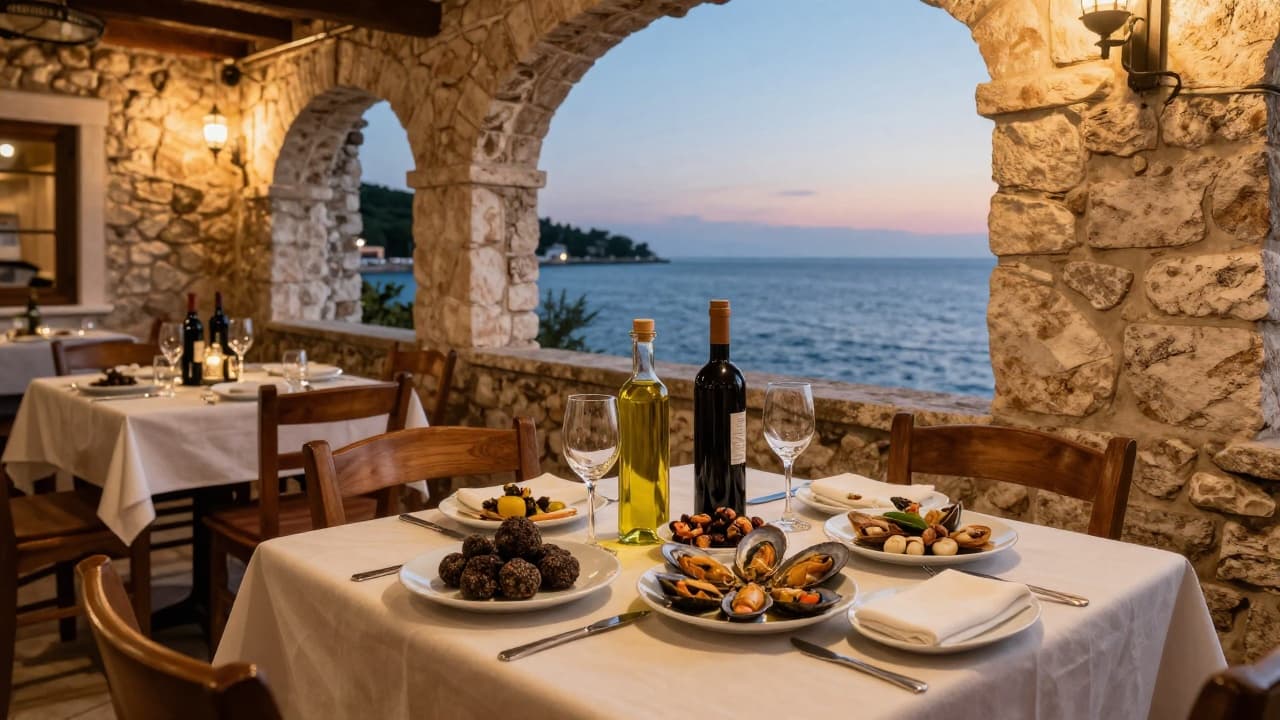
Gastronomy is an integral part of the experience of any destination and a increasingly important element in the research and interests of modern tourists. The local experience is very often linked to the enjoyment of the specific culinary characteristics of a location, with the best examples of branding national cuisines on a global level being countries such as France, Italy and Greece.
Current global data shows that the average tourist currently spends between 20 and 30 per cent of their budget on food while travelling, and an increase in this trend of spending on culinary offerings is expected in the coming period. Croatia has a comparative advantage in its culinary offerings due to the Mediterranean climate. The diversity of ingredients, culinary traditions incorporating elements of different cuisines, and traditional cooking skills impress the large number of guests visiting Croatia.
Istria is a prime example of how gastronomy can become a driver of tourism. In Istria, the branding of culinary offerings has been taken seriously for over a decade, representing a successful synergy between the private and public sectors working towards branding Istria as the most desirable culinary destination in Croatia and the Mediterranean. Istria has developed its unique culinary offerings in a quality and systematic manner, with private investments in venues and offerings, as well as the activities of the county, tourism boards, and the promotion by travel agencies, all playing a role in this development.
Poreč is perhaps the best example of how quickly gastronomy can transform the offerings of a town. Poreč has long been one of the pillars of domestic tourism, but it is only in recent years that it has begun to develop its culinary scene. Previously, the culinary offerings were very limited, with many restaurants offering very similar food. In recent years, a true 'boom' of high-quality restaurants has occurred in Poreč, elevating the destination to a new level.
Nenad Velenik, director of the Porech Tourist Board, stated that gastronomy and wine are now one of the most important elements of Porec's identity. He highlighted that gastronomy and wine have evolved from being secondary features to becoming a key motivation for visiting and a significant part of the destination experience. According to him, Porec has successfully created a recognizable tourist value from local products, wine, olive oil, and traditional cuisine. He added that through gastronomy, guests best experience the region's traditions, people, and way of life. Velenik noted that Porec is now receiving a strong new culinary dimension with the opening of restaurants such as Jaza, Harris Piccola, Miram by Fratelli Cerea, and the new Spinnaker, with the development of Pical and the arrival of renowned chefs, further raising the bar of quality and positioning Porec as a destination where luxury tourism is increasingly linked to fine dining.
Boris Žgomba, president of the Association of Travel Agencies at the Croatian Chamber of Commerce (HGK) and a member of the executive board of the European Association of Travel Agencies, believes that the connection between gastronomy and tourism is key to the success of Istria in the tourist market. He stated that Istria is one of the best examples in Croatia of how a tourist destination can develop from a primarily 'sun and sea' product to one that offers guests a much wider and higher quality experience, with gastronomy and wine playing a crucial role. Istria has successfully connected local ingredients, truffles, olive oil, wine, small producers, traditional taverns, and high-end restaurants into a single, recognizable story, according to Žgomba. Today, when speaking of Istria, gastronomy is no longer just an addition to the tourist offering, but one of the elements that define it, he stated.
Such an offering attracts a profile of guest who seeks more than just a holiday by the sea. These are guests who wish to explore the destination, its way of life, people, and local products, visiting wineries and restaurants, and are willing to spend more for a high-quality and authentic experience. Žgomba stated that such a guest is important in the context of developing year-round tourism, as wine, gastronomy, olive oil, and truffles are not products tied exclusively to July and August. He noted that gastronomy is becoming an increasingly significant segment of the tourism market, although the sea and climate will remain among the main reasons for visiting the Mediterranean for a long time. The way guests choose between quality destinations has changed significantly, as more and more people seek experience and authenticity, according to Žgomba. Guests want to know where they will eat, what they will taste, what wine they will drink, whether they can visit a local producer, and what they will take away as a memory from the destination, he added. For a certain segment of guests, gastronomy is already one of the key factors in choosing a destination, he concluded.