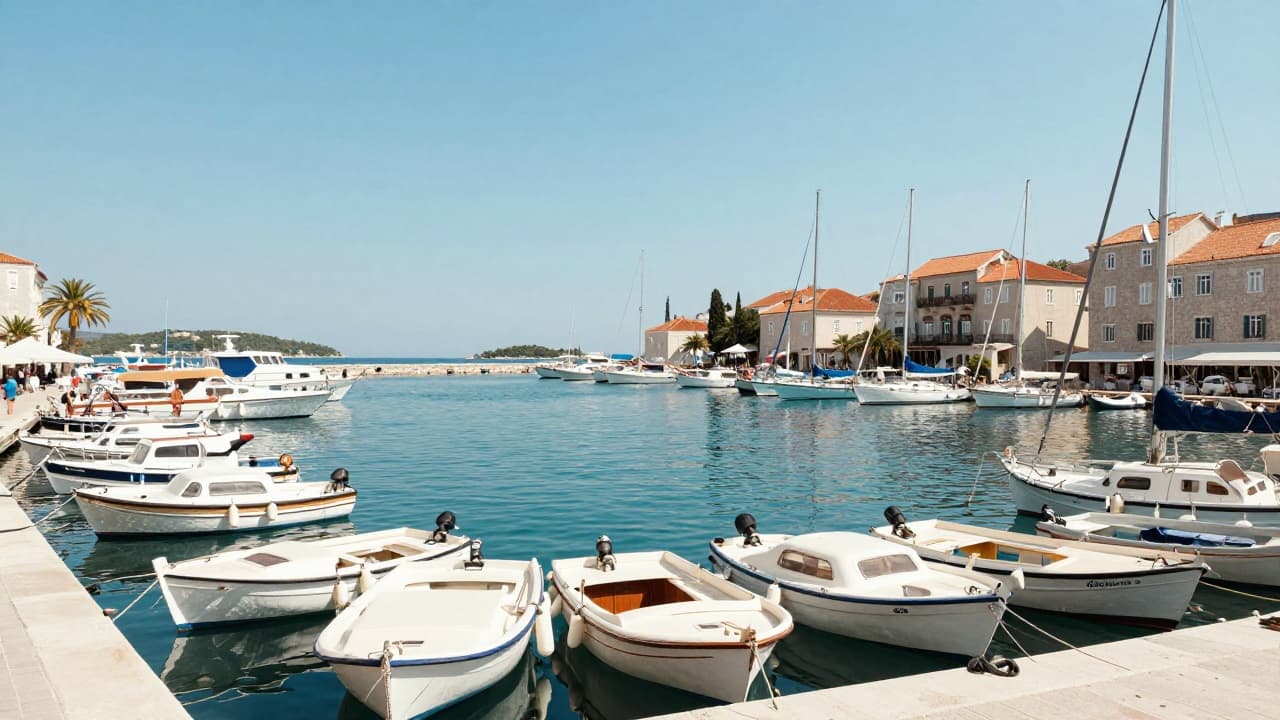
Croatia recorded 0.5 per cent more tourist nights in the first six months of the year compared to the same period last year, according to data from the State Institute of Statistics. In the period from January to the end of June, just under 26 million nights were recorded in tourist accommodation, 120,000 more than the previous year.
At the level of the entire European Union, the number of nights increased by 1.7 per cent, which means that the growth in Croatia was significantly lower than the EU average. Among countries recording strong growth, Malta stands out with 9.9 per cent and Albania with 9.1 per cent, while Slovenia grew by 5.7 per cent and Italy by 3.1 per cent. Spain and Montenegro recorded more moderate growth of 1.5 per cent each, Greece by 1.4 per cent and Portugal by 0.9 per cent. On the other hand, Bulgaria recorded a decline of 1.7 per cent and Cyprus 7.7 per cent.
Looking at domestic and foreign guests separately, the number of nights for domestic guests increased by 7.7 per cent in the first six months, while foreign tourists recorded 0.6 per cent fewer nights than last year. In Italy, the nights of foreign tourists increased by 4.4 per cent, in Slovenia by 6.9 per cent, in Malta by 11.7 per cent, in Albania by 8.7 per cent, in Greece by 1.7 per cent and in Spain by 1.4 per cent.
Data for later months show that Croatia had 8.6 per cent more commercial nights in the first five months than last year, but in June the number of nights fell by 6.1 per cent, and nights by foreign tourists by 7.5 per cent. The Croatian Bureau of Statistics (DZS) recorded 25.3 million commercial nights in July, which is 1.2 per cent more than in July last year, thus raising growth in the first seven months to 0.8 per cent. Nights by foreign guests in the first seven months were only 0.2 per cent above the previous year.
According to the eVisitor system, Croatia had 17.5 million arrivals in the first eight months and 90.5 million nights, with both arrivals and nights increasing by around one per cent. On the Adriatic coast, the growth in nights was 0.5 per cent. In August, 31.4 million nights were recorded, 0.5 per cent more than last year, and in commercial accommodation by the end of August 78.6 million nights, also around 0.5 per cent more. Hotels had around 20 million nights and a growth of 2.7 per cent, while almost 34 million nights in private households were at the level of the previous year.
Eurostat has stated that Croatia is the most seasonal tourist country in the entire EU, with 54.5 per cent of all tourist nights in 2025 occurring in July and August. The EU average was 31.1 per cent, in Greece 41.6 per cent and in Bulgaria 43.4 per cent. In August, last year 41 times more nights were recorded than in January.
The European Travel Commission states that international tourist arrivals in Europe are growing by around 5 per cent, and the number of nights in Europe is growing by 4.8 per cent. The Ministry of Tourism has warned that guests on the key German market are highly sensitive to the price-quality ratio. The Ministry of Tourism states that in the first eight months 7.41 billion euros were recorded, 17.6 per cent more than in the same period last year, and the number of fiscalised receipts increased by 5.7 per cent. According to the latest data published by the Croatian National Bank (HNB) for the first quarter, income from foreign tourists was 945.2 million euros, 9.2 per cent higher than the previous year.