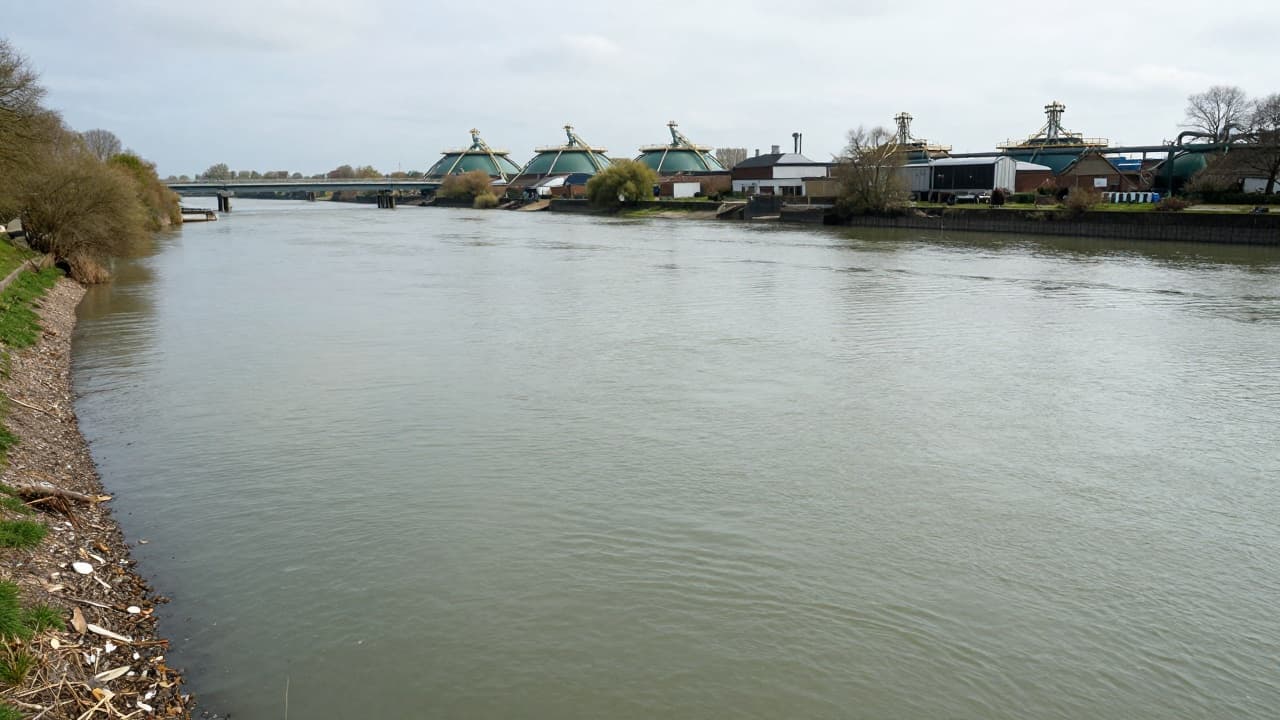
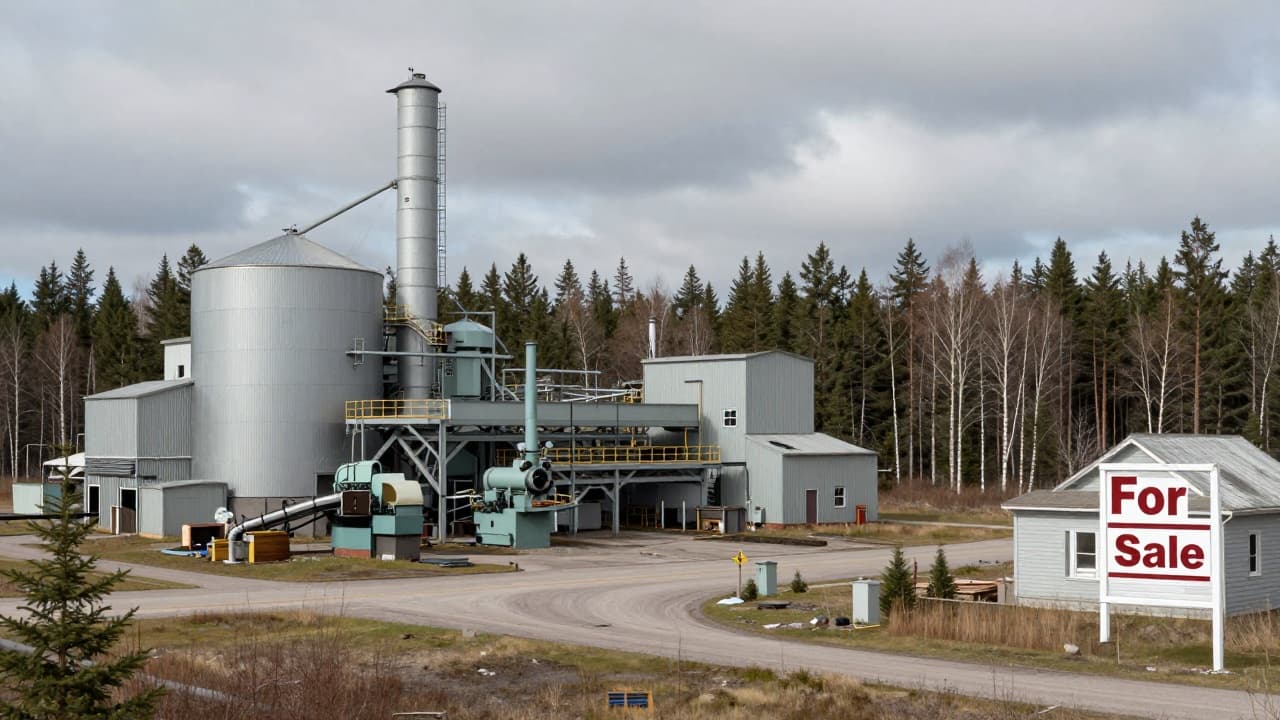
A century-old paper mill in Témiscaming, Quebec, has been closed indefinitely, leaving hundreds of people unemployed. The plant has stood idle after trade negotiations between Canada and the United States broke down and President Donald Trump imposed additional tariffs on the country.
In early October, American owner RYAM carried out an "economic shutdown" of the plant for an "indefinite period". RYAM bought the mill in 2017 and, in an email to the BBC, declined to comment on a potential sale of the facility or prospective buyers. Most of 360 employees have lost their jobs, with workers currently staying afloat through partial payments from a government assistance programme for tariff-affected workers.
Témiscaming was built more than a century ago around the mill and the region’s forests, which are full of pine, birch, spruce and fir. The plant is the main employer and economic anchor of the town, and its closure has almost overnight crashed property values. "For Sale" signs are scattered across the yards of the modest middle-class homes that make up most of the town. There is also fear that key service workers, from shopkeepers to doctors in the small local hospital, may also leave.
"If the mill fails, the town will turn into a ghost town," said Ronnie Raymond. Nadine Suley, who later headed out moose hunting to make use of the short season, says that US tariffs on her town feel like a "personal attack".
Stéphane Lefebvre is an employee and union leader whose father and grandfather also worked at the mill. One local contractor told the BBC that he has already had to lay off 13 people. Workers are forming a coalition of residents who want to buy the facility from RYAM.
The town last faced such an existential threat in 1973, when the then American owner threatened to close the mill. Local workers and managers then banded together to buy the plant and turned it into Tembec, a Quebec-owned company with branches across North America and in France.
Mayor Alain Gauthier calls US tariffs a "bomb aimed at extinguishing our production in Canada". He wants Ottawa to retaliate with its own tariffs on boards coming from the United States into Canada, which are currently duty-free.
US tariffs of up to 50 per cent have directly hit industries such as steel, aluminium, cars, and the wood, pulp and paper sectors. Canada’s national unemployment rate has largely remained stable at around 6.5 per cent since Trump’s tariffs were first introduced.
Industry Minister Mélanie Joly threatened the company Stelco with financial penalties or forced sale of assets if it continues with planned layoffs of around 500 workers due to tariff pressure on steel. Stelco, in Hamilton near Toronto, is owned by American company Cleveland-Cliffs, which pledged to keep jobs in Canada when it bought the firm in 2024. Carney and Ontario Premier Doug Ford announced nearly 9 billion Canadian dollars (£4.8 billion; $6.4 billion) in support for Ontario’s steel and automotive sectors.
Sébastien Lemire is the elected representative for Témiscaming from the Bloc Québécois party. A spokesperson for Minister Joly told the BBC in a statement that the government has made 400 million dollars available to support the forestry sector in rural and remote areas.