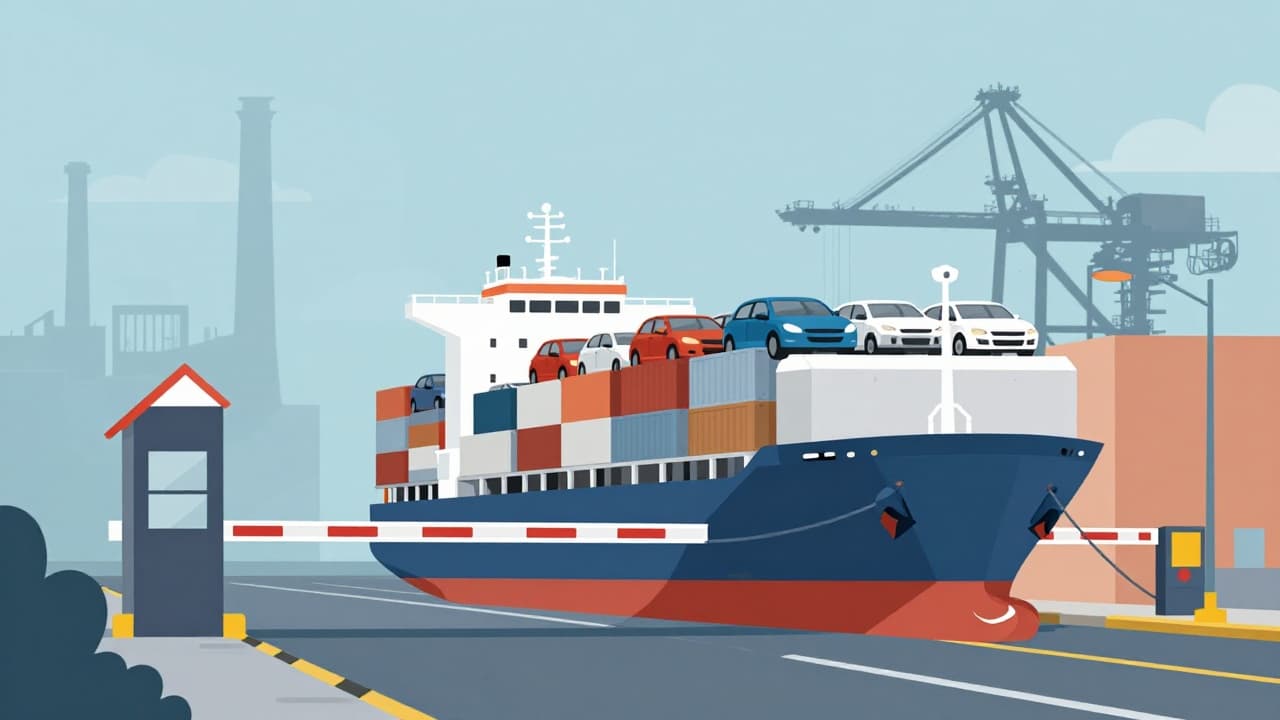
More than a year after Donald Trump's administration imposed sweeping tariffs on vehicles, most manufacturers are choosing to pay the levies rather than investing billions in new US factories, CNN reports.
Toyota announced last week that it would move half of the production of its best-selling pickup, the Tacoma, from Mexico to an expanded plant in San Antonio. Trump hailed the move as proof that "tariffs work", but Toyota says the tariff policy was not the decisive factor, but rather a long-term strategic decision.
The share of imported vehicles in the US market stood at 46 per cent last year, only slightly less than the 47.7 per cent in 2024. Part of that decline is due to the gradual withdrawal of cheaper imported models such as the Nissan Versa from sale.
"Building a factory is a massive commitment and it would be close to foolish to embark on it hastily. Therefore, the safest option is to do nothing," said Ivan Drury, director of analytics at the Edmunds car buying site.
Tariffs are cutting into profits significantly. Toyota paid $8.4 billion in tariffs over the past financial year, as a result of which its North American business moved from profit to loss. General Motors paid $3.1 billion in 2025, while Ford paid $1 billion.
The tariffs are not without effect, however. General Motors has announced the relocation of the assembly of two SUV models from Mexico to the US, and one Buick model imported from China will be replaced by a vehicle produced in America. This production, however, will take place in existing factories in Kansas and Tennessee, not in new ones.
Further uncertainty is introduced by the renegotiation of the US-Mexico-Canada trade agreement (USMCA): Trump announced last month the possibility of withdrawing from the agreement if it does not change in favour of US companies. The association representing General Motors, Ford, and Stellantis called for a "quick and permanent solution" that would give the industry long-term security for capital-intensive investments.
Experts estimate that replacing imports with new local factories would take years and cost billions of dollars, with labour costs higher than in Mexico. Trade policies can change faster than a factory can be built, and sales rose by two per cent last year despite record prices, so manufacturers find it more profitable to continue importing.