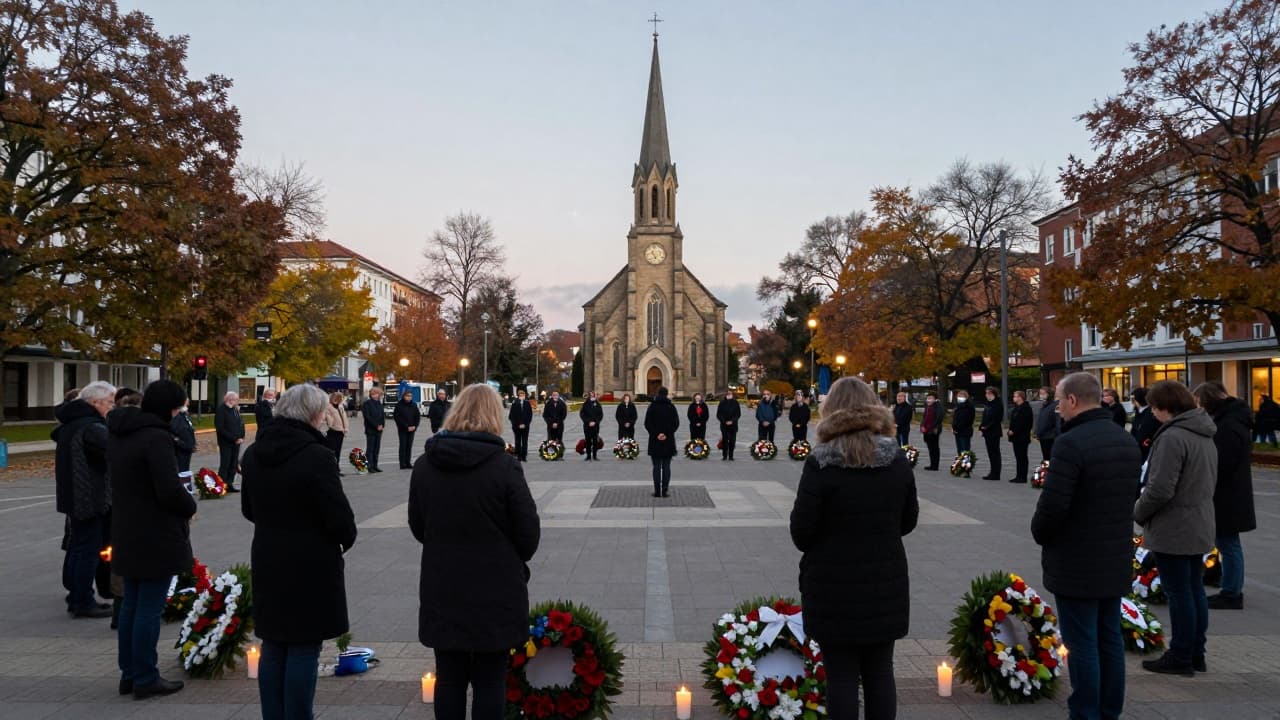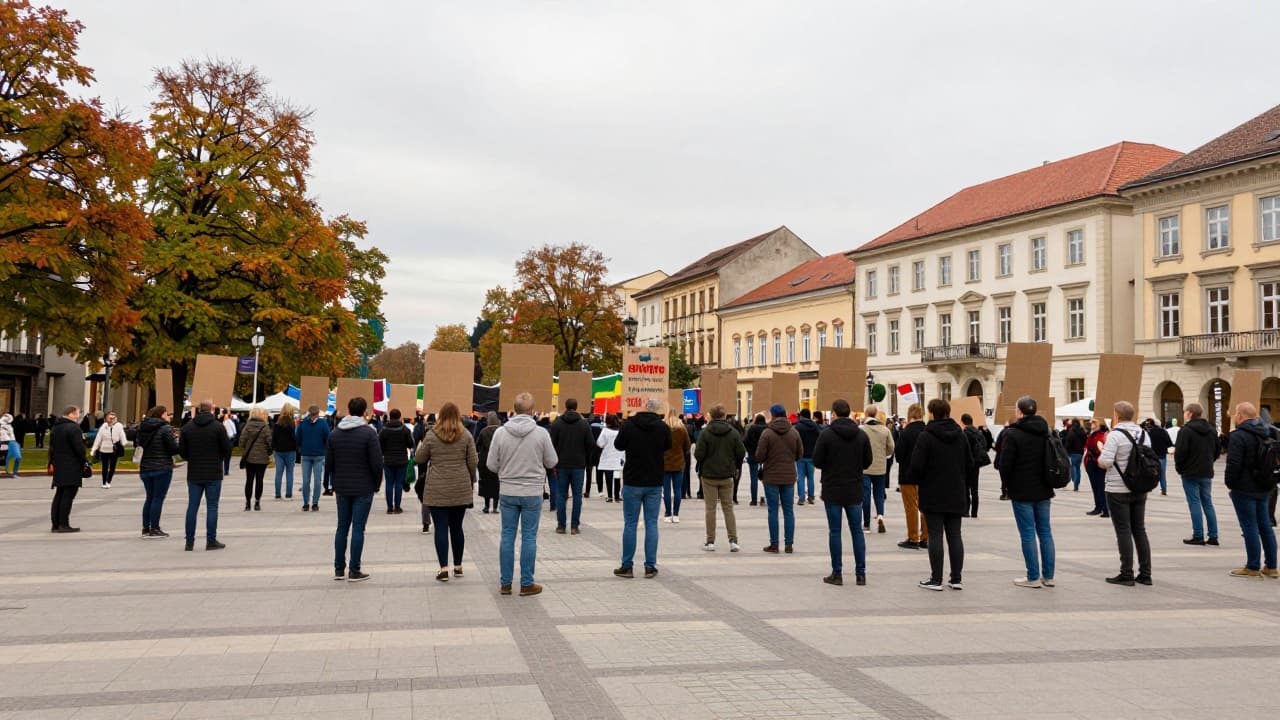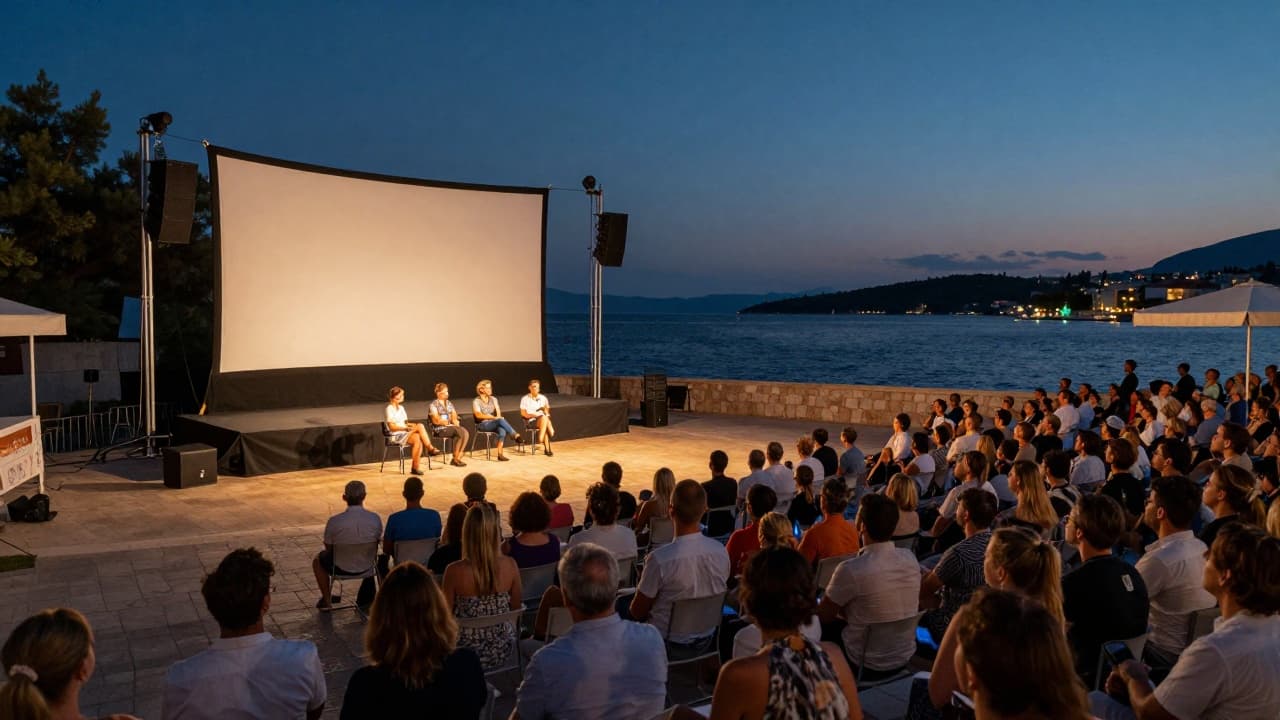
The left-wing festival Korčula after Party (KaP) has been held for the eighth year in the summer cinema in Korčula. The first evening of the festival was marked by fierce verbal exchanges between parts of the audience and the participants in the debate 'Return to the past: revisionism and hatred'.
The debate featured literary critic and publicist Katarina Luketić and Robert Botteri, editor-in-chief of the Slovenian weekly Mladina, with historian and writer Dragan Marković moderating. The debate turned into a heated argument in which individuals in the audience accused Botteri of being responsible for the breakup of Yugoslavia and the subsequent rise of capitalism and nationalism in the Balkans due to the magazine's covers and articles in the late 1980s. Botteri partially acknowledged the accusations from the audience.
Marković opened the debate by asking how it was possible that, today, with religion once again socially powerful and influential in the post-Yugoslav countries, there was such heightened hatred and intolerance towards minorities, including migrants. Luketić stated that this happened because someone had been working on it for thirty or even forty years, since the 1980s, with the turning point occurring in the 1990s. Luketić stated that identities were called into question, and that this was a triumph of revisionism, primarily in Serbia, but also in Croatia and Slovenia. She explained that in Croatia, at a certain point, Serbian nationalism was equated with Yugoslavism, leading Croatia to easily discard its Yugoslav legacy, while the entire Yugoslav narrative was demonised.
Botteri noted that Slovenia was the first to realise what was happening in Serbia in the mid-1980s and was the first to refuse further participation in the Yugoslav project. He stated that in the late 1980s, two currents of critical thought emerged in Slovenia: nationalist and civic. Mladina belonged to the latter. By 1991, they had not been selfish towards Yugoslavia, but believed that Yugoslavia needed to be democratised, Botteri said, adding that it was clear in the mid-1980s that Yugoslavia would collapse if it were not democratised. No one at the time spoke of an independent Slovenia, but after the conflict with the JNA and the Serbian nationalist line, the civic movement in Slovenia abandoned the Yugoslav project. Then, the right wing gained the upper hand, pushing Slovenian politics to the right, Botteri said, recalling that the League of Communists of Slovenia had left the Congress of the League of Communists of Yugoslavia in Belgrade, concluding that they could no longer stay together.
Marković noted that civil society in independent Croatia had developed around the protection of liberal values and freedoms, without the desire to reference the achievements of socialism. In recent times, the right and the Church have entered civil society, so women's rights, which had already been achieved in socialism, came under attack. Luketiš responded that she did not believe that Yugoslavia was a 'Belle Époque', as despite all the liberalisation, there was an undercurrent of national ideas. Research showed that in Croatia, there was not a large social distance from Serbs, Luketiš said. The right-wing civil society was now seeking to abolish women's rights, she added, noting that this had been attempted in the early 1990s by Ante Baković, but it had looked ridiculous at the time. It was only with the takeover by Markić and their taking over of civil society that things began to change in a negative sense, Luketiš said.
Luketiš said that contemporary revisionism was not just a Croatian or Slovenian specific, but was happening across Europe. When we entered the European Union in 2013, it seemed that the right had been defeated and had faded away, and Europe was different then, Luketiš said. Today, more people are identifying with the nation than ever before in history, she warned. She recalled that in 2016, when Karamarko came to power, his culture minister, Zlatko Hasanbeg, had stated that anti-fascism was a mere platitude, which had resonated like a bomb. Today, almost every politician says the same, Luketiš said.
Marković asked Botteri how it was that a right-wing politician, Jane Janša, who had recently for the fourth time become the prime minister of Slovenia, was so eternal in the region. Botteri replied that Janša, in socialism, was a faithful party apparatchik. In the nineties, he unsuccessfully stood for election on the social democratic list, but later turned to nationalism, realising that it brought him more votes than social democracy. Botteri's comment prompted a new question from the moderator: why was social democracy no longer able to attract voters in the present day? Botelli responded that there were several reasons. The migration crisis of 2015 had helped the right to stoke fear, Botteri said, adding that the media wrote every day about how many migrants were arriving, how many were raping, etc. Then came the social media, which polarised the public, Botteri concluded.