Montenegro is underestimating Croatia's stance and is not making progress on resolving the open issues with the neighbouring country that are necessary for its entry into the European Union, according to Montenegrin analyst Danijel Kaležić in a conversation with Hina. Kaležić is a political analyst and scientist at the Institute of History of the University of Montenegro.
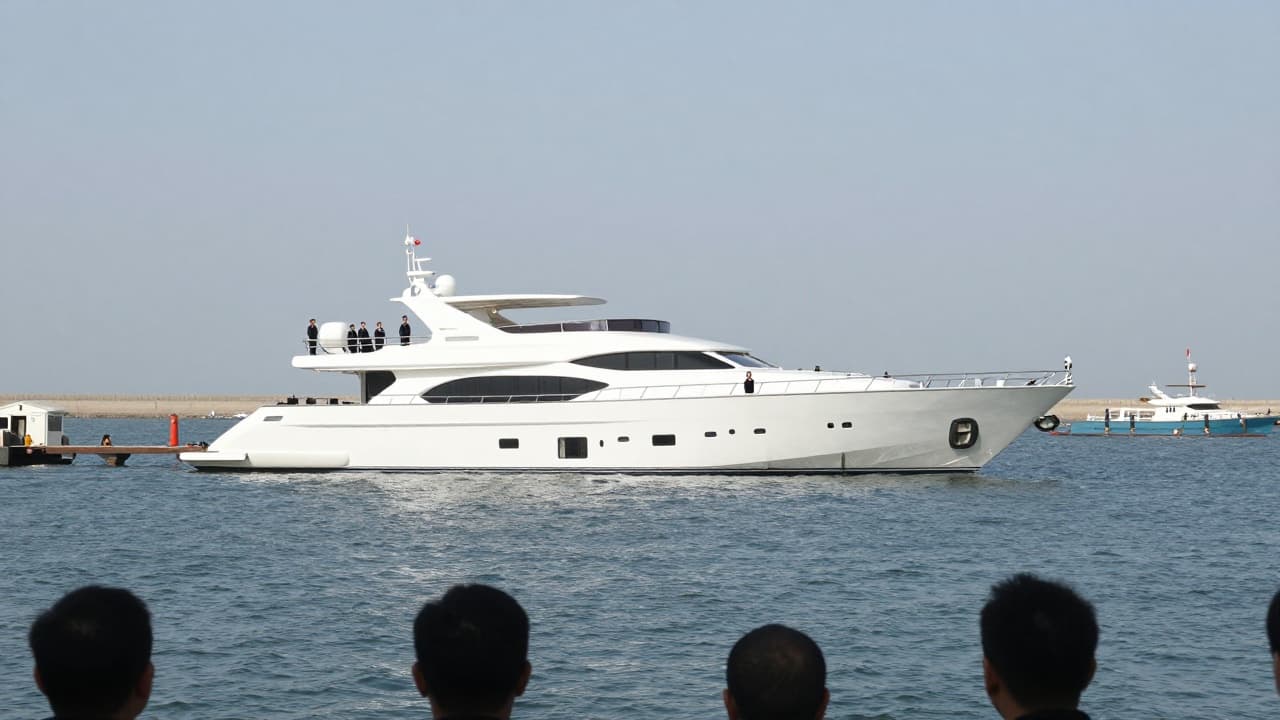
His assessment follows the visit to Montenegro by Croatian Foreign Minister Gordan Grlić Radman on Thursday. On that occasion, he stated that the vessel Jadran is not the only asset Croatia is claiming, and that Zagreb has documentation proving the asset is worth more than $2.7 billion.
Kaležić interprets this statement as a form of diplomatic threat, or an escalation in tone, in an attempt by Zagreb to further emphasise its dissatisfaction and the gravity of the situation. The message from the Croatian minister, he says, should be read as "a direct call to take the position and stance of the Croatian government seriously".
In addition to the succession of military property and the school ship Jadran, Croatia is seeking the resolution of a number of bilateral issues, primarily concerning the legacy of the Homeland War, border disputes, and administrative-legal matters. The Montenegrin side, Kaležić warns, "is greatly underestimating the positions and stance of Croatia, and is speaking too lightly about these issues".
As an example of progress not even being made at a symbolic level, Kaležić points out that the public pool in Kotor still bears the name of Zoran Gopčević, who, in the 1990s, was involved in the mistreatment of Croatian prisoners in the Morin camp. He highlights that history textbooks need to be revised to clearly and responsibly present the role of Montenegro and the participation of Montenegrin reserves in the aggression against Croatia in the 1990s. Confronting this responsibility is considered an important part of building trust between the two countries, as such steps would demonstrate that there is genuine political will to resolve the open issues.
The additional problem, Kaležević sees, is that the Ministry of Foreign Affairs is pursuing a policy that does not reflect the actual stance of the parliamentary majority, but rather seeks middle-ground solutions. "Such an approach is not sustainable. Diplomacy requires formulating and clearly presenting the political positions for which the government is responsible," he said. He adds that diplomatic middle-grounds are unlikely to bring real progress as long as parts of the parliamentary majority are sending messages that undermine relations with Croatia.
He also reflected on the statement by Prime Minister Milojko Spajić that Montenegro is the target of hybrid influence from two neighbouring countries, stating that it was made without concrete evidence. The Prime Minister, in Kalević's view, is responsible for clearly identifying the sources of the alleged hybrid action and explaining what the state is doing, all the more so as Montenegro lacks effective institutional mechanisms to counter such influences. "Spaić avoided naming those countries, thereby creating a certain confusion, from which an anti-Croatian campaign logically arises. It has been going on in Montenegro for some time, and outside it as well," he said. The aim, he claims, is to attribute responsibility for the problems in the relationship between the two countries solely to Croatia, while absolving Montenegro of any responsibility.
"Croatia has been a reliable partner, both in technical and political terms. It is natural that Montenegro goes to the European Union via Croatia and with its help," said Kalević. He believes that the existing problems, including those created by the current government, will be resolved by a new Montenegrin government after the 2027 elections.
The fact that Montenegro has not yet adopted the EU acquis and translated it into the Montenegrin language, Kalević sees as confirmation of the limited personnel and administrative capacity of Podgorica. He considers it good news that the European Commission is considering a temporary derogation from the rules, including the possibility that Podgorica be allowed to use one of the official EU languages, most likely Croatian. "It is in this area that Croatia can and should play a constructive role, providing expert assistance and sharing experience from its own accession process," he concluded.
The President of the European Commission, Ursula von der Leyen, visited Montenegro on Thursday. Kalević said that she arrived "at a time of growing political instability and crisis, which is the culmination of several factors, primarily the inability of the government to open a dialogue with the opposition with the opposition." Montenegro is thus entering the final stages of accession negotiations with the European Union, but also a new phase of political crisis following the resignation of the President of the Parliament, Andrija Mandić, who sent condolences to the family of war criminal Ratko Mladić, and then prevented the holding of a parliamentary session on which the opposition had proposed to decide on his dismissal. This move by Kalević is described as "the straw that broke the camel's back" and is judged to be "deeply undemocratic and contrary to the spirit of the Constitution of Montenegro".
The visit of von der Leyen is interpreted as an attempt to stabilise the political situation at a time when it is necessary to complete the final stage of the accession negotiations with the European Union. The clear message from Brussels is represented by concrete diplomatic gestures, including the absence of high-level European officials, including the President of the Commission, Ursula von der Leyen, and the European Commissioner.