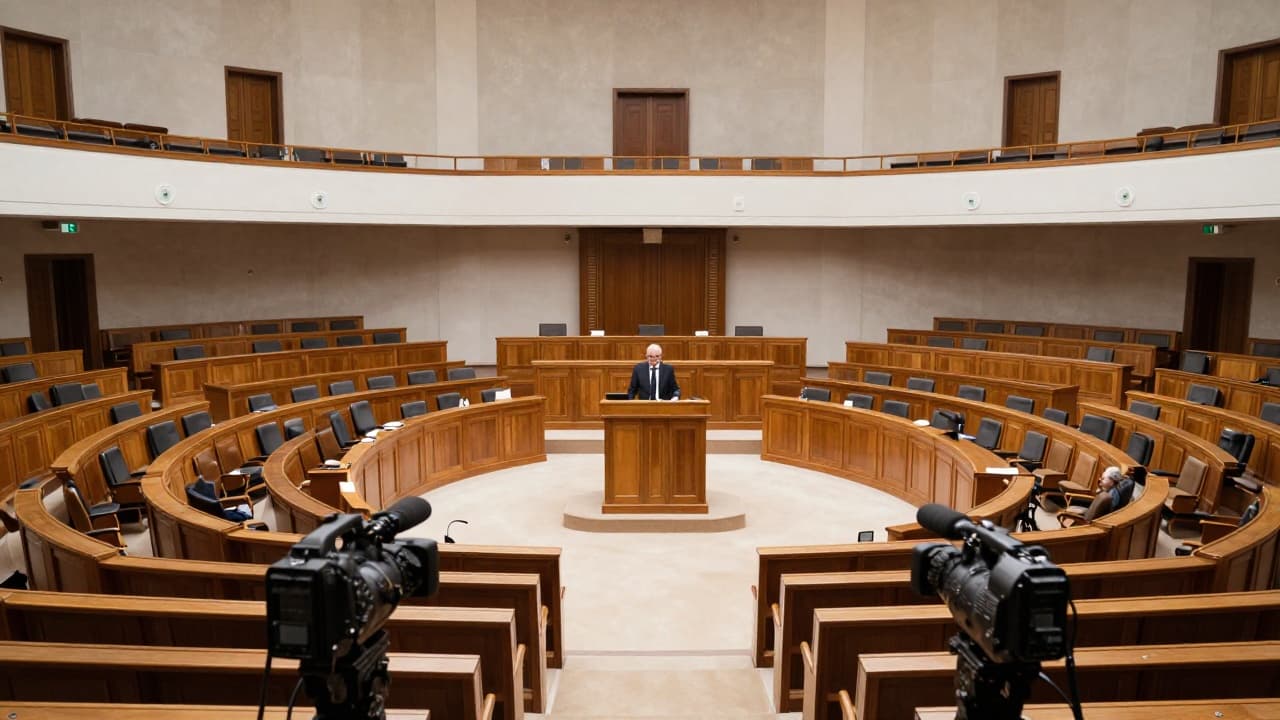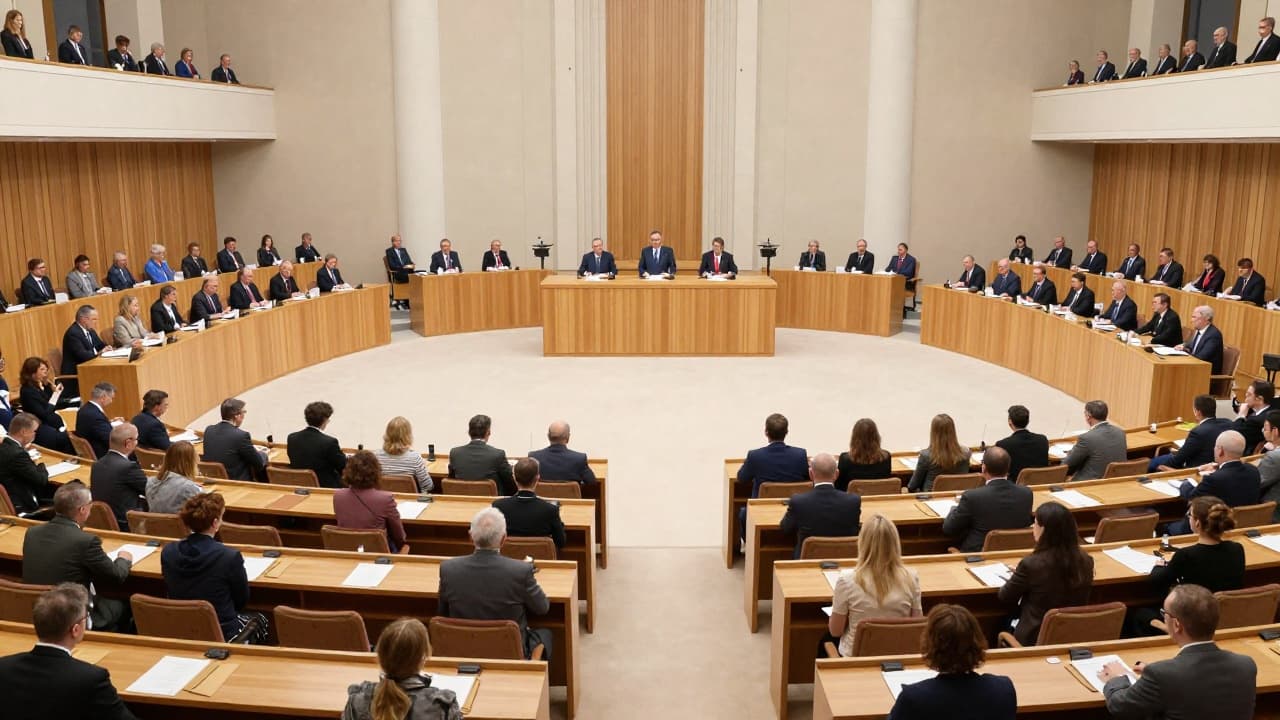
The Croatian Parliament (Sabor) rejected the initiative to recall Prime Minister Andrej Plenković, which was launched by the Social Democratic Party (SDP) over the case of the illegal disposal of hazardous waste in the Gospić area. Of the 136 MPs who participated in the vote, 55 supported the proposal, while 79 voted against. A minimum of 76 votes was required to topple the Government.
Among the MPs who abstained were Ivica Baksa of the Independent Platform North, and independent MP Branko Kolarić. Kolarić, a former SDP member, told Jutarnji list that he has no intention of being part of the governing majority and that no one has contacted him or asked him to join them. He also stated that as an individual, he cannot support the option that offers SDP president Siniša Hajdaš Dončić as prime minister, assessing that Hajdaš Dončić is, in his view, a "dead weight for the opposition". Kolarić claims that he has no agreements with either the governing side or the opposition regarding votes in the Parliament, and that he will vote for those proposals he considers good. He emphasised that he wants to push through the hospital project in Blato, which was part of his pre-election programme when he entered the Parliament, and that this was his personal contribution to building a children's hospital there.
The vote was preceded by a heated debate in which the opposition linked responsibility for the Gospić case directly to the prime minister and the functioning of state institutions. SDP president Siniša Hajdaš Dončić stated that the reasons for the recall go beyond the Gospić case and that the main problem is the "decay of oversight, responsibility, and society". He accused the Government of not using the powers it already had to intervene, ensure remediation, and charge the responsible parties with the costs, adding: "You had the authority and the money, but you buried political responsibility". Sandra Benčić of Možemo! (We Can!) asserted that the prime minister's responsibility is undeniable and emphasised that institutions had had information about the events in Gospić since 2022, while citizens had not been warned. Nikola Grmoja of Most (Bridge) stated that the Government survives thanks to the "naked interests" of the governing majority and claimed that it had politically fallen when it allowed institutions to fail in the waste case in Lika.
MPs of the governing Croatian Democratic Union (HDZ) disputed some of the opposition's claims and linked responsibility for certain problems to local authorities. They reiterated that no air, water, or soil pollution had been established in Lika, and redirected the debate to the Jakuševec landfill in Zagreb. HDZ's Majda Burić retorted with accusations that Most members are "political extremists and violent people". The governing side claimed that the opposition is using the tragedy and citizens' fear for political settlement. During the debate, MPs of the Homeland Movement (Domovinski pokret) were called out, and the opposition reminded them that DP had demanded Plenković's recall and filed a criminal complaint against him before entering the governing coalition. DP's Ivica Kukavica replied that his party had done what it promised to voters and that it had participated in the formation of a centre-right Government. Josip Borić stated after the vote that Plenković remains prime minister and that the Government will resolve the waste problem in Gospić, Poznanovac, Pula, Benkovac, and other locations.
The vote on the recall was yet another unsuccessful attempt by the opposition to challenge confidence in Plenković's Government. During the ten years of his premiership, the opposition has launched a total of 44 such attempts. The Parliament also elected a new chief director of the Croatian Radiotelevision (HRT) on the same day. Dražen Miočić, a long-time journalist and editor at the public broadcaster, received the support of 78 MPs, 11 voted against, and five abstained, while most of the opposition did not participate in the vote. Miočić has been with HRT since 1994, will replace Robert Šveb at the head of the public television, and his term lasts five years.
Armin Hodžić, an MP representing the Bosnian, Albanian, Slovenian, Montenegrin, and Macedonian national minorities, was elected as the new vice-president of the Parliament. 125 of 131 MPs voted for Hodžić's appointment, five voted against, and Josip Dabro of DP abstained. Hodžić thereby became the youngest vice-president in the history of Croatian parliamentarism and the first in that position from the ranks of the Bosnian national minority.