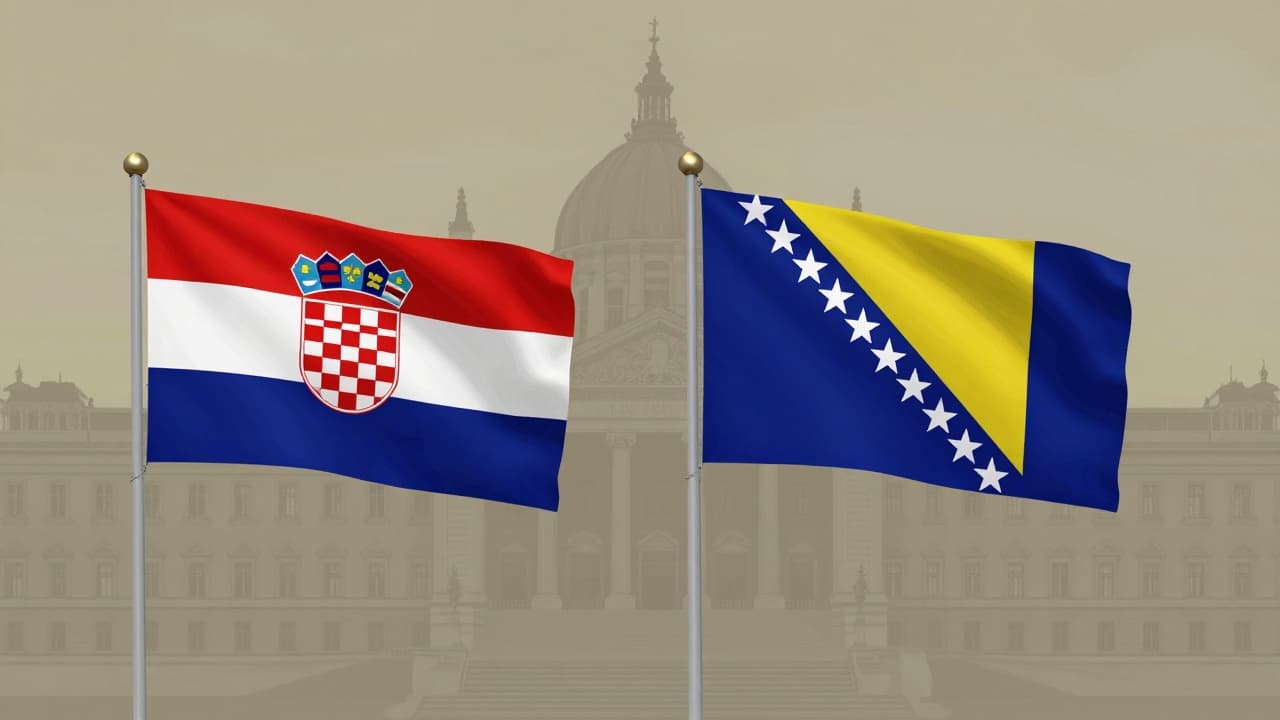
The Croatian Parliament voted on Wednesday, the last day of the spring session, on the Resolution on the Political Empowerment of Croats in Bosnia and Herzegovina, proposed by the Homeland Movement. 83 members of parliament voted in favour of the document, with three abstaining and one against, Hina reported.
The Croatian Democratic Union (HDZ) voted against, while two members of the Croatian Serbian Democratic Union (SDSS) and the representative of the Bosniak minority, Armin Hodžić, abstained, and the left opposition did not participate in the vote. The ruling majority, along with the Croatian Democratic Union, the Croatian Party of Rights, independent MPs Marija Selak Raspudić and Nino Raspudić, and Ivica Baksa, supported the resolution.
The resolution, comprising nine points, calls on the government to continue supporting the full political equality of Croats in Bosnia and Herzegovina within a reform of the political system that ensures free and fair elections, in which each constituent people would elect their own representatives. The Parliament supports the electoral models proposed by the legitimate representatives of the Croatian people, including the proposal for a separate electoral unit for the election of the Croatian member of the Presidency of Bosnia and Herzegovina.
The document condemns 'open calls for electoral engineering to override the votes of Croats' in the election of the Croatian member of the Presidency and the delegates to the House of Peoples. Croats with citizenship in Bosnia and Herzegovina are urged to exercise their voting rights in the general elections on 4 October.
The leader of the Homeland Movement, Ivan Penava, and the Deputy Speaker, stated that Croatia is sending a message through the resolution that it will not passively watch the overriding of the rights of Croats in the neighbouring country. He was particularly pleased that the left and right wings of the Croatian Parliament agreed on the equality and constitutional status of the Croatian people, as well as support for the European path of Bosnia and Herzegovina.
Parts of the right opposition consider that the final text is significantly diluted compared to the original proposal. 'Of the seven substantive points that the original proposal contained, six and a half have been removed, leaving us with a very diluted resolution,' said Nino Raspudić, although he indicated he would still support it. The Croatian Party of Rights had tabled eight amendments, but the ruling majority rejected all of them.
The Croatian Democratic Union (HDZ) responded to the criticisms by stating that Croatia has not advocated more strongly for the position of Croats in Bosnia and Herzegovina than it does today, and that the Croatian question has been raised to the European level, as stated by MP Dario Pušić.