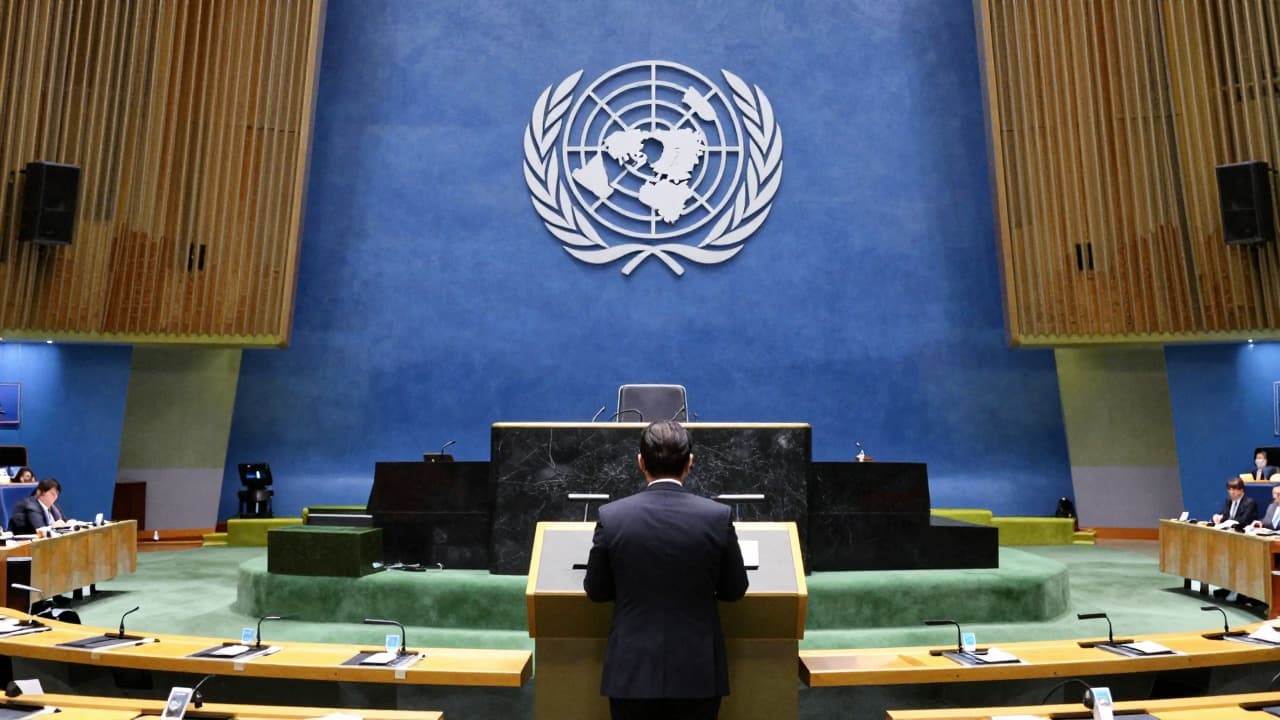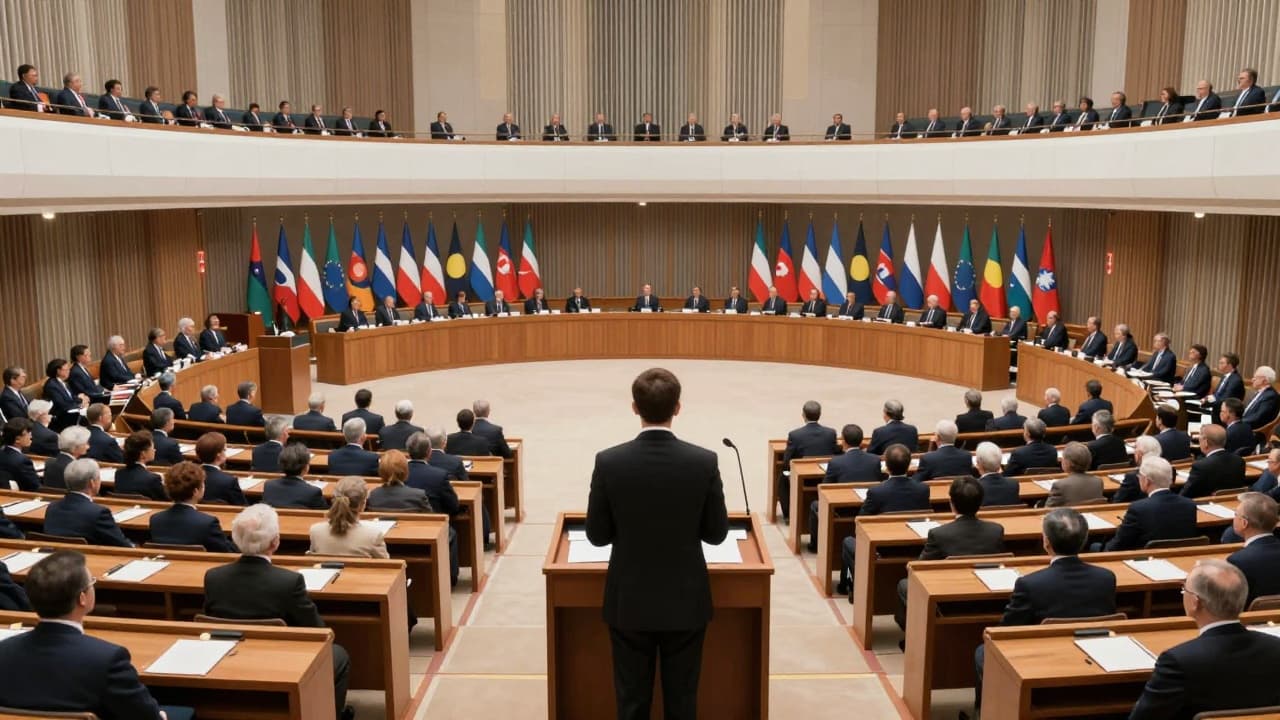
Serbian President Aleksandar Vučić spoke at the UN General Assembly this evening, accusing the international community of double standards towards Serbia, particularly regarding Kosovo. He stated that the UN Charter and international law cannot be applied selectively.
Vučić asserted that almost all world leaders today invoke the UN Charter, yet the same rules were not applied to Serbia. "It will become completely clear who opened Pandora's box of disrespect for the UN Charter and when the world started down a completely wrong path," he said.
The central thesis of his address was that the major Western powers, by recognising Kosovo's independence and intervening with NATO against the then Federal Republic of Yugoslavia in 1999, created a precedent that weakened the international order. He reiterated that Serbia does not recognise Kosovo's independence, and in his view, the international community interprets the principle of territorial integrity differently when speaking of Serbia and other states. He emphasised that Serbia simultaneously supports the territorial integrity of Ukraine.
Speaking on the position of Serbs in Kosovo, Vučić again insisted on the establishment of the Community of Serb Municipalities, provided for in agreements between Belgrade and Pristina reached with EU mediation. He claimed that Belgrade had fulfilled the requirements of the international community over the past decades, including cooperation with the Hague Tribunal, but had not received what was promised in return. "They told us that we should hand over our people to the Hague Tribunal, and then honey and milk would flow and flowers would bloom. We handed them over, and received nothing," he said. He added that Serbia had signed numerous agreements which he claimed other parties, as well as their international guarantors, had not fully implemented.
Vučić stated that Serbia sees an opportunity in US President Donald Trump to establish a "fairer world order." He said that "they trampled on Serbia," but did not defeat it, and that it had "risen from the ashes like a phoenix" and is now "an example of how to preserve international order."
In part of his speech, he referred to Croatia, stating: "It is hardest for us in Serbia when we see in our neighbourhood the legacy of Nazism elevated to the level of social respect in the Republic of Croatia, which boasts of its Nazi past and the use of Nazi slogans and symbols today. Serbs, who suffered most at the hands of the Nazis, cannot accept the revival of the most terrible ghosts of the past responsible for the deaths of hundreds of thousands of Serbs, Jews and Roma in monstrous concentration camps such as Jasenovac." He added that "therefore, moral lessons coming from such sources are completely unacceptable."
He described Serbia as a country remaining on the European path, but wishing to maintain close relations with countries in Asia, Africa and the Global South. He emphasised that Belgrade wants to conduct an independent policy and speak with all major powers. Serbia formally remains an EU candidate, while maintaining close relations with Russia and China and not imposing sanctions on Moscow over the invasion of Ukraine.
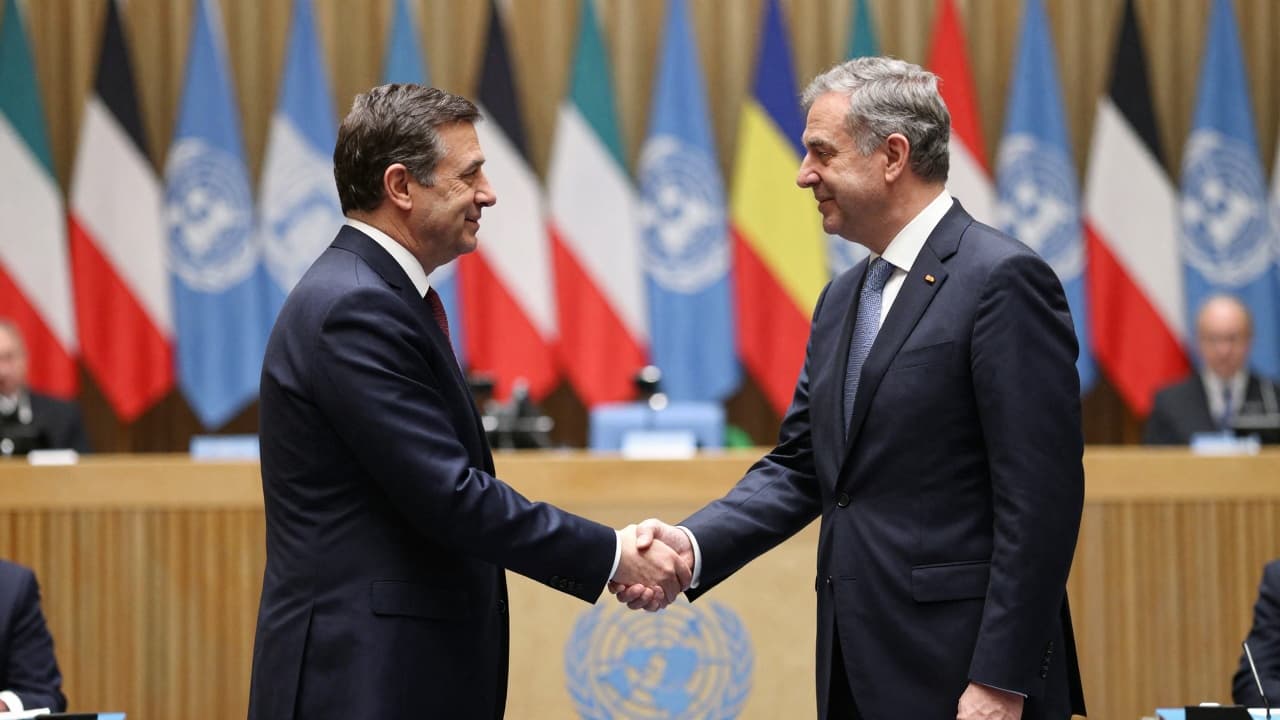
During his stay in New York, Vučić spoke with EU High Representative Kaja Kallas. After separate meetings with Vučić and Kosovo Prime Minister Albin Kurti, she stated that it is necessary to accelerate the normalisation of relations between Belgrade and Pristina and implement agreements already reached.