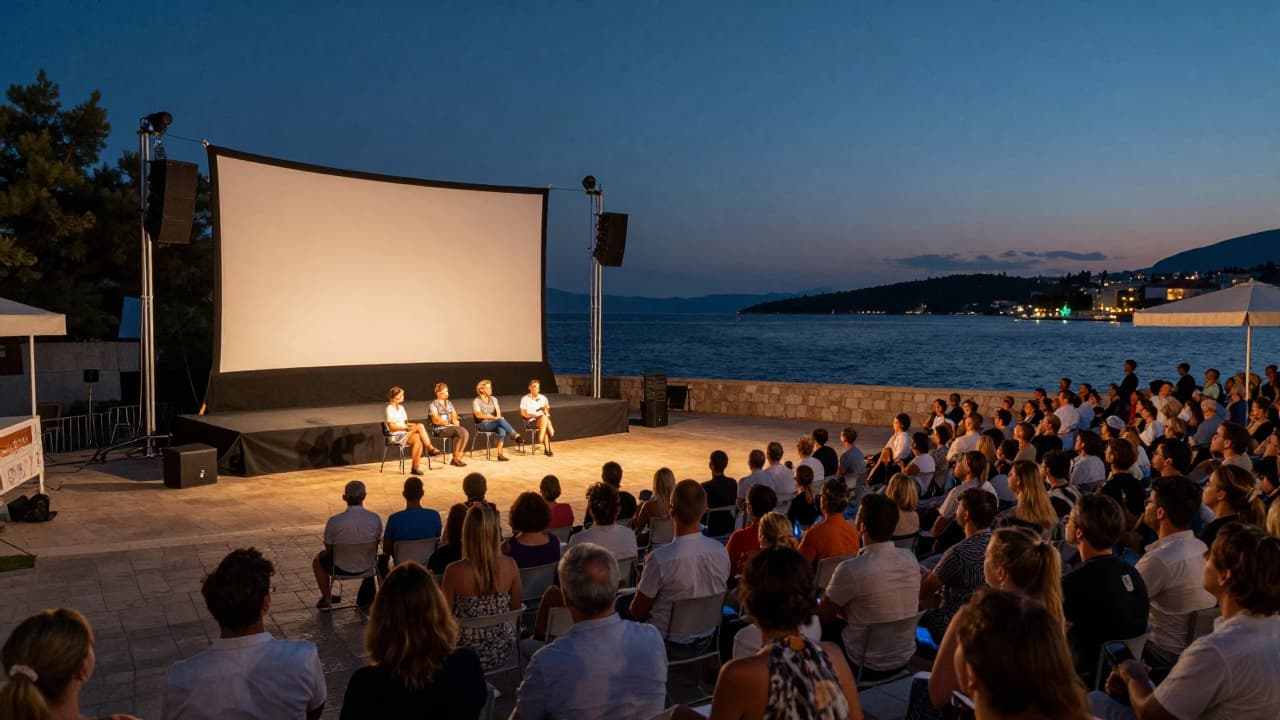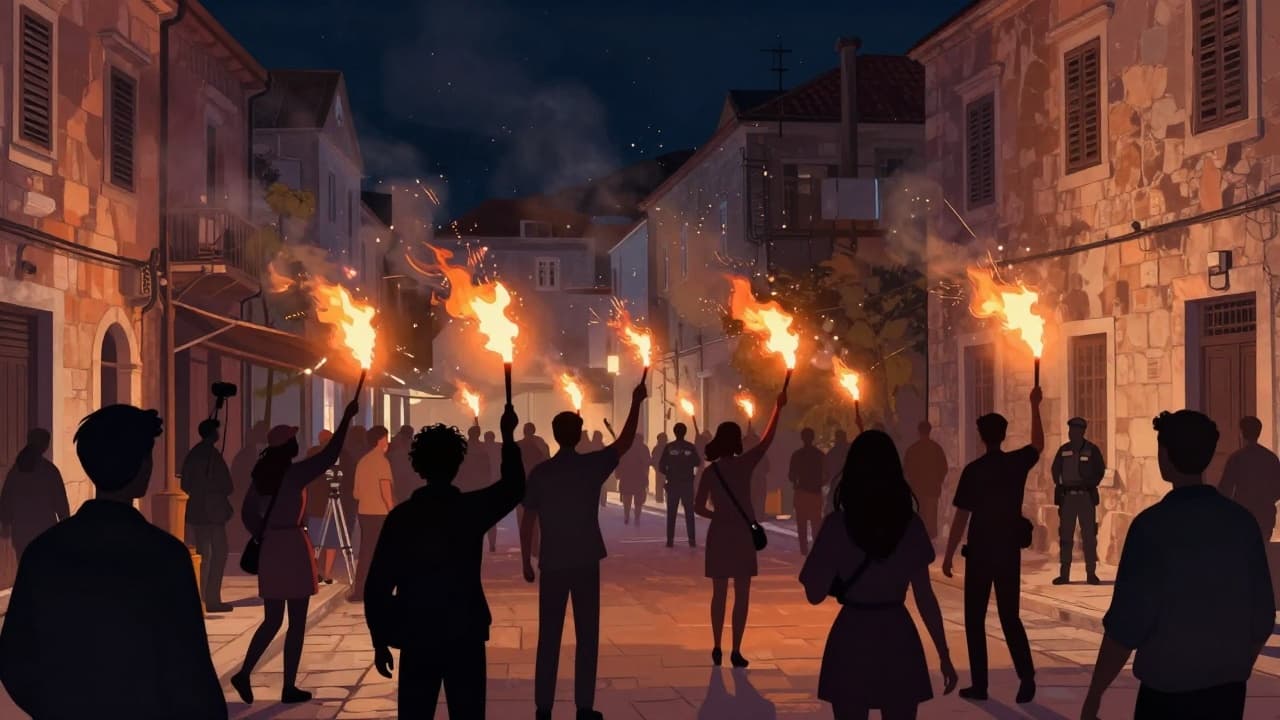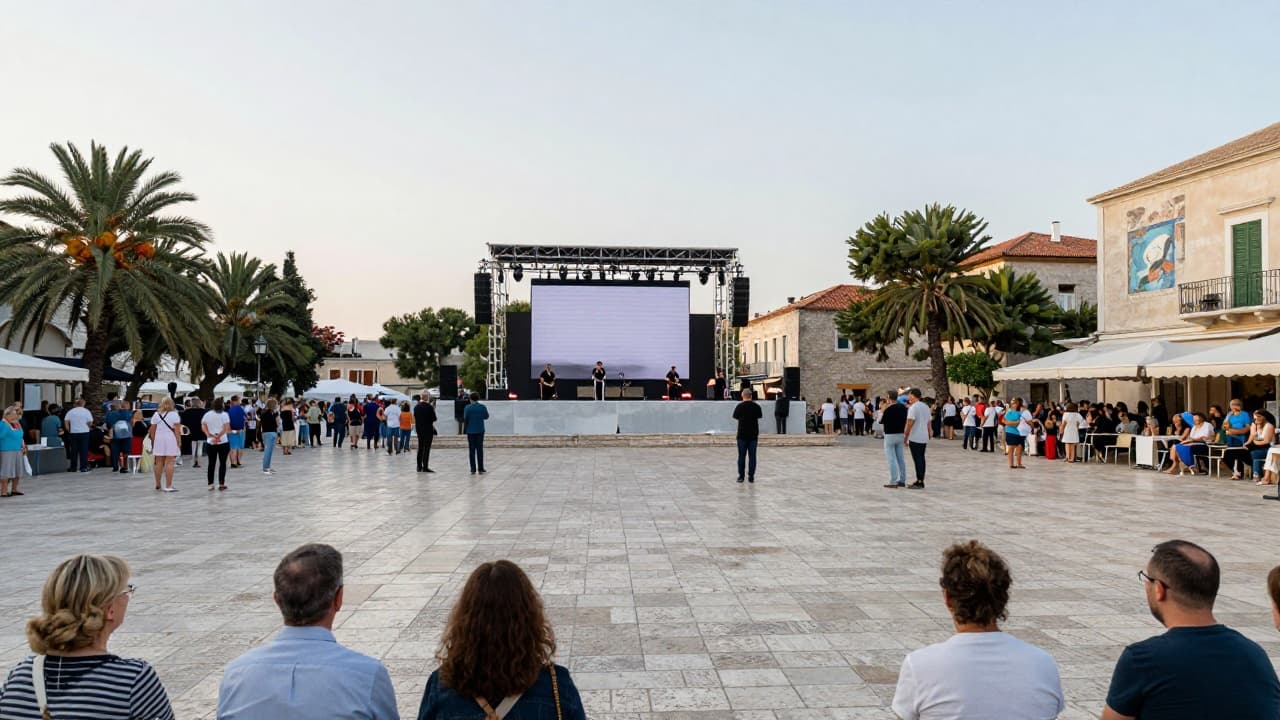
The Korčula after Party festival, which has been held in Korčula for the eighth year running, found itself at the centre of a dispute after certain associations and veterans linked damage to an Ustaša inscription on a mural to the staging of that left-wing festival. The organisers and participants strongly denied the allegations, with Dragan Markovina stating: 'Lie, malice and hysteria.'
Markovina stated that a local radical had written an article in which participants of the festival were described as followers of the Greater Serbian aggression against Croatia. He stressed that no one at the festival had questioned the Homeland War, but rather that a thesis had been fed to them that the festival was anti-Croat. According to him, the media had published without qualification a statement full of lies that the festival was linked to damage to the mural, and he directed readers to articles by Damir Pilić in Slobodna Dalmacija for details on the actual discussions.
Participants in the festival stated that the statement by certain veterans was untrue and that everything had been falsely constructed with the aim of sowing unrest among the people of Korčula with lies. One participant stated that 'intellectual debate is the backbone of every democracy' and that a healthy society should reflect on the past, present and future. He added that there should be no forbidden topics, as he said, in neighbouring Serbia under the regime of 'the notorious dictator Vučić', where 'darkness reigns'.
'We do not want Croatia to be monolithic, it is not, but we must fight every day to preserve that space,' the participant said. He further pointed out that the political and other elites in Croatia boast of belonging to the Western civilisation, in which one can speak freely and constructively about all topics, and it is up to those elites to preserve that belonging.
The participant also addressed the accusation that he was in favour of Greater Serbia: 'It is absurd that I should even have to deny that I am in favour of Greater Serbia. What great Serbia has seized them, it is a complete fabrication by idle people.' He added that some people clearly cannot accept that leftists and anti-fascists are also Croats, especially if they are declared anti-fascists, and that they have created their own standard of what a Croatian person should be and are shaping it to their own measure.
'But when I am pulled by the tongue, I am against the revival of sentimentality towards Chetnicks and Ustasha,' the participant said. He stressed that he was on the side of the anti-fascist legacy which fights against a new Serbian world, as well as the bloody legacy of Ante Pavelić and his Ustasha, and the salute 'Za dom spremni'. He recalled that the Croatian Constitution mentions anti-fascism, and that this is a problem for some, but he said that he would not be pushed by false constructions.
'Because we speak in a civilised manner, we are not for violence, we contribute to diversity and we do not advocate the revival of long-dead states. We are for peace and for leaving a pleasant space for our children to live in,' the participant concluded.
Certain veterans were disturbed by the fact that religious and educational values were being discussed and questioned at the festival, and that a man had been dressed in a black T-shirt with a large red five-pointed star on it. All of this was interpreted as a direct attack on free and independent Croatia. In a statement, they said that 'the immediate cause and direct consequence of the five-hour ideological incitement was a brutal night-time intervention on the memorial mural in honour of the Vukovar veterans and those who died in the Homeland War', which is located near the Korčula secondary school.
The veterans stated that the target of the 'cowardly attack' was the portrait of the volunteer Jean-Michel Nicollier, and that the insignia of the unit he fought in had been 'vandalised and mutilated'. They were also indignant that the inscription 'Za dom spremni' had been erased, believing that someone had been inspired by the festival. In a statement, they said: 'Dressed young skijasi are ready for vandalism and banditism in the name of ideology' and 'Is this not the same handwriting as the skijazi of the red youth? - judge for yourselves.'
On the other hand, the participants in the festival did not agree with the message of the inscription 'ZDS', nor did they touch it. Markovina concluded that it was a lie, malice and hysteria, while other participants stated that the statement by the veterans was untrue and falsely constructed. The whole affair was wrapped up with a picture of the Praks from Pul under the scale of the entrance to the Old Town, from which the flag standing on the top of the tower had been erased by the women themselves, and all wrapped up in a strange cloth above the Ploka with an equally bizarre text.