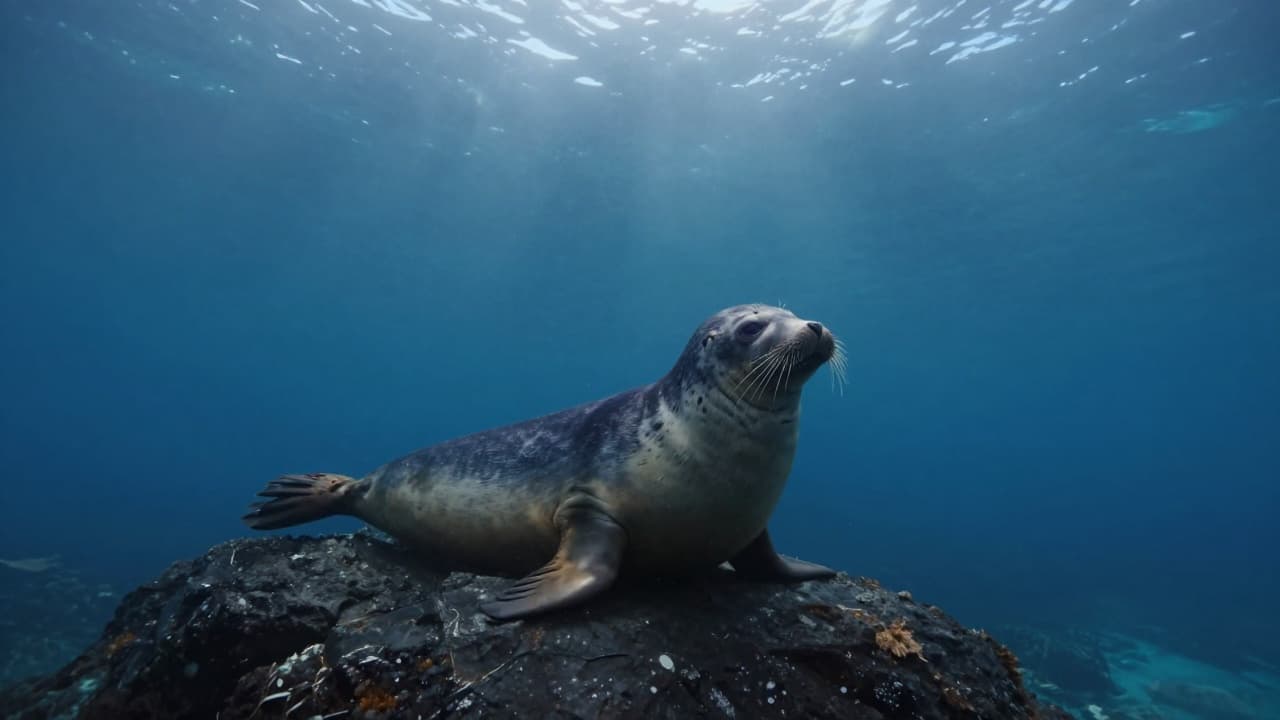
The Mediterranean monk seal, a species that once abounded in Croatian waters, now faces a serious risk of extinction. Scientists' estimates indicate that only around 600 individuals of this species currently survive worldwide, making it one of the most endangered marine mammals globally. Its presence in Croatian waters, although historically confirmed, is now virtually non-existent, highlighting the urgency of protecting remaining populations.
This species is characterised by isolated habitats, primarily in the Mediterranean Sea, but also in parts of the eastern Atlantic. Although historically an integral part of the local ecosystem, its current population numbers indicate a serious threat to the species' survival. Scientists warn that preserving the remaining individuals is crucial to preventing total extinction, given that the population has drastically declined over a historical period.
The first scientific description of this species dates back to 1777, when a specimen was recorded caught near the island of Cres. This historical data serves as an important indicator of the species' former widespread distribution, which is now reduced to minimal levels. Although historical records have proven its presence in Croatian waters, the current situation indicates a serious threat to its survival, requiring urgent protective measures. Scientists emphasise that preserving the remaining individuals is crucial to preventing total extinction, given that the population has drastically declined over a historical period.
Given that the species has already experienced a significant reduction in numbers, experts highlight the need for stricter protective measures. Although historical records have proven its presence, the current situation indicates serious challenges. Therefore, it is necessary to take urgent steps to prevent further population decline and ensure the future of this endangered species.