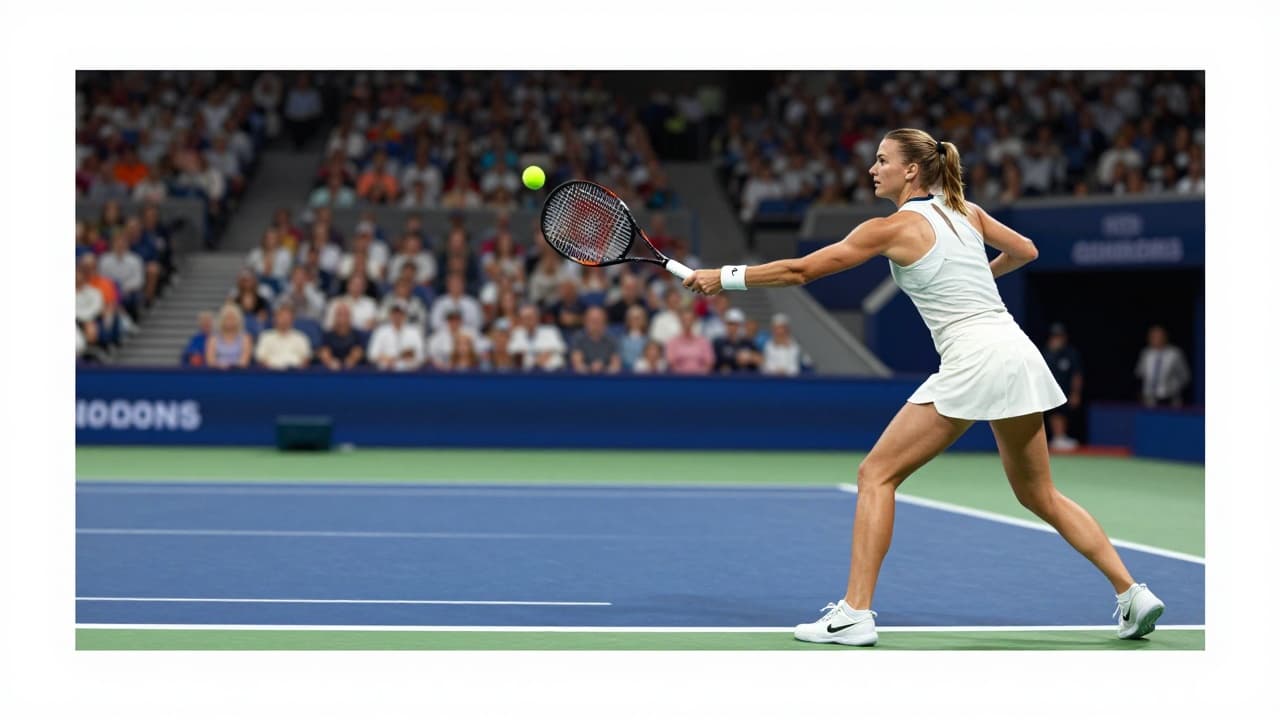
British tennis player Jodie Burrage received death threats on social media after losing her first WTA Tour singles main draw match in 16 months on Tuesday. She was subsequently bombarded with abusive messages, and the 27-year-old shared the story on her Instagram account, displaying direct messages sent following her 3-6 6-3 7-5 defeat to India's Vaishnavi Adkar.
In the post, she wrote: 'Nice welcome back to tour. I remember why I left.' She tagged the WTA, asking when action would be taken to combat abuse. Despite this, she won her Chennai Open pairs quarter-final on Wednesday alongside Robin Montgomery from the United States of America.
The WTA told BBC Sport that protecting players and the wider tennis family from online threats and abuse is a key priority. In Chennai, staff are providing support to Burrage, along with the player welfare team and the Threat Matrix team. The WTA claims to be taking a 'proactive approach' to protecting tennis players from abuse.
The Threat Matrix system, established in 2023, is provided by Signify Group in partnership with World Tennis and uses AI-driven detection. It can identify the individuals behind accounts threatening players, enabling investigations and potential legal action. The WTA added that through this system, they identify, investigate and take action against those responsible, which includes reporting abusive content for removal, escalating serious cases to law enforcement agencies and supporting actions to prevent real-world harm.
Tennis players were exposed to more than 12,000 abusive posts and messages on social media last year, according to data from the service. The WTA has offered Burrage additional support because much of the abuse comes via direct messages. This includes a private channel for reporting abusive direct messages and moderation that hides abusive comments on public channels before she sees them.
In 2024, a Signify report showed that angry gamblers were responsible for 48% of posts rated as abusive. They were responsible for 42% of verified abuse in 2025 and 59% of serious abuse cases. The WTA is working with several gambling companies in a programme that flags abuse from gamblers in real time, allowing the operator to take direct action against those targeting athletes. The company can then flag, restrict or suspend the account.
Mhairi Maclennan, chief executive of Kyniska Advocacy, which supports female athletes, believes that 'still not enough is being done' to protect athletes as a whole. She told BBC Radio 5 Live's Drive programme that it is too common for high-profile athletes to receive this type of abuse. Many athletes they speak to report having received abuse – whether death threats or rape threats – because of their public profile and because sports like tennis are linked to gambling. She said that sports need a healthier relationship with gambling agencies and that while they ultimately need the money, they must look at what gambling does to individual athletes and care for their well-being. Other players, including Germany's Eva Lys, have shown solidarity with the former world number 85.