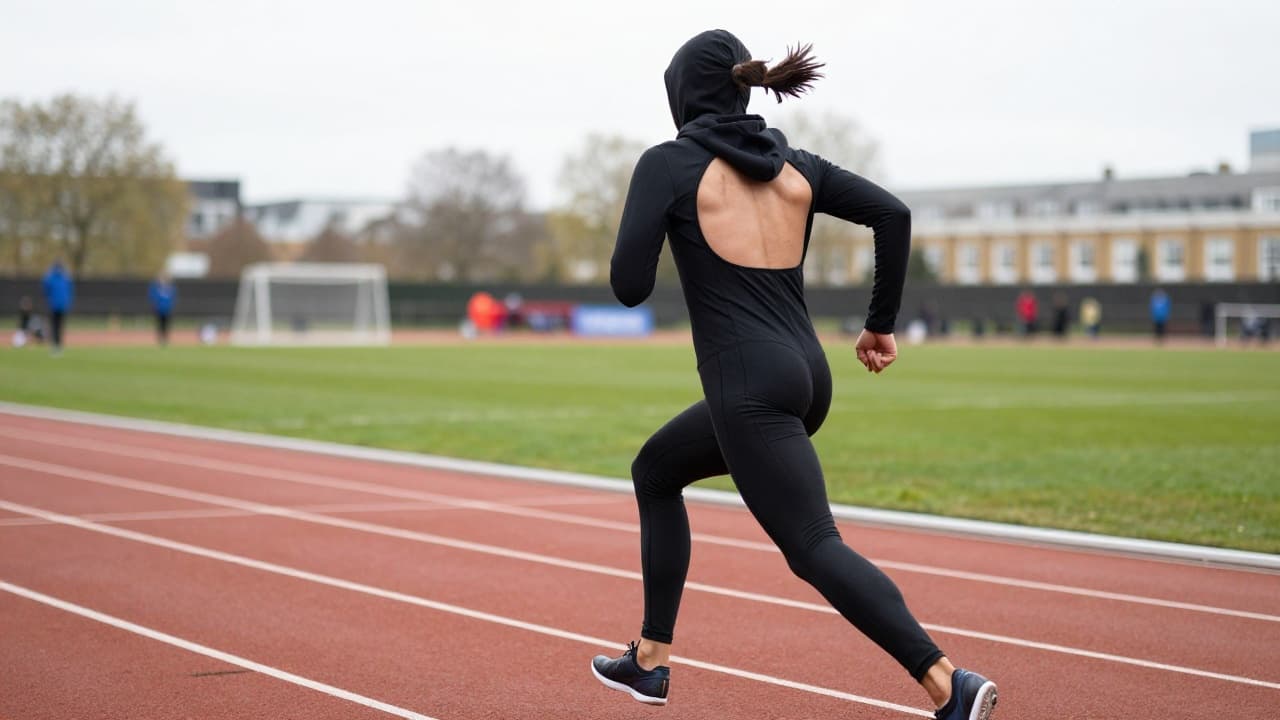
British athlete Keely Hodgkinson, the current Olympic 800-metre champion, appeared at the Athletix meet in London in an unusual black bodysuit that covers almost her entire body. It is a specially designed Nike suit with long sleeves, a hood, an open back and a special cutout for her ponytail.
Nike called the suit the Zero-Distraction Speed Suit. It was developed over roughly a year in collaboration with Hodgkinson, made to her measurements and requirements. The aim was not only to achieve a striking look but also to improve aerodynamics during competition. Designers wanted the hood to reduce aerodynamic drag around the head and hair, and Nike says the suit was developed to reduce air resistance.
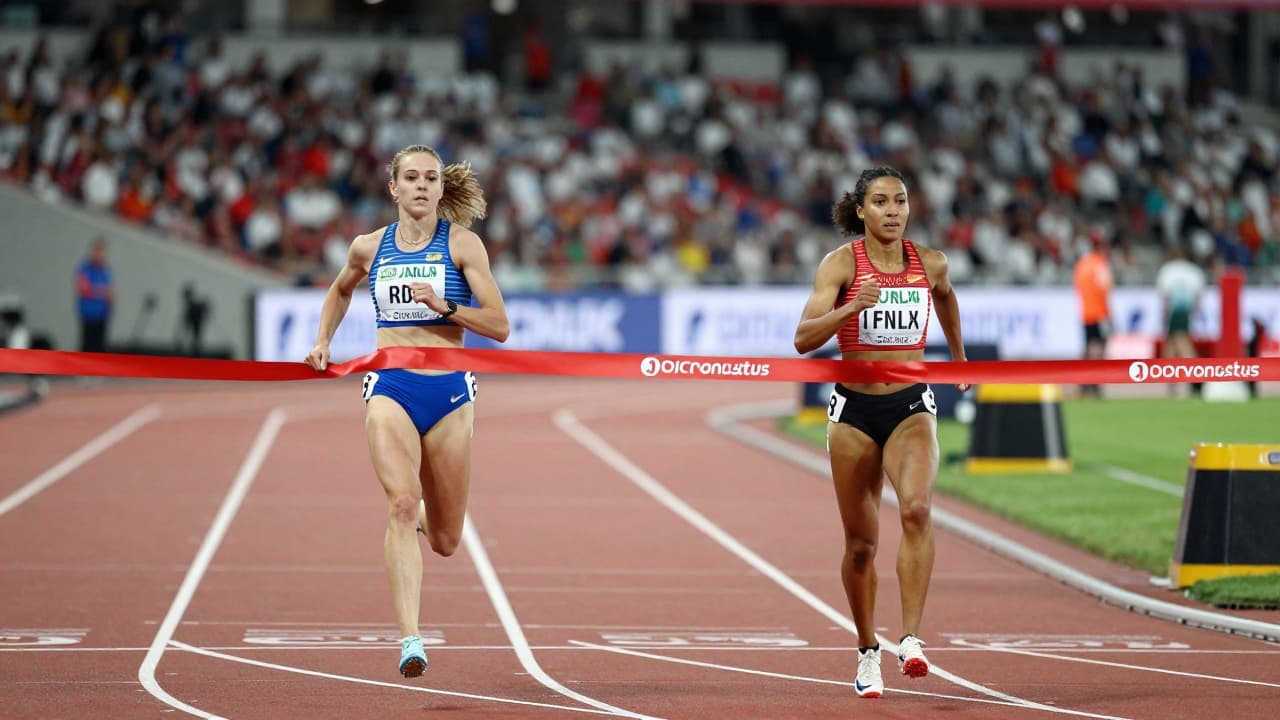
Hodgkinson competed in the suit at last Friday's Athletix in London and won the 800 metres in 1:56.40. The design was partly inspired by legendary Australian athlete Cathy Freeman, who won Olympic gold in the 400 metres at the Sydney 2000 Games in a similar full-body suit.
"We worked on the suit for about a year, with all the adjustments and testing. It was a really fun process with Nike's innovation team. Fashion, speed and science come together there, and it might show what the future of athletics could look like," Hodgkinson said. She added that style was very important and she wanted the suit to be comfortable but also to feel a bit sexy. "The back is open and because of that I'm not hot. I have a feeling like I'm not wearing anything," she said. She also noted that she tested it during training in South Africa at a temperature of 37 degrees and still did not feel too warm.
The problem with wearing the suit at the Olympics is not the design or the athletics rules, but the manufacturer. Hodgkinson is a Nike athlete, and the British athletics team also works with Nike. However, at the Olympics Hodgkinson competes for Team GB, whose official sports equipment supplier is Adidas. The partnership between the British Olympic team and Adidas has lasted more than four decades, and British athletes at the Games must wear official Adidas kit. Certain technical items, such as sprint spikes, may be an exception, but the competition suit or bodysuit is not. For that reason, Hodgkinson will not be able to defend her Olympic gold in that suit at the Los Angeles 2028 Games.
It is possible that Hodgkinson will then wear a different version of a similar concept made in accordance with the British Olympic team's rules. She hinted that this type of equipment may not be a one-off experiment. "This was a test. It's not something we've never seen before. Cathy Freeman and other athletes wore something similar, and this is a new version with new technology," she said. Hodgkinson believes that the combination of fashion, technology and sports performance could be a direction in which athletics apparel will develop in the future.