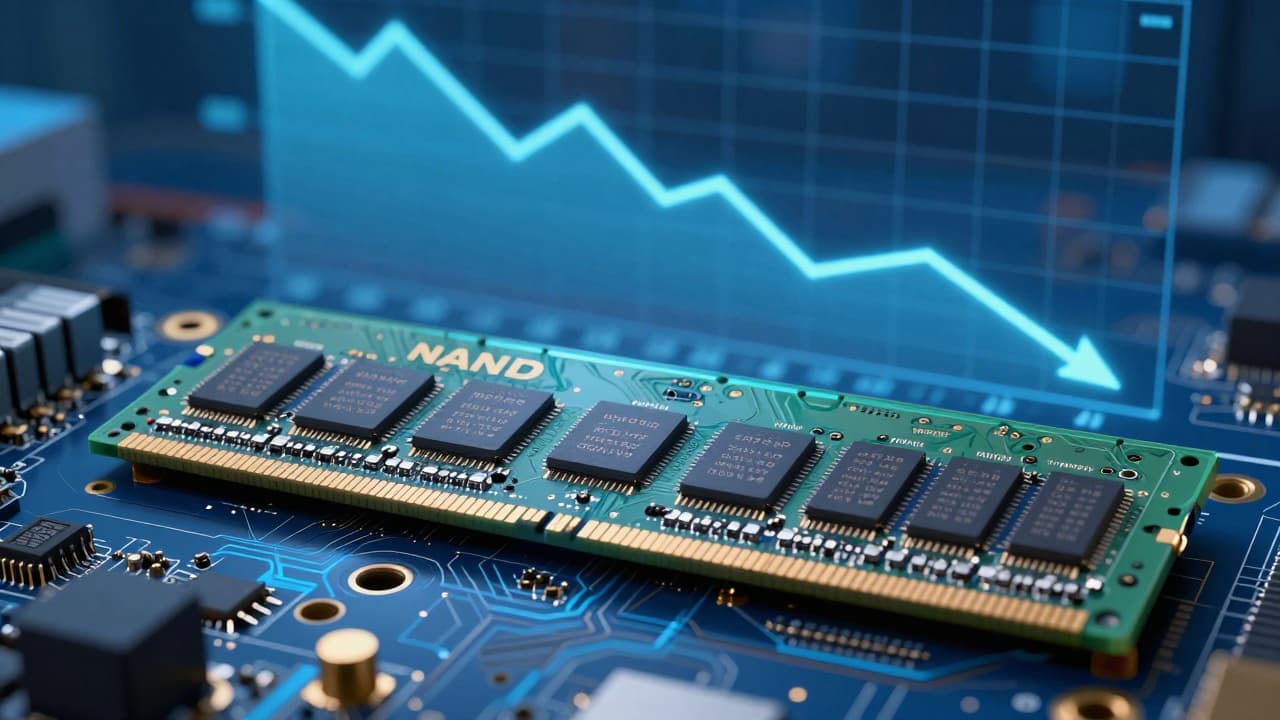
NAND memory prices have begun to fall, and weaker demand and stronger competition from Chinese manufacturer YMTC could lead to cheaper NAND memory, and eventually SSDs. According to a report by South Korea's Seoul Economic Daily, spot prices for NAND chips intended for consumer electronics have fallen by approximately 20 per cent in the past month.
If such a trend continues, it could gradually affect the prices of SSDs, laptops and mobile phones. As reported by Tom's Hardware, estimates from Bank of America analysts dated 13 November also point to possible price reductions. According to their expectations, contract prices for NAND memory for personal computers and mobile phones could fall by five to ten per cent in the first quarter of 2027. These are forecasts relating to the prices of the memory chips themselves, not the announced price cuts for finished devices.
One reason for the price drop is the fact that the growth in memory demand in AI data centres does not affect all types of memory chips equally. DRAM manufacturers have redirected part of their production capacity to the production of HBM memory used in AI accelerators, thereby reducing the availability of conventional DRAM. The situation with NAND memory is somewhat different because the production of advanced high-density chips for data centres requires different equipment and production processes. Increased demand in the AI sector therefore does not necessarily have to restrict the supply of NAND memory intended for consumer devices to the same extent.
Price movements are also influenced by increasing competition among manufacturers, especially due to the expansion of China's YMTC in the NAND memory market. Weaker demand for certain categories of consumer electronics further reduces pressure on suppliers, creating conditions for falling prices.
However, customers should not expect SSDs and other devices to become cheaper immediately. Component manufacturers mostly procure based on pre-agreed contracts, so it may take some time before lower memory chip prices are reflected in retail prices.