Nikon has paused the judging of its entry following doubts raised by other scientists that it was created using artificial intelligence. The entry, Small World in Motion, is held annually for the past 15 years and accepts photographs and video recordings taken with powerful microscopes.
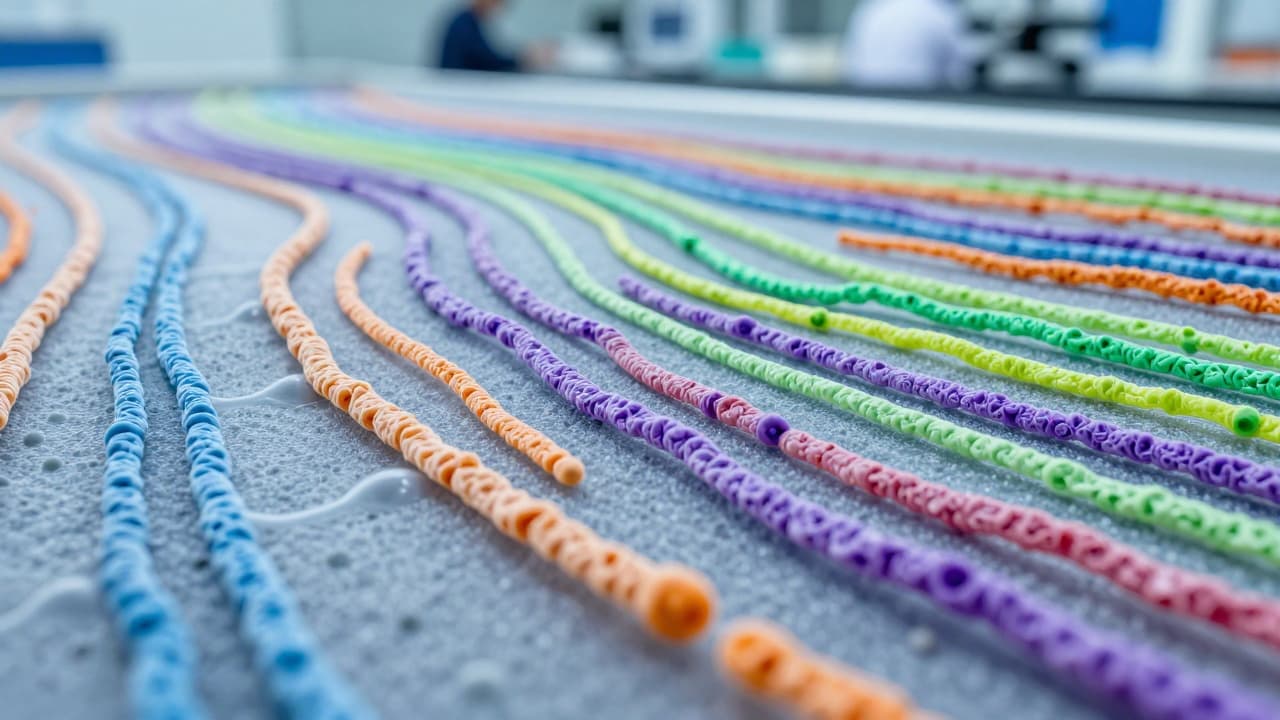
The entry is a short video submitted by Dr. Ning Xu, a researcher at Tsinghua University in China. The video claims to show fine hair-like structures called cilia moving within the airways of a child with a rare disease. Xu did not respond to a request for comment from the BBC, but online he stated that he had not broken the competition rules. In response to the Nikon post on LinkedIn, he did not deny the use of AI in the image processing, but stated that he had stayed within the rules. "AI was not used to generate the experimental film, the cilia or their movement," Xu said.
The entry is artificially coloured, which is common in microscopy and permitted in the competition. The bright colouring is usually achieved manually using dyes and dyes on the sample itself. Xu accepted that AI was used "to distinguish and visualise features in reconstructed images in shades of grey".
Critics' claims include that the entry contains shapes and movements that do not correspond to normal cellular structures or behaviour, as well as that the cilia appeared too large. Edward Phelps, an associate professor at the University of Florida, noted that some structures "jump in and out" and that the cilia "appear out of nowhere". Doctoral student Ian Donovan said that the original image contained a visible water mark that indicated it was generated by AI. Two former judges also expressed concern about whether the image was real.
Nikon stated that Xu was "cooperating with" their investigation and that they had received additional technical documentation. In a statement, they said: "We currently do not see that any rules have been broken." They added that an update would be issued soon, and that for now they were sticking to their procedures.
Dr. Patrick Hickey, who was fifth in the 2026 Small World competition, said that the recognition the award represents is worth more than the 3,000 dollar ($2,250) prize. He pointed out that it would be unfair to other competitors if the entry was shown to have been dishonestly altered using AI. According to his statement, there is a specific set of competition rules, one of which clearly states that generative AI is not to be used to create content, and the other that the recording must be made under a microscope.