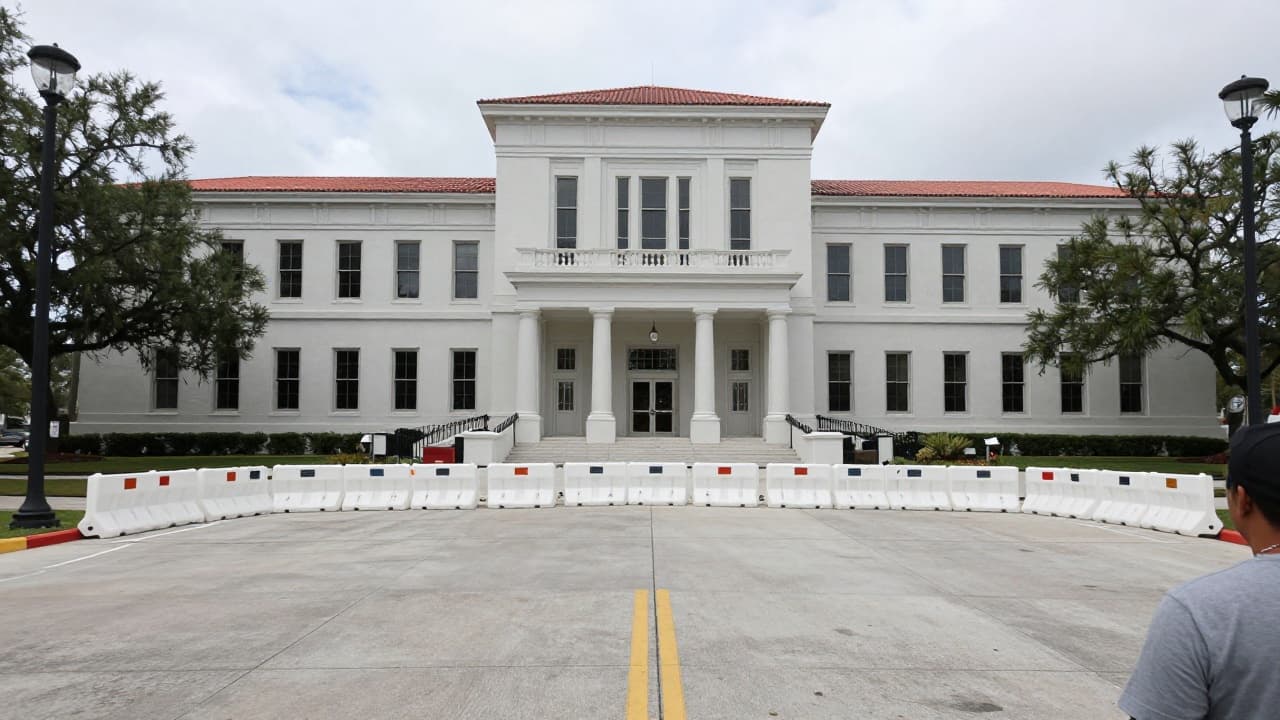
Eighteen people were arrested in connection with the assassination of Haitian President Jovenel Moïse, US officials said. The suspects were transferred to Florida to face trial, with federal prosecutor Jason Reding Quinones stating that "18 were transported by military aircraft from Haiti to face US justice in the Southern District of Florida".
Moïse, 53, was killed. He was shot dead on 7 July 2021 in his private residence, according to available information, by a hired group of approximately 20 armed mercenaries. His security detail did not intervene to protect him.
FBI special agent Brett Skiles said on Sunday: "Today's arrests, across multiple locations and internationally, underscore the FBI's continued commitment to bringing all participants in this conspiracy to justice." Quinones added that five years on, the suspects are still being brought to justice and the work is not finished. To date, 30 suspects have been charged.
In May, four men were convicted in a federal court in Miami on charges including conspiracy to murder or kidnap Moïse, conspiracy to provide material support, and violations of the US Neutrality Act for participating in an unauthorized military operation abroad. All four face life imprisonment. They were linked to CTU, a private security company based in Florida, and according to federal prosecutors, they were drawn into the conspiracy by the prospect of securing lucrative contracts following Moïse's overthrow.
Eleven people have already been charged in connection with the assassination in US courts, which have jurisdiction over conspiracies hatched on US soil. Five have been sentenced to life imprisonment, including a former Colombian soldier, a former Haitian senator, a Haitian-Chilean businessman, a retired Colombian soldier, and a Haitian-American. The latter was sentenced to 30 years in prison.
Haiti has sunk deeper into chaos since Moïse's assassination. The country currently has no president, and is preparing for the first presidential and legislative elections since 2016, as well as a constitutional referendum on 13 December, should security conditions allow. Band control covers approximately 80 percent of Port-au-Prince, and violent crimes such as kidnappings for ransom, armed robberies, and vehicle thefts plague the impoverished nation.
The multinational force, tasked with supporting local police in combating gangs, will not be fully staffed by October as planned, the spokesperson said earlier this month. The force was established by the UN Security Council, with an expected strength of 5,500 uniformed personnel and 50 civilian staff. As of July, the force comprised fewer than 1,000 personnel from Chad, Mongolia, Jamaica, Guatemala, El Salvador, and Sri Lanka, with no further updates provided.