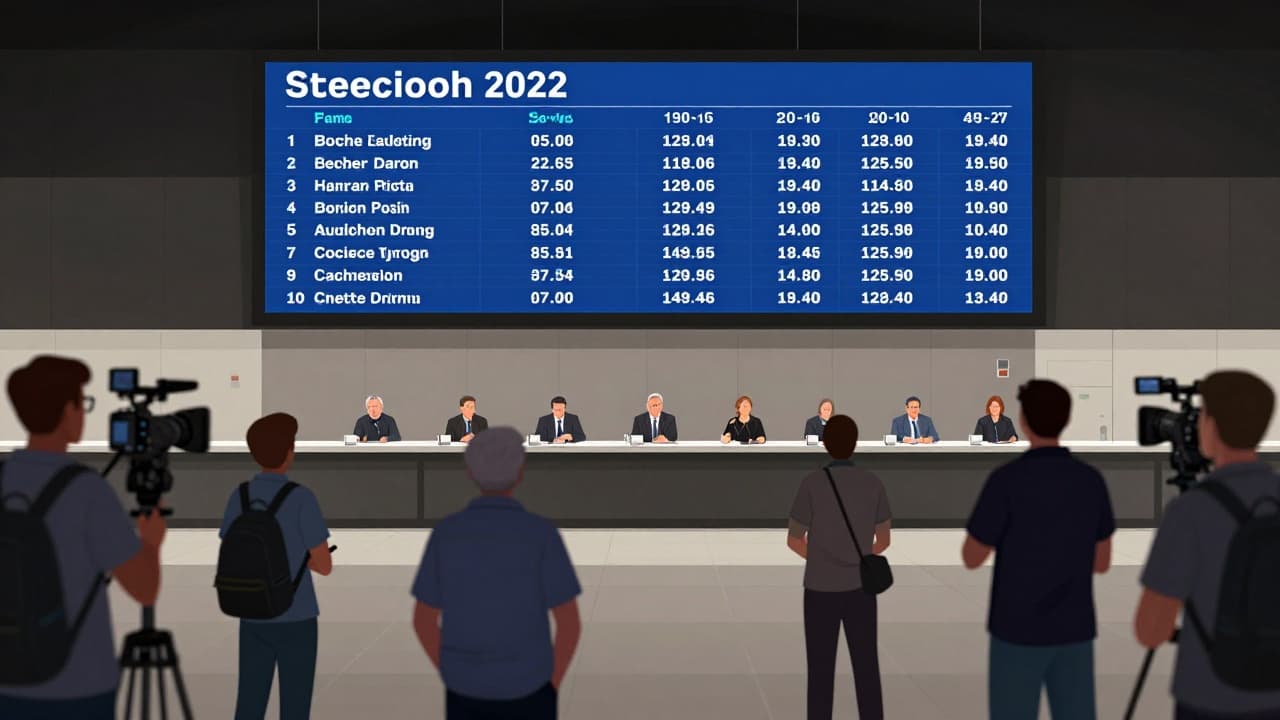
Elections in New Zealand have been described as among the tightest in recent history, with polls indicating that no coalition will secure a majority of parliamentary seats. With 8 per cent of votes counted, the National Party was at 31.2 per cent, the Labour Party at 28.4 per cent, the Greens at 12.9 per cent, Act at 11.2 per cent, NZ First at 9.6 per cent, Opportunity at 5.7 per cent, and Te Pāti Māori at 0.4 per cent. According to these figures, the right-wing coalition bloc would return to power.
After 35 per cent of votes were counted, Labour were narrowly ahead with 29.9 per cent, the National Party had 29.4 per cent, the Greens 14.1 per cent, Act 10.5 per cent, NZ First 9.4 per cent, Opportunity 5.4 per cent, and Te Pāti Māori 0.6 per cent. In the northern city of Whangārei, National Party candidate Lloyd Budd was 206 votes ahead of Labour’s Gary Payinde, with 34 per cent of votes counted. This seat has always been a National Party stronghold, except for a brief three-year reversal during the red wave led by Jacinda Ardern in 2020.
Act leader David Seymour addressed supporters at Auckland’s Viaduct Harbour. He said it was unlikely that it would be known tonight who would form the next government and that the final result might not be known until the declaration of the final count in two weeks. Seymour appeared to be on course to win in his Epsom electorate, where he was currently 900 votes ahead of National Party’s Paul Goldsmith. Goldsmith is a senior government minister who is unlikely to enter parliament if he does not win that seat. In the neighbouring Tāmaki electorate, Act appeared to be losing that riding. Act was currently at 10.6 per cent, having won 8.6 per cent of the vote in 2023.
With 29 per cent of votes counted, parliamentary seats were tallied as follows: National Party 41, Act 13, NZ First 11, totalling 65 seats; Labour 36, Greens 17, Te Pāti Māori 5, totalling 58 seats. There are 130 seats in parliament, with the remaining mandates according to these figures. National Party MP Mark Mitchell arrived at the Auckland election centre. He served as minister for several portfolios in the previous term, including police, the prison system, and emergency management. Mitchell said that early results for the National Party were good, that governing governments around the world were struggling, and that he hoped for the return of older colleagues, including Nicola Willis and Paul Goldsmith. He added that it was too early for conclusions. Mitchell appeared more open to the possibility of cooperation with Opportunity if that party became the kingmaker, while Luxon had repeatedly ruled out cooperation with Opportunity.
Opportunity leader Qiulae Wong stated that it was very likely her party would go down in history tonight and that voters had voted for a lasting change in New Zealand politics. She thanked her candidates for a positive and determined campaign, said that for many in the room the result was long-awaited, and acknowledged the effort of volunteers since the party’s founding a decade ago. Wong entered the party headquarters at Auckland’s Eden Park and said she was confident, that they were delighted, and that it looked very promising, noting that they needed to see how the remaining votes would fall. Opportunity was currently at 5.7 per cent. The centrist party could cross the threshold required to enter parliament, which would be a historic first. Since New Zealand adopted the mixed member proportional system in 1996, no new party has managed to reach that threshold. All smaller parties have emerged from MPs or groups that split from other major parties. With 29 per cent of votes counted, according to these figures, Opportunity would be the kingmaker.
Election activities were accompanied by personal notes: partner of Labour leader Chris Hipkins, Toni Grace, prepared homemade meat pies with pickles and jam, while Christopher Luxon’s wife Amanda brought strawberries. The number of overseas applications jumped 60 per cent compared to 2023, and the electoral commission recorded the highest number of overseas applications. Tens of thousands of New Zealanders have left the country in the last three years due to high costs and high unemployment. Analysts believe that overseas voters may express dissatisfaction with the coalition government. Voting results will not be known until 27 November.