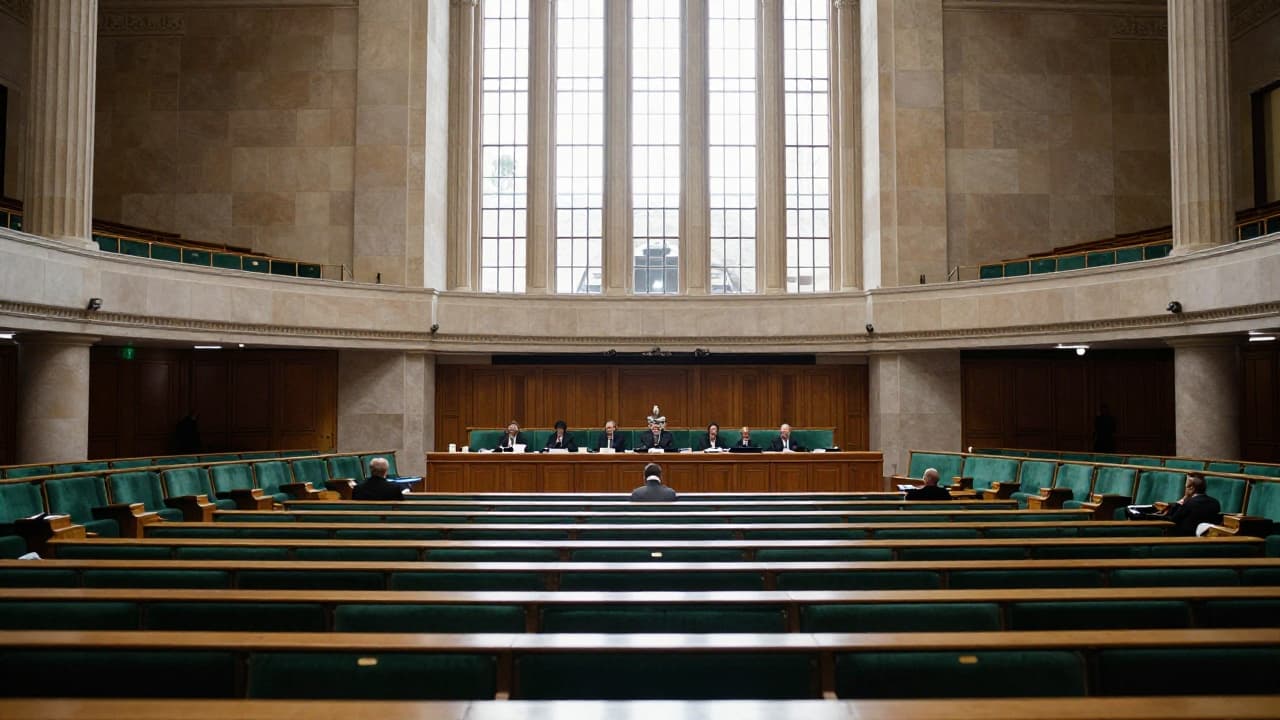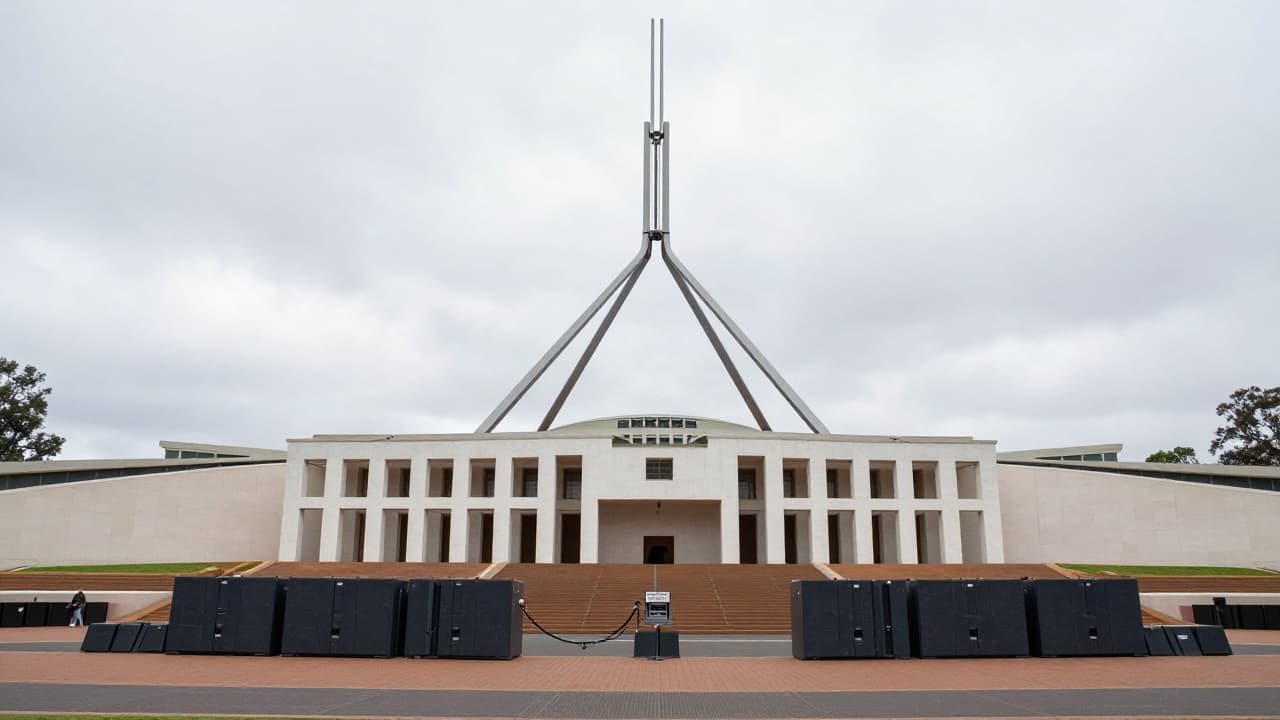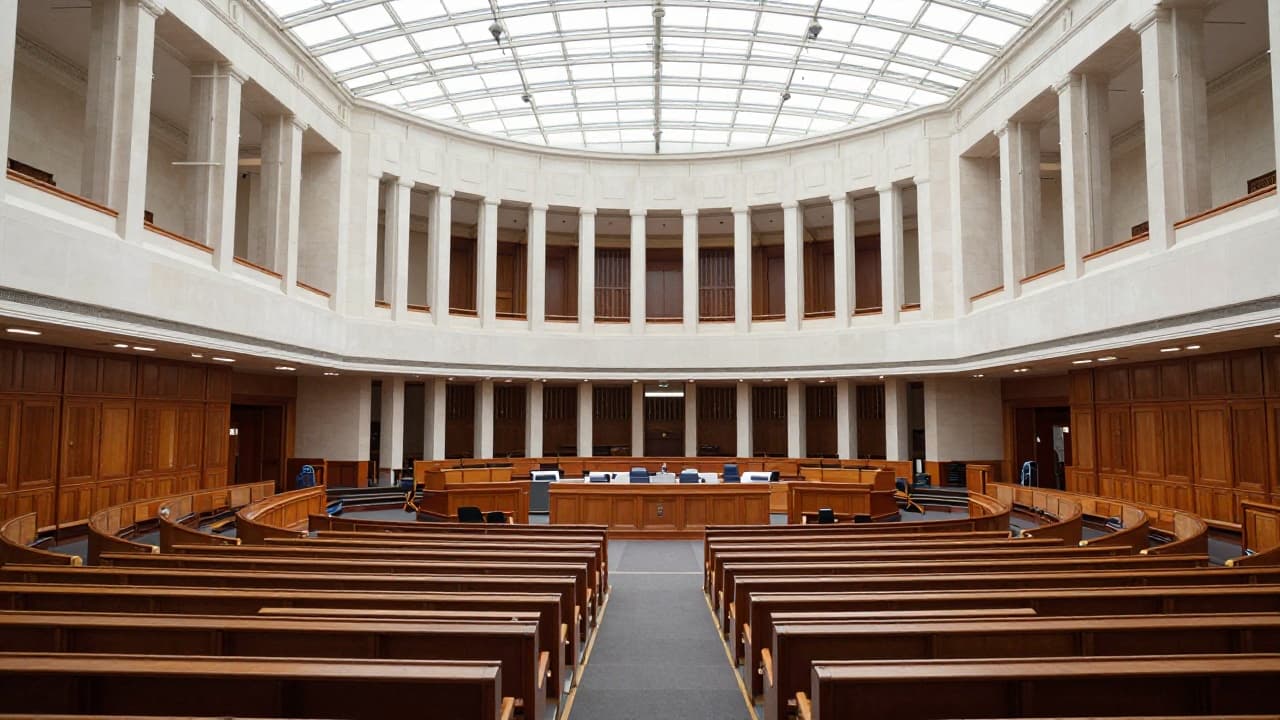
The Australian lower house debates and votes on domestic gas reservation today, while the Senate estimates committee and senior military officials face a series of questions regarding security lapses in defence structures. During Thursday's hearing, Chief of the Defence Force Admiral Mark Hammond expressed dissatisfaction with how the alleged sexual harassment case became public.
A camera was found in a cabin on HMAS Leeuwin on 11 October, while the vessel was anchored in Cairns. Three days later, independent Tasmanian Senator Jacqui Lambie raised the claim in the Senate, stating that the camera was found hidden in a women's shower. Defence forces confirmed the incident several hours later. Earlier this month, a naval member was suspended with pay after a camera was found in a women's toilet on HMAS Leeuwin. Chief of Navy Vice Admiral Matt Buckley described it as the "most heinous breach of trust".
Hammond rejected Lambie's proposal to remove sexual violence investigations from the jurisdiction of the defence forces. He also confirmed that reviews of military and air bases had cleared women's toilets of hidden cameras.
The Senate estimates committee also heard that the Australian Institute for AI Security was not informed of an OpenAI agent attack on the Medicare portal until eight days after OpenAI alerted Services Australia. The institute was established at the end of last year, and Dr Kate Conroy was appointed chief manager in May, tasked with monitoring and testing artificial intelligence for potential risks and harms. Conroy told the committee that Services Australia did not disclose the June attack on the Medicare portal to her until 19 September, after OpenAI published the breach on 11 September. Liberal Senator Jane Hume asked why the incident review is led by the Department of the Prime Minister and Cabinet rather than the institute, to which officials responded that the Department is investigating how agencies across government could coordinate in the event of future incidents, and the institute works closely with the department.
The Chief of Defence Force also told the committee that a news article claiming US security agents had secretly infiltrated Australian naval bases to test their security was "factually incorrect". The report alleged that the US Naval Criminal Investigative Service (NCIS) had deployed agents to several Australian bases, including HMAS Stirling in Western Australia and HMAS Kuttabul in Sydney, to "test existing physical security measures".
In addition, new research shows that Australia's immediate neighbours are more reliable than historical allies, and the United States is increasingly regarded as a "threat".