The Pope began his first visit to France, the first papal visit to the country in 18 years. During the visit he will deliver a speech on the development of artificial intelligence and discuss the future of Europe, while the central part of the visit will be a trip to UNESCO and an afternoon address on artificial intelligence.
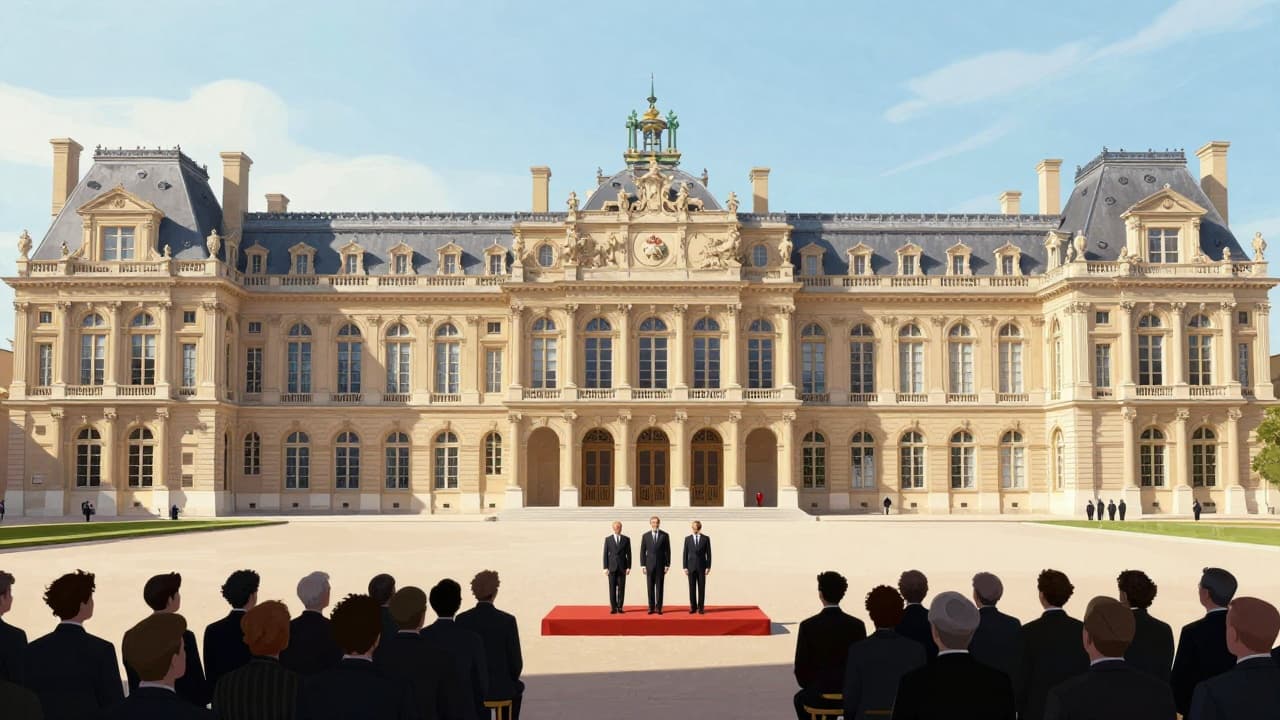
At the Élysée Palace, the Pope, alongside French President Emmanuel Macron, addressed a range of themes. He warned of the danger that artificial intelligence could create a 'paradise of machines', borrowing the phrase from Georges Bernanos's essay France Against the Robot (1947). He noted that technological development has contributed to a significant improvement in the living conditions of humanity, but also warned that technology regularly prompts debates about 'the ambiguous side of technology, which can cause harm when it is not used for good'.
The Pope expressed concern over the 'loss of our own humanity' due to uncontrolled technological progress, including artificial intelligence. He stressed the urgent need to educate minds in ethical reasoning, capable of recognising what is morally good. He also conveyed the urgent concern that 'we might lose our humanity amid a paradise of machines that attack and condition our daily life'. He added that French civilisation has for centuries worked to cultivate free individuals who are fully responsible for their actions. The theme of artificial intelligence will be further developed in his address at UNESCO, and the Pope continues reflections from his encyclical on artificial intelligence published earlier this year.
In his address, the Pope assessed that French history is 'rooted in Catholic tradition' and stressed that 'authentic secularism' does not exclude religion but is directed towards common endeavour. He also advocated for the role of Catholic schools and a broader role for Catholicism in public life.
The Pope also touched on French laws on assisted dying, which the country approved several months ago, and appeared to criticise them. He warned of the 'danger of seeking in science a solution and consolation for all our suffering', calling it merely 'an illusion'. He expressed concern about 'genetic manipulation, surrogacy, organ trafficking or assistance in dying'. He strongly reaffirmed that the protection of the right to life is an indispensable foundation for all other human rights.
The Pope called for no one to be 'indifferent to suffering' and to 'abhor' war, primarily in the context of the situation in the Middle East. 'We cannot remain indifferent to such suffering, which wounds human dignity and insults God. The weight of these situations must stir us, calling on each of us, wherever we are, to a true conversion of heart and a change of stance,' he said.
He advocated for 'dialogue and diplomacy' instead of conflict and criticised the 'false belief' that nuclear weapons 'guarantee security, fuelling a new and hard-to-control arms race'. He repeated his call for a total ban on nuclear weapons. He stated that peace is not merely a balance of forces but is built day by day through dialogue and justice, and called that we never reconcile ourselves to the prospect of war or consider it inevitable, but tirelessly promote dialogue and diplomacy so as to preserve peaceful societies that respect the dignity and rights of individuals and peoples.
He called on France to 'remain an untiring architect of peace and multilateralism, especially within our beloved Europe'. He concluded with the words: 'May your freedom always grow alongside devotion to the common good. May your brotherhood embrace all of humanity, and may the equality you strive for always be founded on the foundations of justice and love – not erasing differences between individuals, but allowing them to flourish harmoniously for the benefit of all society.'
During the visit, the Pope was expected to walk through the streets of Paris before heading to the restored Notre-Dame cathedral.