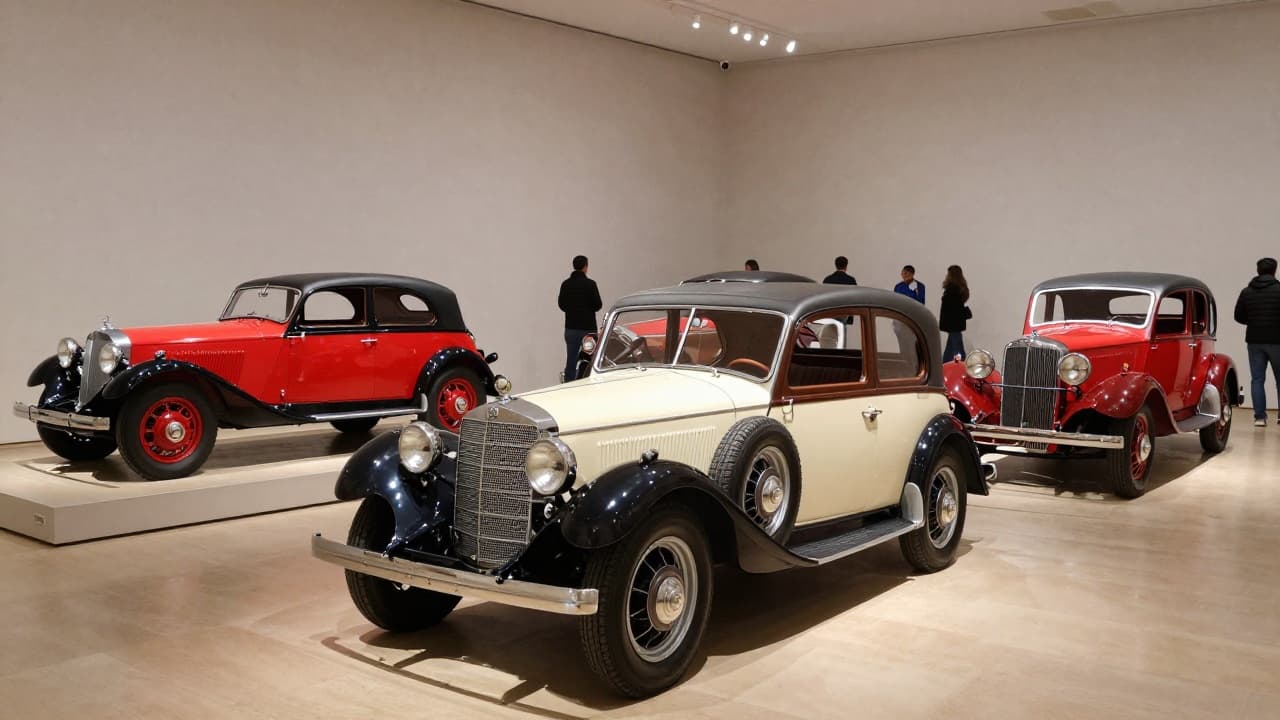
The Vatican Museums presented an exhibition dedicated to popemobiles on Wednesday, opening to the public on Thursday. Titled "A Century of Popemobiles", the display traces the evolution of the vehicles that have allowed popes to come into close contact with the faithful around the world for nearly a century.
The exhibition features eight Mercedes-Benz models that follow the development of papal vehicles from a luxury car in 1930 to more recent versions adapted for safety and encounters with the faithful. The oldest car on display is the Mercedes-Benz Nürburg 460, which Pope Pius XI received on 23 May 1930. The vehicle was specially made for the Pope, featuring a lavish seat upholstered in silk brocade, along with details in precious wood and metal.
Over time, popemobiles acquired new features, adapted to the growing need for direct contact with people. It became particularly important to enable the Pope to greet crowds, shake hands or bless children brought to him by their parents during public meetings.
Among the models on display is the Mercedes-Benz 300 d Landaulet, gifted to Pope John XXIII in 1960. This model had removable rear side windows, allowing the Pope to get closer to people along the road. A major change came in 1980, when Mercedes-Benz developed the 230 G model with a high, transparent dome on the rear for Pope John Paul II's visit to Germany. This dome provided protection while also enabling millions of faithful to see the Pope clearly. The popemobile thus gradually became a recognisable symbol of papal visits and encounters with the faithful.
Pope Leo XIV met with senior Mercedes-Benz executives and thanked them for their long-standing cooperation with the Holy See. He noted that changes in automotive technology had accompanied the development of papal journeys and facilitated encounters with the faithful during pastoral visits and large public gatherings. He also recalled the electric popemobile that Mercedes-Benz presented to Pope Francis, in line with his emphasis on environmental protection.
Leo XIV stated that technological innovations should continue to be directed towards preserving human dignity, caring for nature and the common good. He emphasised that technological progress must serve humanity, the preservation of nature and the common good.