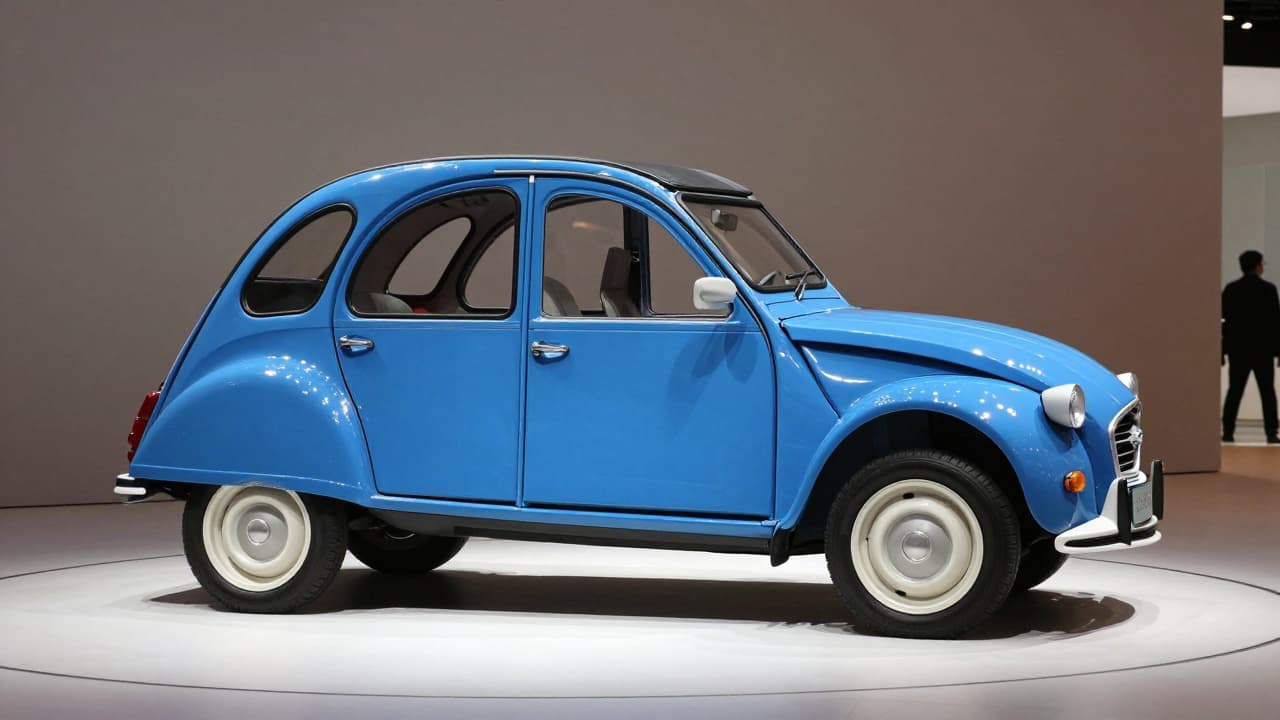
Citroën has revived the legendary 2CV, the popular 'Spaček', in a modern electric guise. The model is currently presented as a design study, with the concept making its debut at the 2026 Paris Motor Show. The concept offers a glimpse into the future of the model as an electric city car.
The new model belongs to the M1E segment, reserved exclusively for electric vehicles up to 4.20 metres in length. Unlike light quadricycles, these vehicles must meet all safety standards for passenger cars. The concept is 3.76 metres long, which is 7cm shorter than the 1948 original.
Details such as the pointed bonnet and separate bumpers take classic elements and modernise them. The door handles are almost identical to those on the first 2CV, but Citroën notes that the handles will likely not be included in the production model. The same applies to the digital license plates, thin mirrors, and large 18-inch wheels. The French manufacturer states that the 2CV is already 90 to 95 per cent ready for production.
The interior of the study features two bench seats without headrests, a portable radio, and a minimalist infotainment system with a small screen and a few buttons. The designers added a picnic basket with an engraved croissant symbol and an egg holder. The original requirement was that the car must accommodate four people and be comfortable enough that raw eggs would not break during a drive over rough terrain.
The target mass for the new 2CV is 1,000kg. The slightly larger Renault Twingo E-Tech weighs around 1,275kg. It is not yet known how Citroën plans to achieve this weight saving. The new 2CV is expected to attract customers with a starting price of €15,000, with sales to begin in 2028. Citroën is focusing on the 2CV in terms of lightness, charm, and attractive pricing, rather than on engine power and range.
Recall that the original 2CV was designed as an affordable car for rural France. Citroën approached the 2CV with radical simplicity: a light weight, a modest engine, front-wheel drive, and a suspension system that was highly comfortable on poor roads. The model was unveiled in 1948, with production starting the following year. It featured an air-cooled two-cylinder boxer engine, a large canvas roof, and a unique body. Production of the 2CV ended in 1990, with more than five million units sold.