
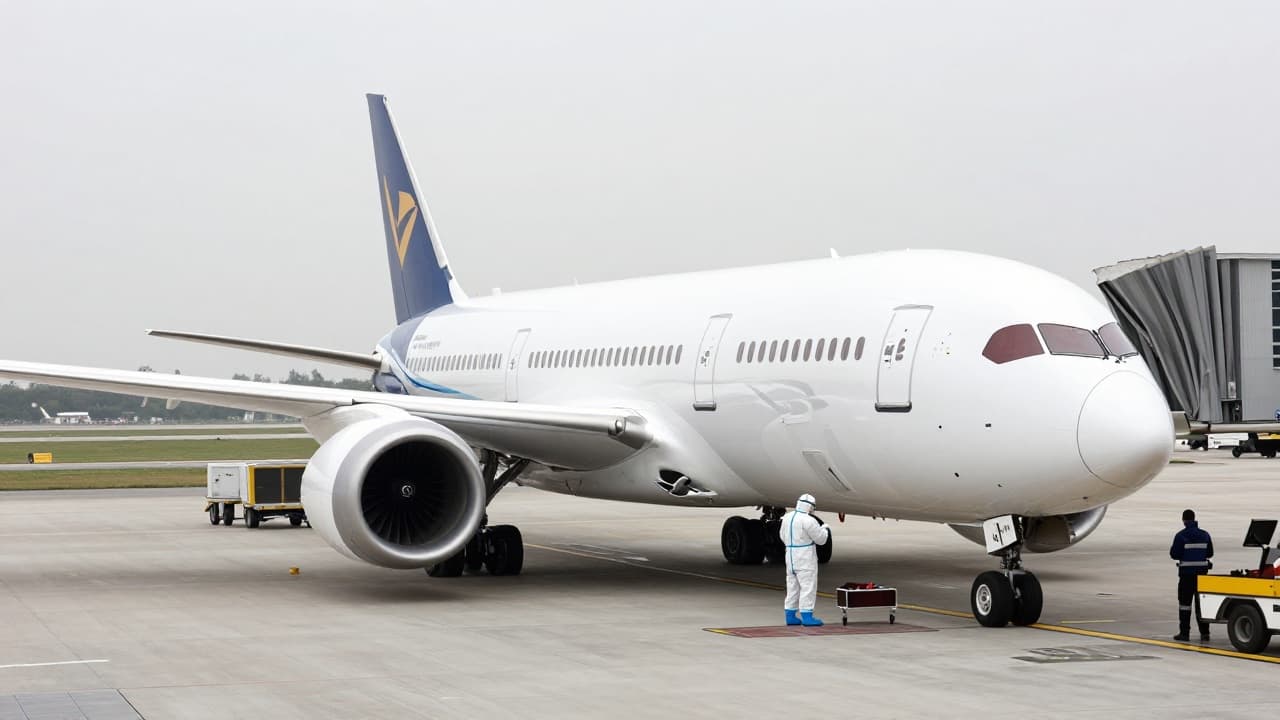
Qantas, the Australian airline, grounded one of its aircraft in Rome after bedbugs were discovered in the passenger cabin. The parasites were found on the flight from Perth to Rome, specifically on QF5, which was operated by a Boeing 787 Dreamliner.
The bedbugs were identified four days prior in the forward section of the economy cabin. Following the landing in Rome, the aircraft was immediately withdrawn from service for thorough cleaning. Consequently, the return flight from Rome to Perth, scheduled for 10 October, was cancelled.
A Qantas spokesperson confirmed that the flight was cancelled to allow technical staff to carry out disinfection after "a problem was identified on a small number of seats in the economy cabin." The airline stated it was "sincerely sorry" for the inconvenience caused to passengers. Qantas stated that affected passengers were provided with accommodation and rebooked on other flights within 48 hours. The company noted that its aircraft cabins are cleaned regularly to high standards, with disinfection carried out as a standard precaution every 50 days.
Professor Michelle Power, a parasitologist at Macquarie University, stated that the bedbugs had "likely" entered the aircraft via the luggage or clothing of a passenger. She explained that bedbugs are associated with travel, noting that people may stay in hotels infested with bedbugs. As they are attracted to the smell of human clothing, they can enter luggage. Professor Power added that bedbugs are insects that do not fly, or at least not without the aid of an aircraft.
Professor Power highlighted that bedbugs are not dangerous, but their bites can cause itching and irritation. She noted that the problem lies in the difficulty of eradicating them, as they can hide for long periods in fabrics and cracks without food. According to her, the issue with bedbugs has "two sides": on one hand, wealthier individuals who travel frequently may spread them, while on the other, those facing health inequalities may struggle, as they cannot afford pesticides or the high temperatures required to destroy the insects, which is 55 degrees Celsius.