Chinese President Xi Jinping has arrived in Washington for a three-day state visit to the United States. President Donald Trump hosted him at Joint Base Andrews.
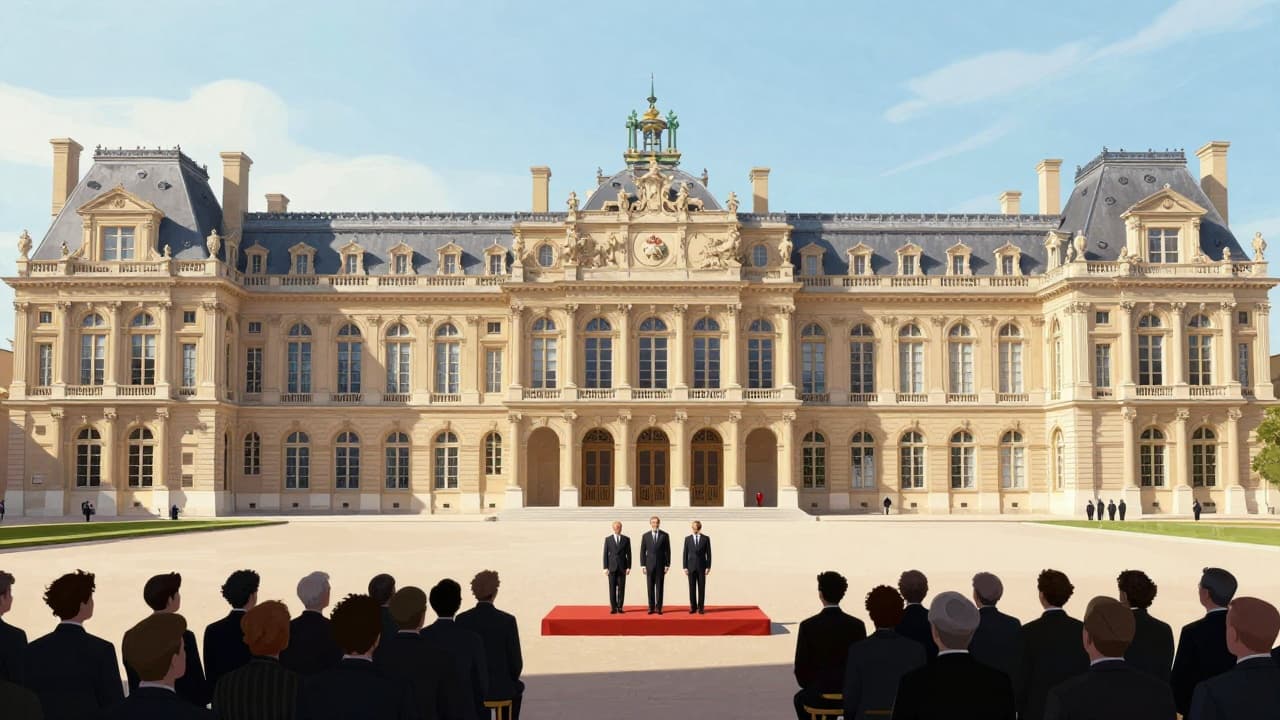
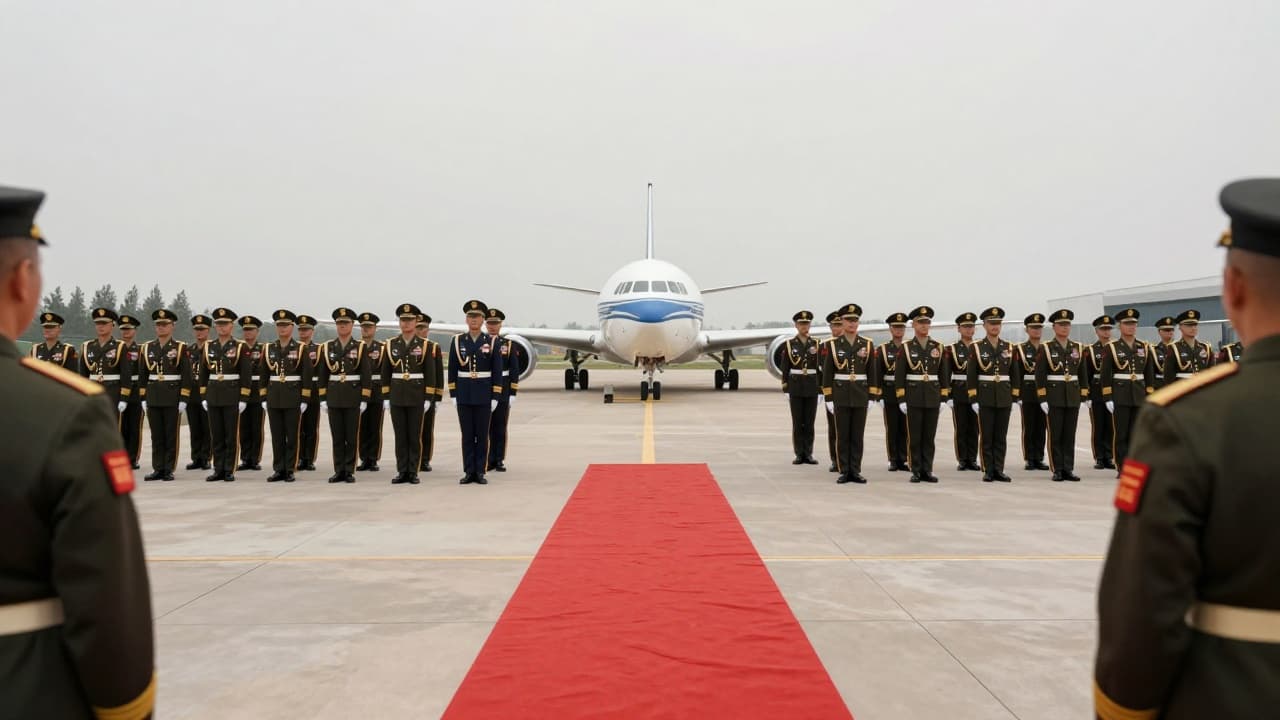
Trump and the first lady, Melania Trump, welcomed Xi and his wife, Peng Liyuan, to the aircraft. On the tarmac lay a 30-metre red carpet, along which stood a guard of honour. Two children presented the Chinese president and his wife with flowers. Trump and Xi shook hands and spoke briefly, with Trump at one point patting Xi on the back.
The most striking part of the welcome was the flyover by two US B-1 strategic bombers. As Trump and Xi stood side by side on the tarmac, the bombers flew overhead with a loud roar. At the same time, six F-22s and six F-16s were stationed on the ground. US presidents rarely go to the airport to greet foreign leaders in person, Trump having previously received Russian President Vladimir Putin in a similar manner in Alaska.
The main part of Xi’s visit will take place at the White House. A new ceremonial event is scheduled, along with talks between the two presidents behind closed doors and a state dinner. The ceremony continues with a formal welcome on the White House lawn, a private tea with the US president and first lady, and a tour of the National Archives.
Trump and Xi will discuss tariffs, trade, rare earth metals, advanced chips, artificial intelligence, Taiwan, and China’s relations with Iran and Russia. One of China’s key levers is rare earth metals, which are essential for the production of electronics, cars and military equipment. China dominates the processing of rare earth metals, and in recent months has shown how dependent the US industry is on Chinese supplies by imposing restrictions on exports. Beijing could offer Trump easier access to these materials in exchange for a relaxation of some US trade and technology restrictions.
China has committed to large purchases of US soy, and talks are also under way on an additional $1 billion in US agricultural products. The table also features the possibility of restoring US oil and gas imports, which have fallen sharply following new tariffs. Negotiations are under way on a broader package that could include a mutual reduction in some tariffs and the reopening of the energy market. Beijing, for its part, will seek to obtain a relaxation of US restrictions on the export of advanced chips and other technologies to China. The control of advanced semiconductors is one of the main weapons used by Washington in an attempt to slow the development of artificial intelligence and military technology in China. No major final agreement is expected, but rather a series of limited concessions by the two sides to extend the period of relative trade peace.
China considers the island of Taiwan to be part of its territory and does not rule out the use of force to take it over, while the US sells weapons to Taiwan and opposes a change in the status quo by force. Trump and Xi will also discuss Iran and Russia, with Washington pressing Beijing over the purchase of Iranian oil and the export of dual-use goods to Russia. Trump has recently stressed that he wants a direct relationship with Xi, and that talks between the two leaders are necessary to prevent the economic and strategic rivalry between the two powers from escalating into a serious crisis.
Xi has stated that Beijing and Washington should be partners, not rivals. He also said that, with joint effort, the visit to the US would certainly be productive. He suggested that the two sides should move towards each other and work together to build a stable relationship in which cooperation is the main backbone, competition is kept within appropriate limits, differences are resolved, and peace can be expected.