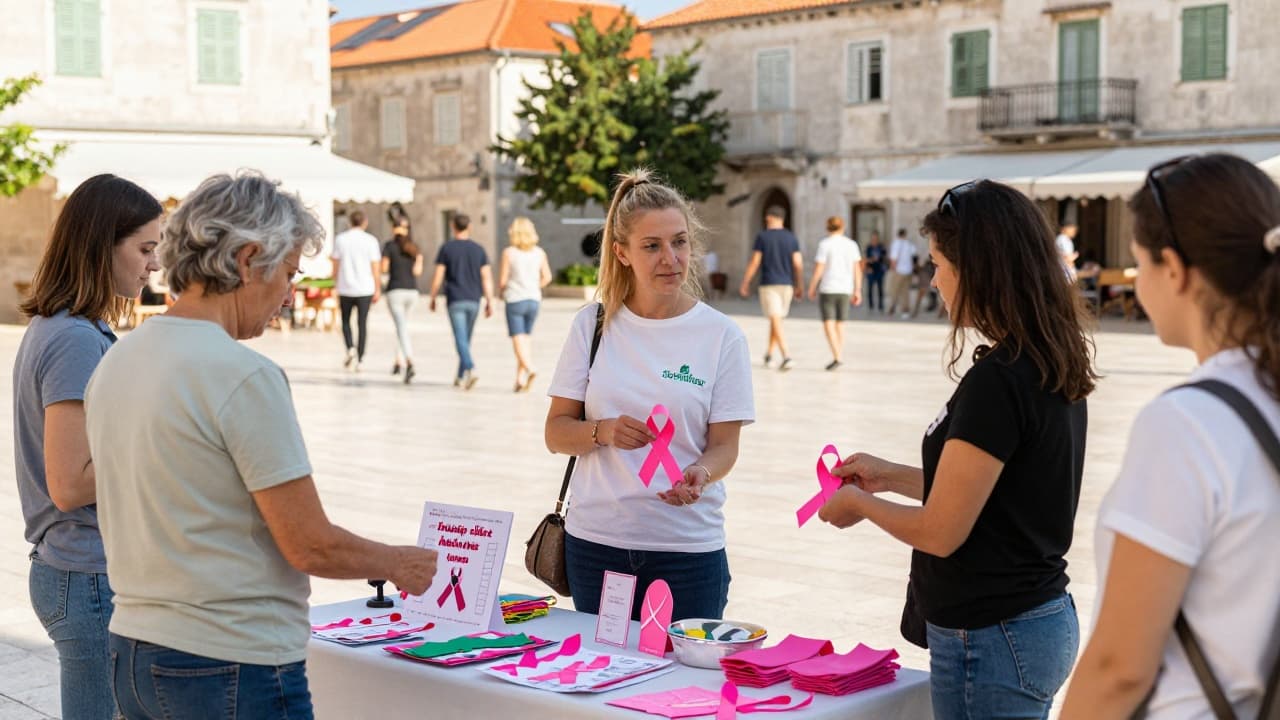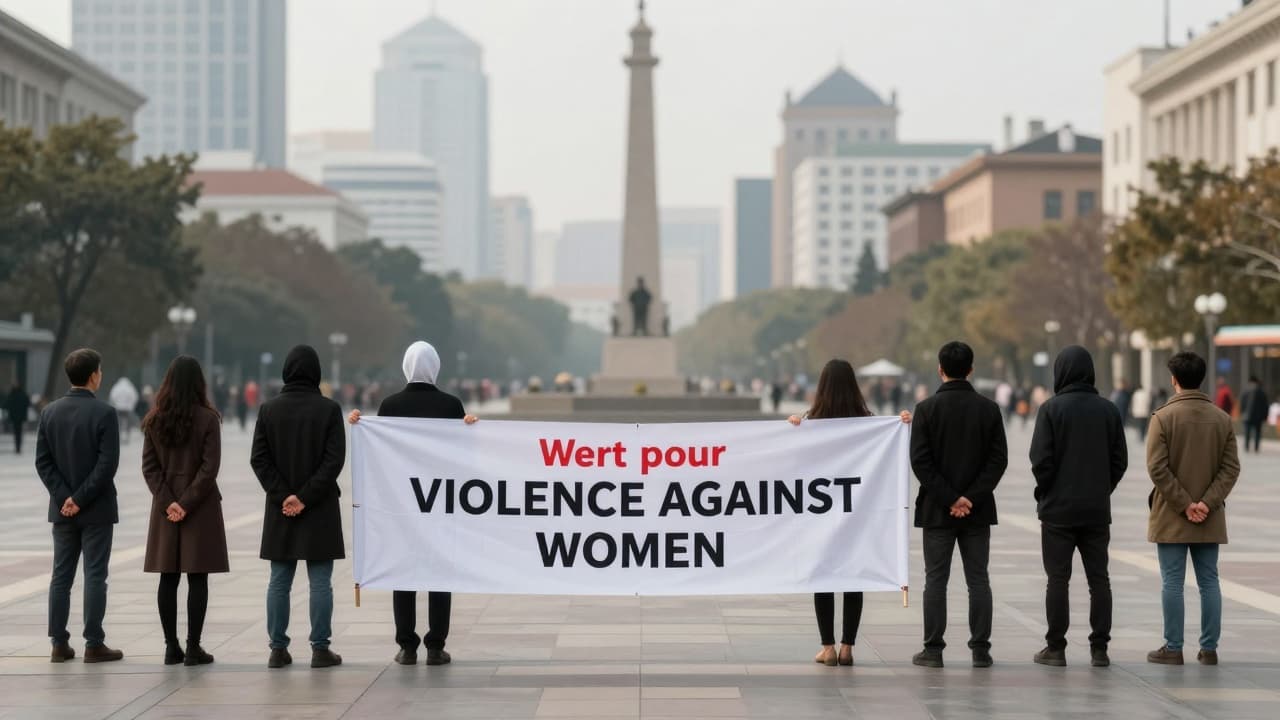
On the Square of Freedom in Osijek, a symbolic public action titled 'While the minister sheds light, women remain in the dark' was held today, organised by the Adela Association. Osijek joined the action of women's organisations and initiatives in a total of 17 cities and towns across Croatia, with the action taking place ahead of the National Day for the Elimination of Violence against Women.
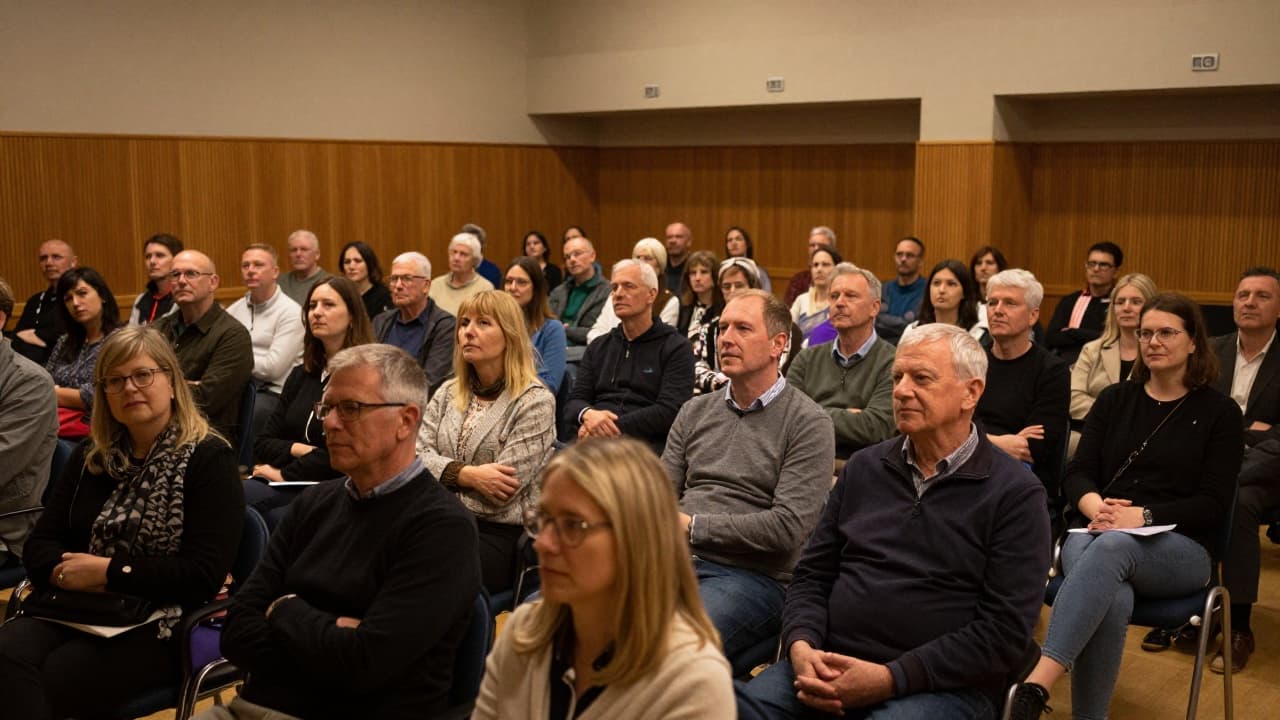
Around 25 participants gathered at the symbolic action in Osijek. The occasion for the gathering was the femicide in Slavonski Brod, and the way in which, as the Adela Association warns, responsibility is again being viewed through the lens of the victim's actions following the murder.
The Adela Association considers that this approach dangerously shifts the focus from the responsibility of the perpetrator and the institutions to the behaviour of the woman who was subjected to violence. Following the femicide in Slavonski Brod, the Minister of the Interior, Alen Ružić, highlighted that the victim had previously withdrawn protective measures, a fact that casts a 'specific light' on the case.
The Adela Association has been highlighting the failures of institutions, the need to establish accountability, and the danger of seeking explanations after a murder rather than answers on how the system responded. In September 2023, Marko Smažil, a police officer at the time, killed his partner, Mihaela Berak, with an official pistol. The police initially treated the case as a potential criminal offence against public safety, specifically negligent handling of a weapon, presenting a series of inconsistent explanations to the public. The County State Attorney's Office subsequently reclassified the case as murder.
In March 2025, Smažil was sentenced to 18 years' imprisonment in a non-final verdict. However, in January 2026, the High Court annulled this verdict and returned the case for a retrial, which is currently ongoing.
The Adela Association, along with other organisations and initiatives involved in the action, are calling for a specific law against all forms of gender-based violence and for violence against women to be moved from the realm of misdemeanours to exclusively criminal law. They are calling for a uniform and mandatory assessment of the risk of recurrence of violence and femicide, with reassessment after every change in circumstances, as well as mandatory and continuous specialist training for all those assessing risk and making decisions on the protection of women.
Among the demands are the immediate and coordinated response of institutions, the effective prosecution and sanctioning of perpetrators, and accountability for failures in the protection of women. The organisations are calling for a comprehensive National Strategy against all forms of violence against women, in line with the Istanbul Convention, stable, adequate and long-term funding for women's organisations providing specialist services to women victims of violence, as well as the identification of failures and accountability in the case of the femicide in Slavonski Brod, and concrete changes in the system's handling to ensure such failures do not recur.