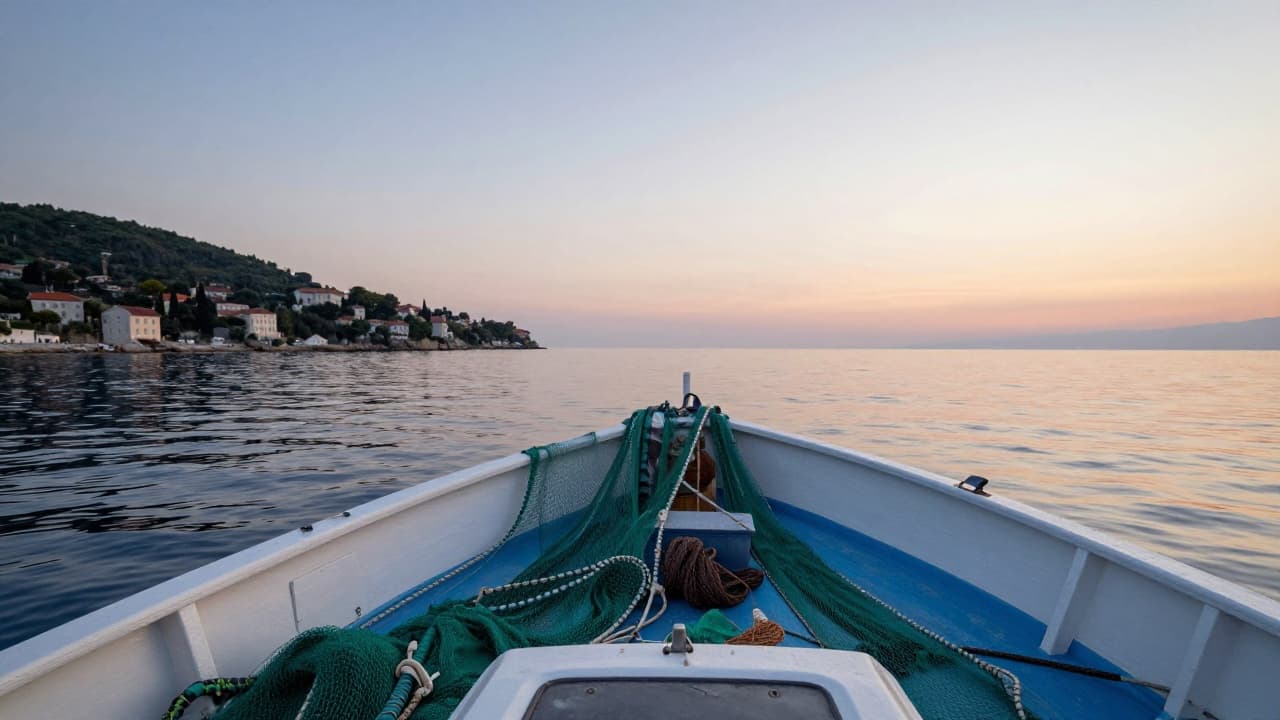
Fishermen in Istria are facing the strictest regulations to date. Instead of the previous 20, they are now permitted to go fishing only five times a month, a measure driven by the serious threat to small pelagic fish stocks caused by overfishing.
An HRT team investigated whether the fish stocks can be restored while ensuring the survival of families dependent on fishing. Previous measures, such as seasonal closures, have not yielded the expected results. Pavle Bajčić, a fisherman from Krk, said the results have been meagre, with fish still small, indicating something is wrong. He added that it often happens that a boat goes to sea for five days and returns without any catch, and even when luck might favour a catch, the quota has already been used up.
Reducing the number of fishing days along the western coast of Istria could force many fishermen to abandon their profession. Intensive efforts are underway to find the right measures to restore anchovy stocks in the Adriatic. Ante Mišura, director of the Fisheries Directorate at the Ministry of Agriculture, Forestry and Fisheries, emphasised that the sardine stock is stable, but the anchovy is below the B limit, a state where self-recovery is impossible and specific measures are required to restore the stock. The situation is serious, and measures could include quota reductions or a moratorium of one or two years.
Vanja Čikeš Keč from the Institute of Oceanography and Fisheries in Split said that the blue fish stock has been in constant decline, falling below the threshold in recent years, so it is uncertain whether it will recover, which is why these measures are being implemented. The state has secured support for fishermen during closure periods, which, depending on the size of the vessel, can amount to up to 35,000 euros. Monthly closures have not produced results, and if reducing fishing days also fails, longer complete closures may be possible.
Stjepan Nedoklan, president of the fishermen's guild of the Primorje-Gorski Kotar County, said that no one is happy about this, but given the situation, something must be done. Mišura emphasised that next year, there may be moves to expand to other areas and increase the number of days, but the most important thing is that the fleet and processing industry survive, while protecting the blue fish stock for the next 50 years. Both the anchovy and the fishermen, as well as the processing industry, must be protected, which is why scientists are cautious with their recommendations. Čikeš Keč said that it would suit the fish if they were not fished, but it would not suit the fishermen, so someone has to be dissatisfied.
Dolphins are protected, and tuna benefit from quotas dictated by the international organisation "Ikat". According to fishermen, tuna numbers are increasing, and it appears that, unlike in the past, they have begun spawning in our part of the Adriatic, a development that neither anchovies nor fishermen welcome.