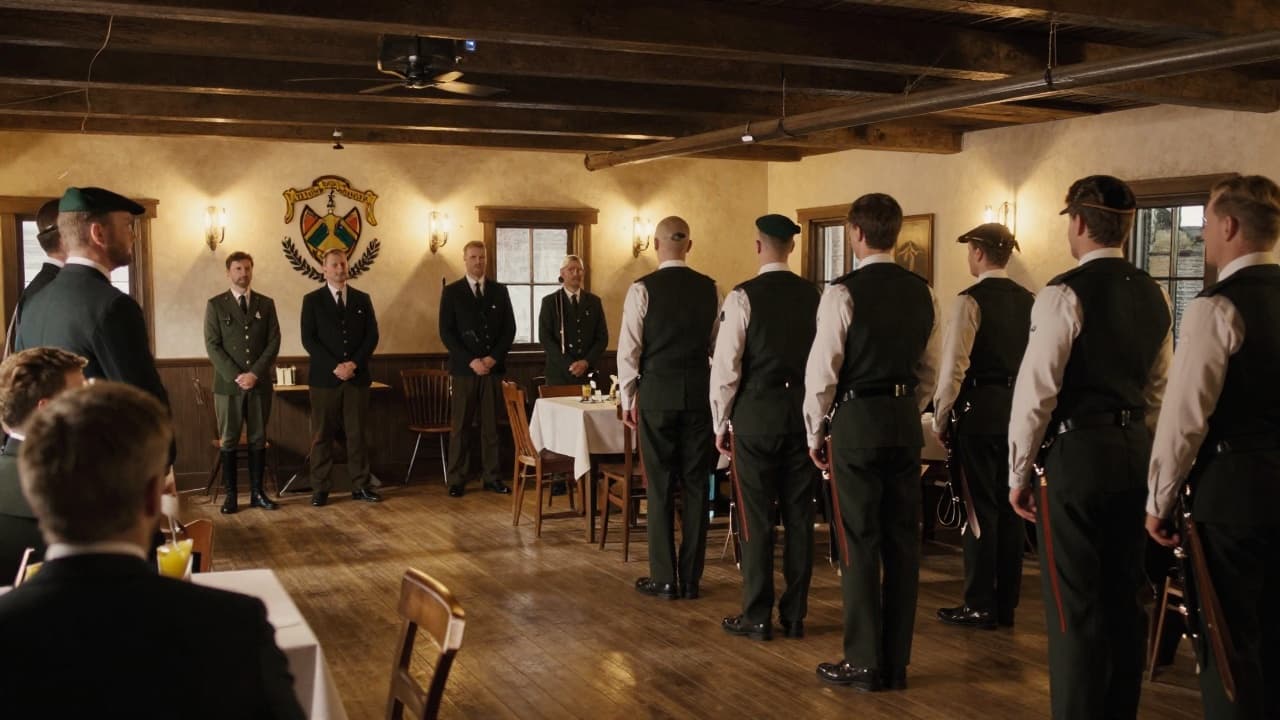
At the Stare Staze restaurant in Kršćan, members of five hunting societies and their guests solemnly marked the 75th anniversary of organised hunting in the Labin region. The ceremony opened with a minute's silence in honour of all deceased hunters, followed by greetings from the representatives of the Istria County Hunting Association and Zoran Karlić on the horn.
The history of hunting in the Labin region was discussed by Dalibor Kvaternik, head of the Labin Hunting Office, who also served as the moderator of the event. A special address was delivered by Branko Zuliani, president of the Balotin Vinež Hunting Society. In his address, he highlighted that the system of hunting in the Labin region, as in other parts of Istria, began after the Second World War, specifically in 1945/46. At that time, hunting permits were issued, which served as the equivalent of today's hunting licenses, and were issued by the administrative authorities of the then-kotars responsible for forestry affairs, based on the decision of the Regional Board for Istria. The 1945 decree, which stipulated the conditions for hunting, was of great importance as legislative provisions could not be applied in Istria at the time, given that Istria had not yet been attached to Croatia.
With the introduction of the Hunting Act in Croatia in 1949, the organisation of hunting changed, and hunting grounds were divided into state and communal. State hunting grounds were managed by forestry, while communal ones were managed by hunting associations. The local authorities in Istria established hunting grounds which were assigned to hunting associations by contract for 15 years. The Kotar of Labin established the hunting grounds of Labin, Vinež, Krš, and Koromačno in 1950, and the Kotar of Pazin established the hunting ground of Pićan. By 1951, hunting societies had been established in the Labin region, territorially aligned with the established hunting grounds, which continue to operate to this day: the 'Balotin' Vinež Hunting Society, the 'Kamenjarka' Hunting Society in Labin, the 'Kamenjarka' Hunting Society in Pićan, the 'Ubas' Hunting Society in Koromačno, and the 'Zec' Hunting Society in Krš. All these societies were members of the Association of Hunting Societies of Pula until 1961, when, following the formation of new municipalities, the Association of Hunting Societies of the Labin Municipality was established. This association operated until 1995, when the Hunting Association of Istria County was established. Since the founding year is the same for all societies, the anniversary is celebrated every five years, and this year marks the 75th anniversary.
Zuliani highlighted that in the five years since the last gathering, the hunters of the Labin region have achieved much good for hunting, as good management is their priority. Although the balance in nature is changing significantly due to the development of technology and urbanisation, hunters are contributing significantly to its restoration, he said. Without hunters, this balance would be even more threatened, especially the wildlife in nature, and wildlife would be in much greater shortage of food and water. Zulani reported that the Istria County had extended the leases for all hunting grounds in the county, including their societies, for a further ten years, until 2036. He added that they had successfully implemented a number of projects with the County of Istria.
As a problem affecting hunting societies in the county of Istria, Zulian mentioned the incidence of vehicle strikes on wildlife. Due to the ambiguity of the legislation, although a uniform insurance policy is in place through the Croatian Hunting Association, insurance companies are seeking to recover the costs from the hunting associations, which leads to protracted court proceedings and legal uncertainty. Speaking of the African swine fever, which appeared in Slavonia in June 2023, Zulian said that they strictly adhere to the biosafety measures ordered by the authorities before, during and after hunting.
In the name of the Croatian Hunting Association and the Hunting Association of the Istria County, Graciano Prekalj addressed the attendees and congratulated them on the anniversary. He highlighted that the government had, between 2018 and the present, paid out 55 million euros in compensation for traffic accidents. He announced that the law was being amended so that from 1 January, compensation would no longer be paid, as it was provided that the licensed hunter was not required to pay compensation if he did not conduct hunting, and if the driver had complied with all regulations, then neither was he at fault, in which case each party would bear their own losses. Prekalj was concerned that there might be lawsuits against the hunting associations.
In the name of the County, the attendees were addressed by Ezio Pinzan, who highlighted the important role of hunting in Istria and wished the hunting societies many new members. The mayor of Labin, Donald Blašković, in the name of the City of Labin and the surrounding municipalities, said that this celebration was a confirmation of a fine tradition and a tribute to all the hunters and hunting societies to whom everyone is proud.