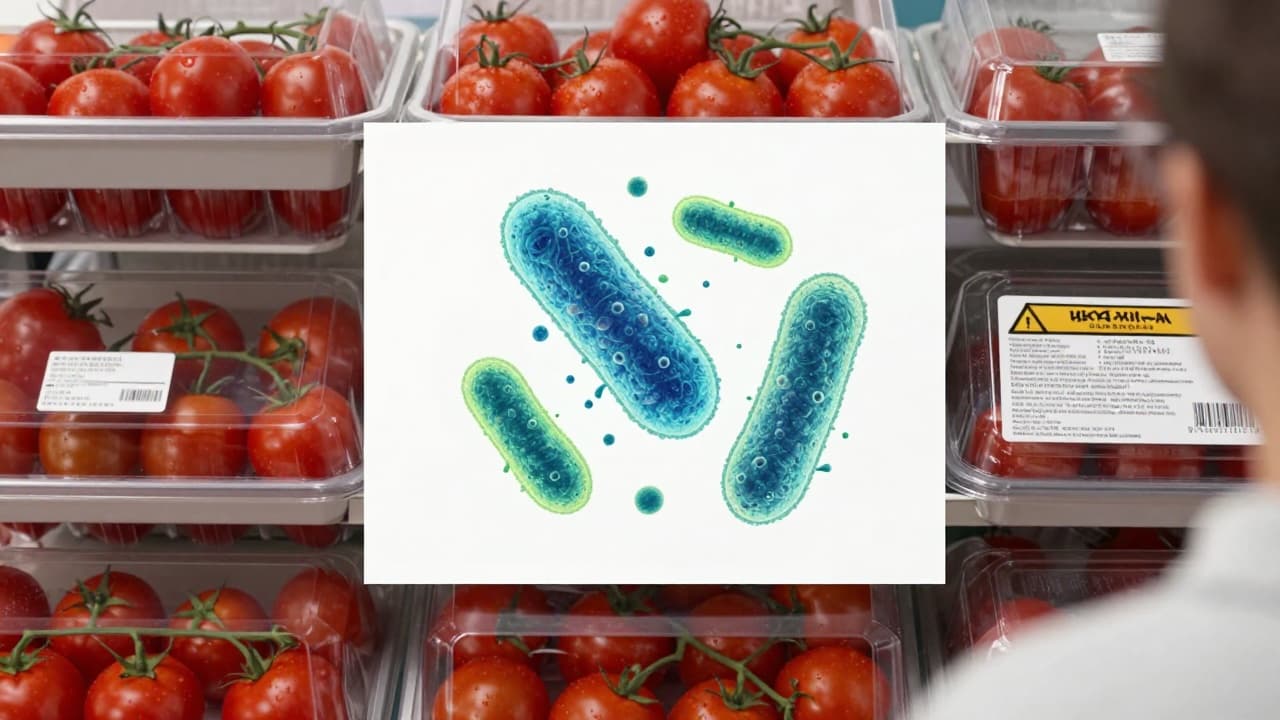
Salmonella bacteria have been identified in fresh cherry tomatoes originating from Italy, with the affected batches distributed to the Croatian market. According to RASFF data, the tomatoes reached not only Croatia but also the Slovenian market, with the alert classified as a serious risk.
Italian inspectors discovered two serotypes of Salmonella, Salmonella Typhimurium and Salmonella Strathcona, during official controls. According to the RASFF notice issued on 9 October, the sample was taken on 15 September, and laboratory analysis revealed the presence of Salmonella Typhim bacteria. The tomatoes were distributed in bulk, in transport boxes, and Italian authorities launched a withdrawal of the contaminated product.
In Italy, more than 130 cases of infection linked to the consumption of the disputed cherry tomatoes have been reported. Health authorities in the country reported cases of salmonellosis in four regions, including Lombardy, Apulia, Lazio, and Friuli-Venezia Giulia. In the area of Brescia, 117 cases were recorded, with 15 in Bergamo. Italian public television, Rai, reported on 19 September that 117 people had been identified in the area of Val Trompia with symptoms linked to the outbreak, among them children, with 13 of them then hospitalised. Analyses conducted on the infected confirmed the presence of salmonella.
The tomatoes were grown in Sicily, with bacteria detected in the irrigation water on agricultural land in Sicily. It is suspected that the water was the source of contamination, but the exact circumstances of the infection and its link to specific batches are still under investigation. Investigators are considering the possibility that the tomatoes were contaminated during cultivation, rather than during transport or food preparation. The public prosecutor’s office has launched an investigation, and according to reports from Corriere della Sera on 10 October, the prosecutor’s office in Brescia has opened an investigation against unknown persons on suspicion of causing bodily harm through negligence. Investigators are examining the supply chain of cherry tomatoes delivered from Sicily, specifically the batches packaged by the company in Gele. The company Markas, responsible for preparing school meals, confirmed that salmonella was detected in one batch of tomatoes used in the diet of children, following complaints from around 15 families.
The authorities of the Apulia region introduced preventive measures at the beginning of October. From 2 October, the serving of fresh raw tomatoes has been suspended in kindergartens and primary schools, with a similar recommendation issued to hospitals, care homes, and other institutions caring for vulnerable groups. Rai reports that Italian health authorities are investigating cases linked to Salmonella Strathcona and the monophasic variant of Salmonella Typhimurium.
Salmonella is a bacterium that most commonly causes infection in the digestive system. Symptoms of salmonellosis typically appear as diarrhoea, high fever, and abdominal pain and cramps, with nausea, and sometimes vomiting, most commonly between six hours and six days after infection. In most healthy adults, the infection passes without serious consequences, but in young children, the elderly, pregnant women, and immunocompromised individuals, more serious complications may develop. In severe cases, the bacteria can enter the bloodstream, causing a serious infection requiring hospital treatment, and dehydration may also occur.
Salmonella Strathcona is a relatively rare serotype, linked to cherry tomatoes in Europe since 2011. Infections with this serotype occur seasonally, most commonly from summer to the end of the year. The European Centre for Disease Prevention and Control (ECDC) and the European Food Safety Authority (EFSA) published a report in October 2025 on the multi-country spread of Salmonella Strathcona associated with the consumption of tomatoes. Water samples taken from the area of a tomato producer in Sicily were positive for Salmonella Strathcona, but it was not confirmed that the irrigation water was the cause of the latest outbreak. According to the ECDC and EFSA report from October 2025, 437 cases of Salmonella Strathcona infection linked to the international outbreak were confirmed, including three cases in Croatia. European health institutions determined that tomatoes grown in Sicily were the source of certain outbreaks in Austria and Italy. These data refer to previous years and do not indicate a confirmed infection in Croatia during the most recent period.
It is not known in which shops in Croatia the potentially contaminated tomatoes were sold, nor whether cases of infection linked to the disputed tomatoes have been recorded in Croatia. It has not been confirmed which Croatian shops or distribution centres received the disputed batches, whether the tomatoes were sold to end consumers, nor have the batch numbers been publicly listed to allow consumers to identify contaminated products. There is no confirmation that new cases of salmonellosis linked to this batch have been recorded in Croatia. Consumers are advised not to consume tomatoes from the disputed batches due to the identified contamination. Index has sent a query to the State Inspectorate regarding which Croatian companies received the disputed tomatoes, whether they ended up in shops, and whether procedures for their withdrawal or recall from the market have been initiated.