
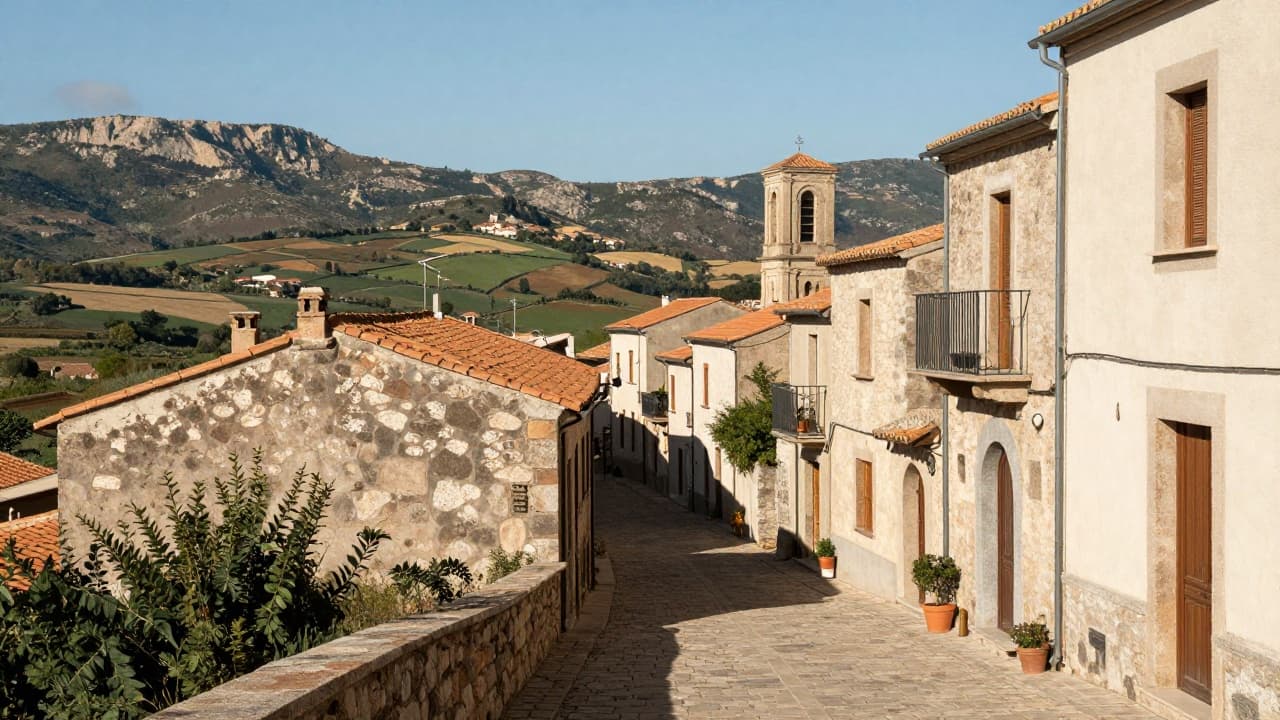
The Sardinian village of Bolotana, located 110 kilometres from the well-known 'blue zone' of longevity, has a female population with the longest life expectancy in the world, or at least one of the longest, according to a study published in Frontiers in Aging. Analysis of demographic data from 2021 to 2025 shows that a 70-year-old woman in Bolotana can expect to live a further 20.85 years, while the average in the province of Nuoro, to which Bolotana belongs, is 18.61 years. The average across Sardinia is 18.4 years, and in Italy 18.06 years.
The probability that a 70-year-old woman from Bolotana will reach 100 is 13.8 per cent, which is significantly higher than in the province of Nuoro (4.33 per cent), Sardinia (4.43 per cent) or Italy as a whole (3.54 per cent). This probability is three times higher than for women in the US. According to life expectancy and the likelihood of reaching 100, women in Bolotana rank among the world's best, just behind Hong Kong.
A 70-year-old man in Bolotana can expect to live a further 16.02 years on average, while the Italian average for 70-year-old men is 15.48 years. The estimated probability of a man in Bolotana reaching 100 is 4.92 per cent, with the national average at 1.41 per cent.
The authors of the study note that the results, due to the small number of residents in Bolotana, are highly sensitive to changes in the observed period. When they analysed the period from 2015 to 2019, the estimated probability that women would reach 100 was only 1.46 per cent, and the expected remaining life expectancy for women in that period was 18.3 years.
Researchers state that determining the cause was not the aim of this demographic analysis. In the paper, they note that the observed advantage in survival may be due to several mechanisms, including genetic heritage, dietary habits, physical activity, family support, social cohesion, and access to healthcare. The epidemiologist and co-author of the study, S. Jay Olshansky, notes that residents live on steep, hilly terrain, grow much of their own food, and that social isolation is rare. He adds that the location has very well-preserved historical records which allow for precise verification of residents' ages. Bolotana had 2,266 residents during the study period. The co-author of the study, researcher Dan Buettner, is the founder of the Blue Zones project.