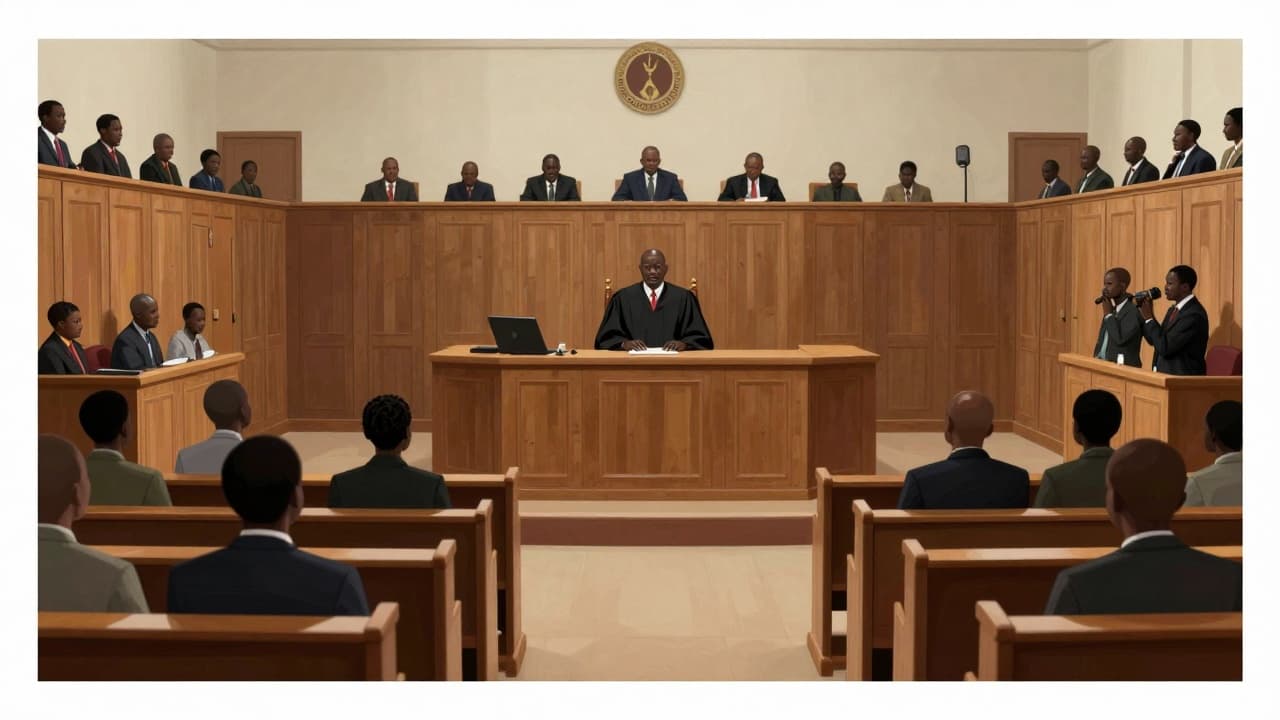
Duane 'Keffe' Davis, a former gang leader from California, was sentenced to 40 years to life in prison for the murder of Tupac Shakur in 1996. The sentence was handed down on Tuesday by Judge Carli Kierny. Davis is the only person convicted in connection with the murder, which has remained unsolved for decades.
Tupac Shakur was shot on 7 September 1996, shortly after a boxing match involving Mike Tyson. He was just 25 years old. He was shot in the head and died from his injuries a few days later. He left behind a musical legacy that has defined a generation, with albums sold in excess of 75 million copies worldwide.
Before the sentencing, Sekyiwa Shakur, the rapper's sister, addressed the court. 'It was hard sitting there, listening over and over again to someone describe what happened to Tupac Amaru Shakura,' she said. She described her brother as a father figure. 'He was the one God entrusted to look after me,' she said. She added that due to the grief over her brother's murder, she had been hospitalised several times for depression, suicidal thoughts and PTSD. Sekyiwa Shakur and the rapper's half-brother, Maurice, called for Davis to receive the maximum sentence. 'It is time you sat down and thought about what you have done to the world, not just to me,' she told him. Davis, during the statements, stared fixedly, but appeared stoic. He had previously stated that he would appeal.
Judge Kierny addressed Davis at the time of sentencing. 'For three years I have heard you say the same thing... I was involved in this. But I am different. I have moved on. I have left Compton,' the judge said. 'You cannot take a man's life, his future, and simply walk away from it,' he added.
The investigation was hampered by a number of factors. The code of silence within street culture made some witnesses reluctant to cooperate with the police. Las Vegas police were sceptical of the evidence provided by their colleagues in Compton, as the head of security at Shakur's publishing house was a former police officer from Compton. Orlando Anderson, a gangster and Davis's nephew, was on the radar of police as a possible shooter. On the night of the murder, the young star had a confrontation with Anderson. Las Vegas police interviewed Anderson, but he was never arrested. Anderson died in 1998, and before his death denied any connection to the murder.
Davis was arrested in 2023 on charges of murder. The breakthrough in the case came through his own media tour, in which he highlighted his status as one of the last surviving witnesses, and his 2019 'tell-all' memoirs. Davis felt emboldened by the 2008 agreement he had made with the police. At that time he had spoken openly to investigators about the shooting of Shakur, who were actually seeking information about the death of Christopher Wallace, known as Biggie Smalls or The Notorious B.I.G. Under the agreement, Davis was not to be brought to justice for crimes he had spoken of. In his memoirs 'Compton Street Legend' Davis wrote that he and a group of other men targeted Shakur and his entourage, seeking revenge for a conflict with his nephew. The memoirs and interviews became the central part of the prosecution's case. The prosecution argued that the details represented a confession and that his public statements had invalidated the agreement.
During the trial, Davis's defence team argued that the details were embellished. The defence argued that there was no physical evidence, such as the murder weapon, linking Davis to the murder in Las Vegas. The lawyers sought to persuade the jury that his statements should not be considered credible, arguing that Davis was exaggerating and making unverified claims to attract attention, increase interest in his book and gain financial benefit. The prosecution, on the other hand, believed that Davis's statements provided important insight into the preparation of the attack. The jury ultimately sided with the prosecution.
The prosecution argued that Davis had not personally fired the fatal shots, but had participated in the organisation of the attack. According to the prosecution, Davis had arranged the weapon and coordinated the group from which the shooter fired at the car in which Shakur was travelling. Davis had spoken publicly on several occasions about his presence in the white Cadillac from which the shot was fired, and had written about his role in the memoirs published in 2019. After the publication of the memoirs, he gave a number of interviews that once again focused public attention on the unsolved murder.
The murder was often mentioned in conjunction with the death of the other rap giant, Notorious B.I.G., whose real name was Christopher Wallace, who was killed a few months later. Davis's sentencing represents a significant moment in the case, which has long seemed to be heading towards a judicial resolution. The appeal has been announced, meaning that the legal battle is not yet over.