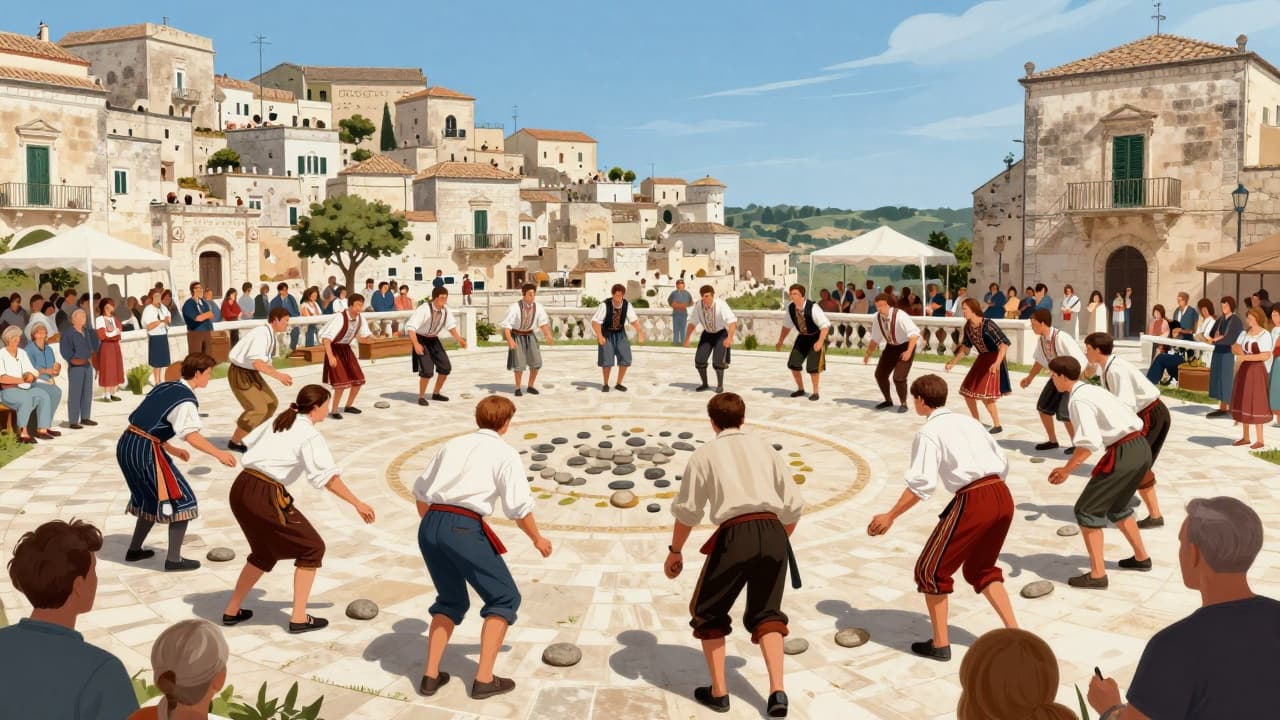
The Festival of Ancient and Street Games, "Mediterranean Playground", was held in the Italian city of Matera in early November, featuring around 15 traditional games from Italy, Croatia and the Spanish region of Catalonia. Croatia was represented at the festival by the Croatian Association of Traditional Games and Sports (Hrvatski savez tradicijskih igara i sportova, HSTIS), based in Buzet.
Istrian pljočkanje occupied a special place in the programme, having been included in the joint UNESCO Tocatì programme. The festival was organised by the Matera Basilicata 2019 Foundation in cooperation with the Verona-based association Associazione Giochi Antichi (AGA), which has organised the international street games festival Tocatì since 2003 and runs the eponymous network of gaming communities across Italy. This network is inscribed in the UNESCO Register of Good Safeguarding Practices for the protection of intangible cultural heritage, marking the first Italian recognition in that register. The associations Zio Ludovico and Lumaca, Udruga Giallo Sassi, and Unione Italiana Sport Per Tutti (UISP) Matera, which provided technical support, also participated in the organisation.
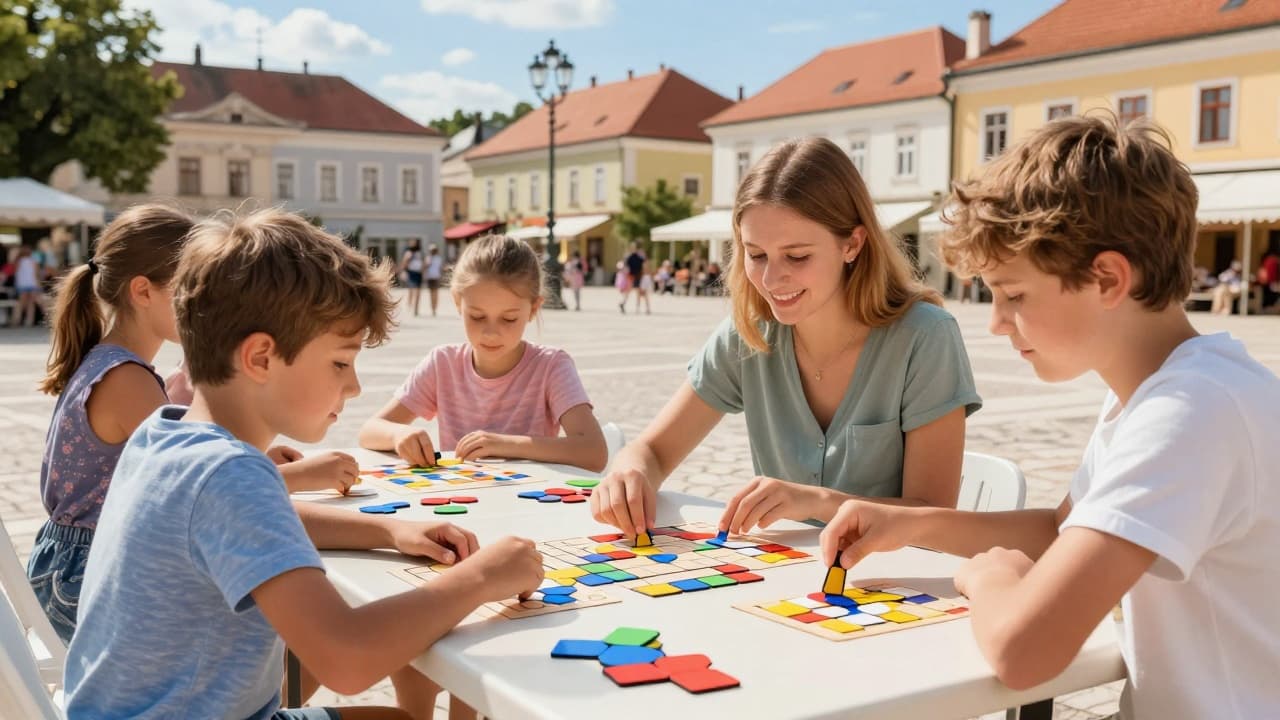
The first day of the festival was dedicated to primary and secondary school pupils, with more than 200 young people taking the opportunity to learn about traditional games. Around 15 games of various origins and styles were presented. These included the African strategy game awale – worri, backgammon and carrom, as well as more, palo del bastone, pljočkanje, Catalan espadrille throwing, bbrigghje, strummole and lippe. Pupils also familiarised themselves with games that are now nearly forgotten, such as skipping rope, školice and tug of war.
The following two days saw the programme open to the citizens of Matera, who were also introduced to all the games represented. Among the more attractive features was a presentation of Palo della Cuccagna, a traditional Italian folk game in which participants attempt to climb a greased pole to win prizes placed at its top. This game, once a common part of folk festivities, could still be seen in Istria until a few years ago.
A panel titled "Trasmissione e salvaguardia dei giochi tradizionali come patrimonio immateriale" ("Transmission and safeguarding of traditional games as intangible heritage") was also held as part of the festival. Panelists discussed the possibilities for preserving traditional games and passing them on to younger generations, their recognition as intangible cultural heritage under UNESCO, the connection between Mediterranean cultures, and the role of street games in revitalising city squares and encouraging physical activity.
The Croatian delegation at the panel was led by Milivoj Pacenti, president of the Croatian Association of Traditional Games and Sports. Pacenti spoke about the process of inscribing pljočkanje on the UNESCO list of intangible cultural heritage and presented the work of HSTIS and the Istrian Pljočkanje Association. Igor Jovanović from Veli Vrh Primary School in Pula spoke about incorporating traditional games into the education system, presenting examples of their application in Istrian schools and curricula, and highlighting the importance of institutionalising local studies in the Istria County. He cited a school where pljočkanje and throwing activities with slings, or fjondas, have been conducted for several years in cooperation with the Sports-Traditional Club Istrijanska fjonda from Veli Vrh in Pula. Alongside Pacenti and Jovanović, the festival was attended by Darijan Divšić, a representative of Divšići Primary School and Vladimir Nazor Primary School in Krnica.
Participation in the festival in Matera provided an opportunity to present Istrian tradition to an international audience, as well as to exchange experiences on how traditional games can be preserved and brought closer to new generations.