Ismael Ox, also known as Ismael 'Ox' Oumarou, is 25 years old and competes in para-taekwondo for the United States. His journey from rural Niger to the American team has been marked by loss, poverty and perseverance.
Ox grew up with his grandmother in rural Niger, in a household where around 40 people lived. His father was briefly present when he was five years old, and Ox claims he was beaten and kicked until he bled, as was his mother. He had to work from the age of six, and at nine was sent to the streets of the capital, Niamey, to sell water or anything else to earn food. He was expelled from several schools and began attacking people and fighting in the street.
He discovered taekwondo by watching through the window of a local dojo, where he copied the moves as a self-taught practitioner. He dreamed of becoming like Jackie Chan and his kung-fu characters. During one street fight, a man approached him and said there was too much anger in him and that he would channel it into something useful. It turned out to be a taekwondo coach, with whom Ox began training and dreaming of becoming the best in the world.
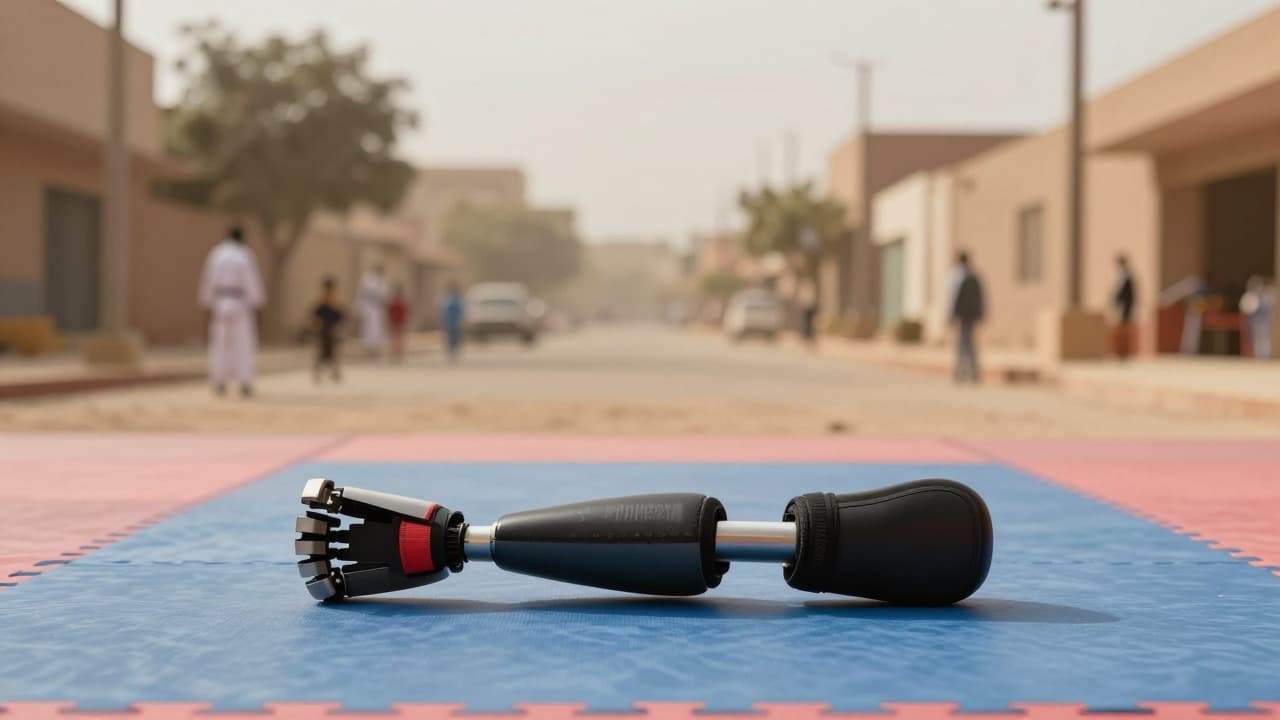
In 2012, everything changed. An Islamist militant group threw a grenade at the then 11-year-old Ox and his friends. Ox ran towards the grenade, grabbed it, and it exploded as he tried to throw it away from his friends. He lost his right hand. Ox claims that members of the jihadist group Boko Haram were in his village, attempting to abduct young girls and kill people, when they threw the grenade. Ox spent two weeks in hospital and emerged with a lot of anger inside him.
Many, including family members, considered his return to martial arts after losing his hand to be an empty story. He tried to enter tournaments for able-bodied people, but was rejected. Eventually, he heard about para-taekwondo. He spent all the money he had on travel to competitions, and sometimes had to sleep in the venues where tournaments were held because he could not afford accommodation. He began winning medals and bringing home titles such as the Korean Cup and the African championship, and was started to be regarded as one of Africa's best para-athletes.
Ghana offered him citizenship so he could represent that country, as Niger did not have a long-term plan for his continued involvement in combat sports, and para-sport in Africa was not as developed as elsewhere. Ox set his sights on the United States. A friend of his mother, who had never met him, came at 3 am and said she would lend him money for a flight. He arrived in Washington DC in 2018 as a 17-year-old who did not speak English, a disabled person moving alone to the other side of the world.
In Washington, he ended up sleeping on the street, relying on other homeless people for translation. He travelled to para-taekwondo tournaments, where others helped him secure competition equipment and fed him when food was hard to come by. He tried Las Vegas before heading to New York. There, he faced the choice between living in a house full of drugs and weapons or sleeping outdoors. He chose the subway station and the busy streets. He worked security jobs for less than minimum wage and arranged to clean restaurants in exchange for food.
At just 17, he decided he should go to school. He chose a school and appeared before it, which raised questions, and the school worked with authorities to place him in foster care. Life in a group home was another difficult situation with many challenging people. Ox says taekwondo kept him disciplined and focused. Niger was added to the list of countries for which the US imposes a travel ban in January 2026.