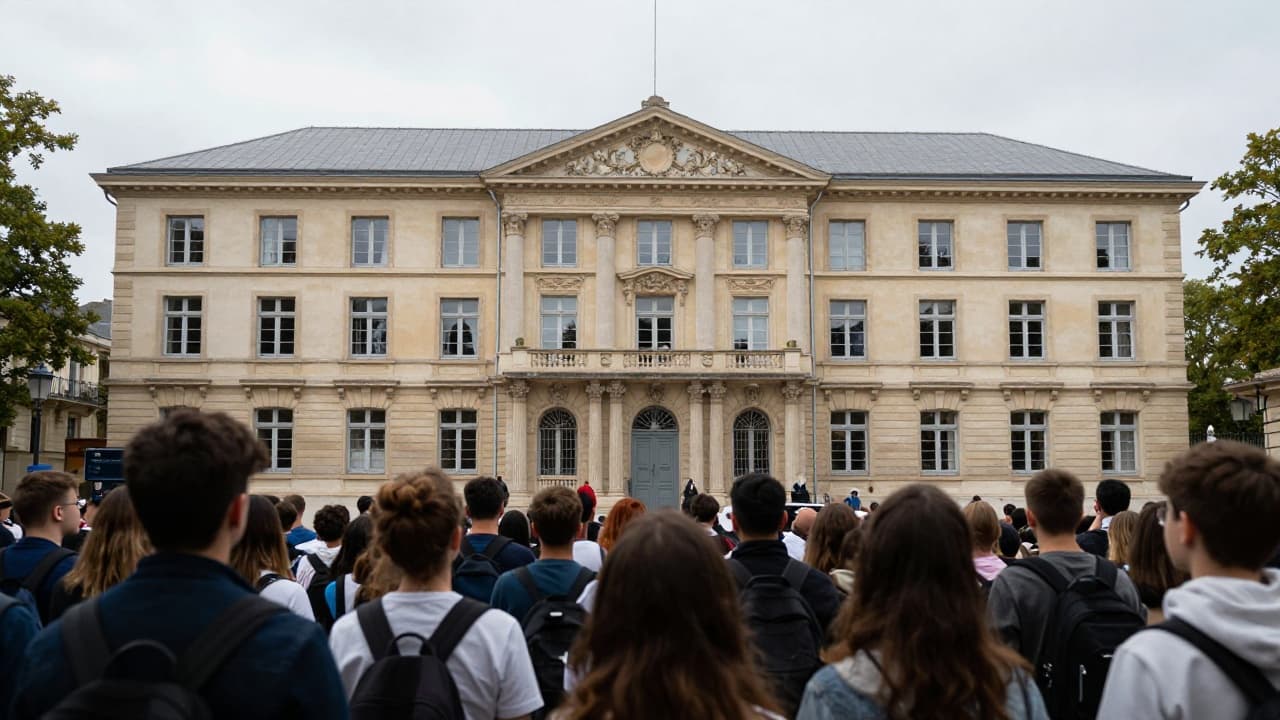
A 15-year-old boy lost his hand during a protest in the northern French town of Lens, local prefect François-Xavier Lauch confirmed. According to his account, the boy’s hand was blown off on Monday, and an investigation has been opened following the incident.
The newspaper La Voix du Nord reported that the teenager lost his hand after picking up a police stun grenade. A source from the police union stated that the student in Lens appeared to have picked up a tear gas canister fired by police, intending to throw it back, but the device exploded in his hand.
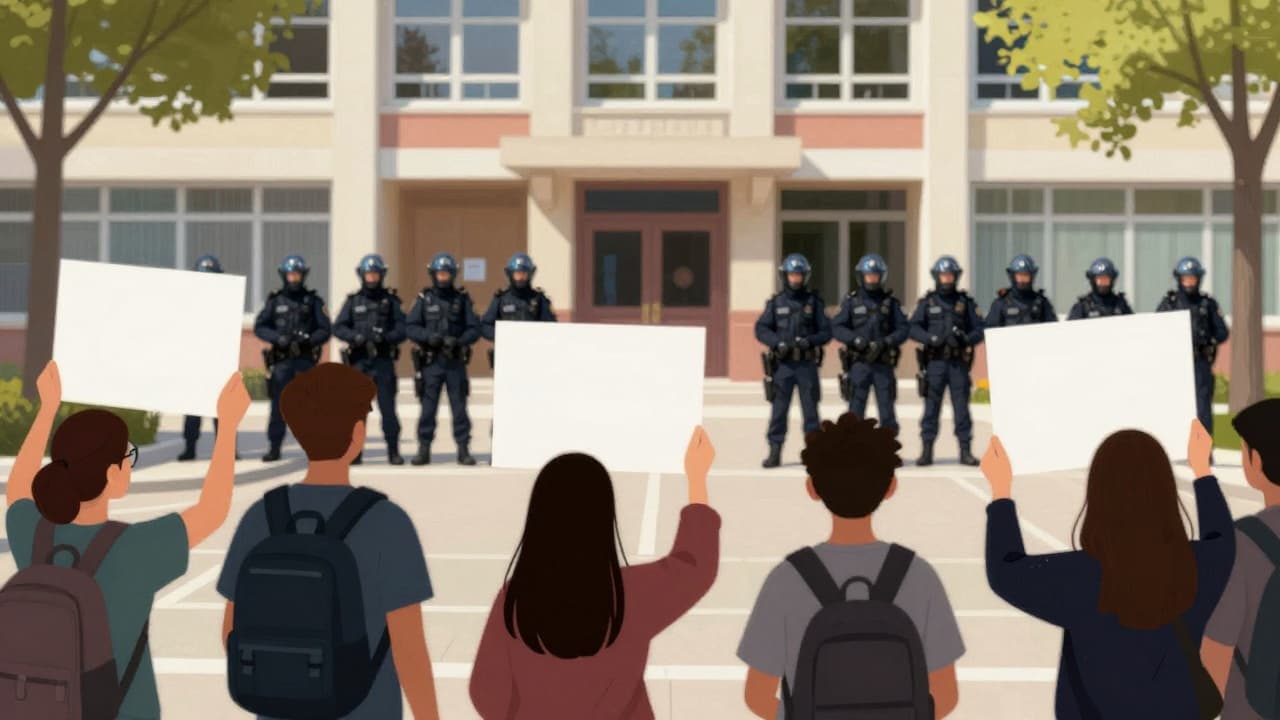
The protests began on 17 September in the Parisian suburb of Créteil, where students joined teachers who were striking over a lack of resources and staff. Students are protesting against overcrowded classrooms, dilapidated school buildings, and a shortage of teachers. On Monday, hundreds of schools across France were closed completely or partially, with students continuing to block school buildings.
The minister for education stated that 78 teachers and other educational staff had been injured in the student protests. According to Le Figaro, a 17-year-old was arrested after allegedly throwing stones at police, striking a passer-by in the face and causing them to lose sight in one eye.
Amnesty International reported last week that a 14-year-old was hit by a grenade in the jaw, losing several teeth. The same source stated that other students were arrested following the use of restraint techniques by police. The French League for Human Rights (LDH) raised an alarm on Monday, with president Nathalie Thio stating that there are no guidelines in place for the police to exercise restraint.
The minister for education, Édouard Geffray, stated, as reported by Le Figaro, that the protests represent a freedom that must be respected and protected. He strongly criticised acts of extreme violence, including direct attacks on school principals in some instances.
The French prime minister, Sébastien Lecornu, accepted the students' complaints as legitimate and instructed ministers to address their five main demands. Among the demands is the provision of cover for absent teachers by the government. Lecornu also called for a review of the length of the school day in France, one of the longest in Europe, and the government will consider repairs to dilapidated school buildings. Ministers are to propose solutions by the end of the month.
Sophie Binet, head of the left-wing union CGT, stated that the government had been late in offering a solution to the students' demands. She highlighted that the number of absent teachers not replaced had doubled over the past 10 years, and that class sizes were at record levels. She called on the government to halt all budget cuts, including cuts to teaching posts.
Student unions called for a day of protest on Tuesday. Thousands of union members, teachers, public sector workers, and parent groups are expected to join marches in support across France. Bin stated that union members would march to ensure that no violence occurred on the edges of the protest on Tuesday, criticising the heavy-handed police response.
University students continued to support the school protests on Monday, with up to 40 university buildings blocked across France. The minister for higher education, Philippe Baptiste, told French radio that the student and secondary school protests could intensify with national protests on Tuesday. According to the minister for education, of the 3,700 secondary schools, between 400 and 500 are expected to remain closed completely or partially on Monday.