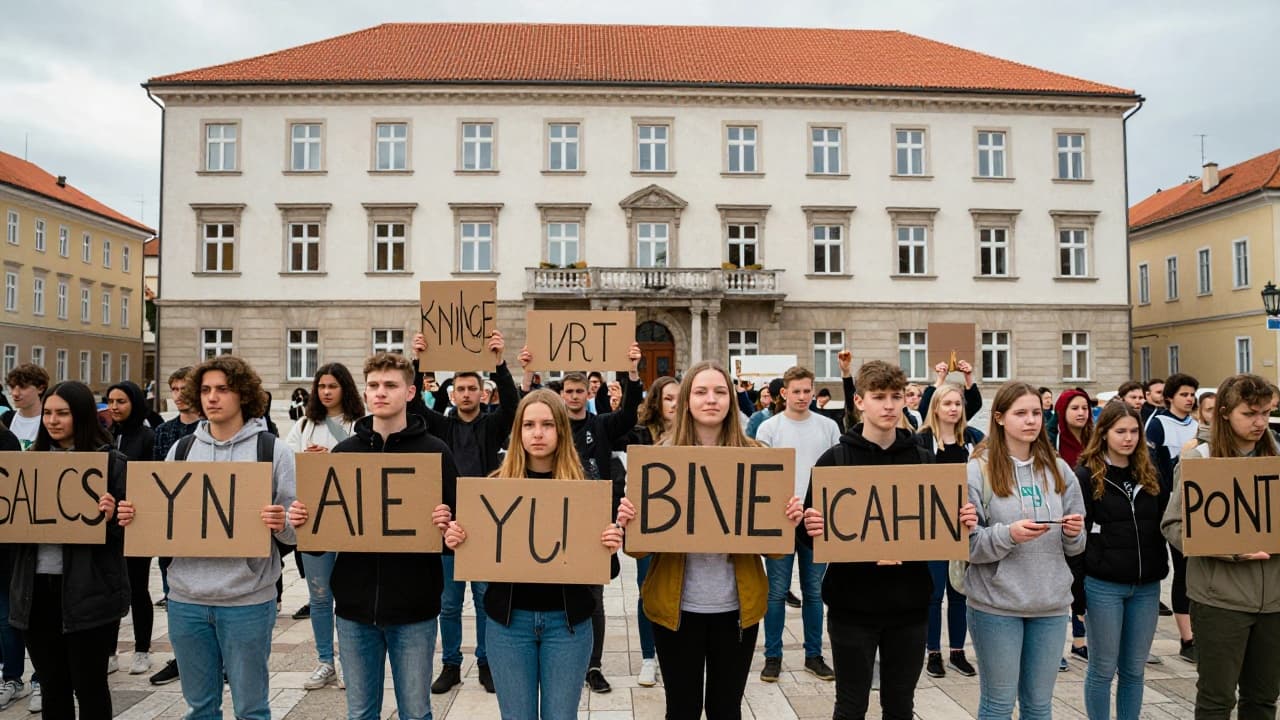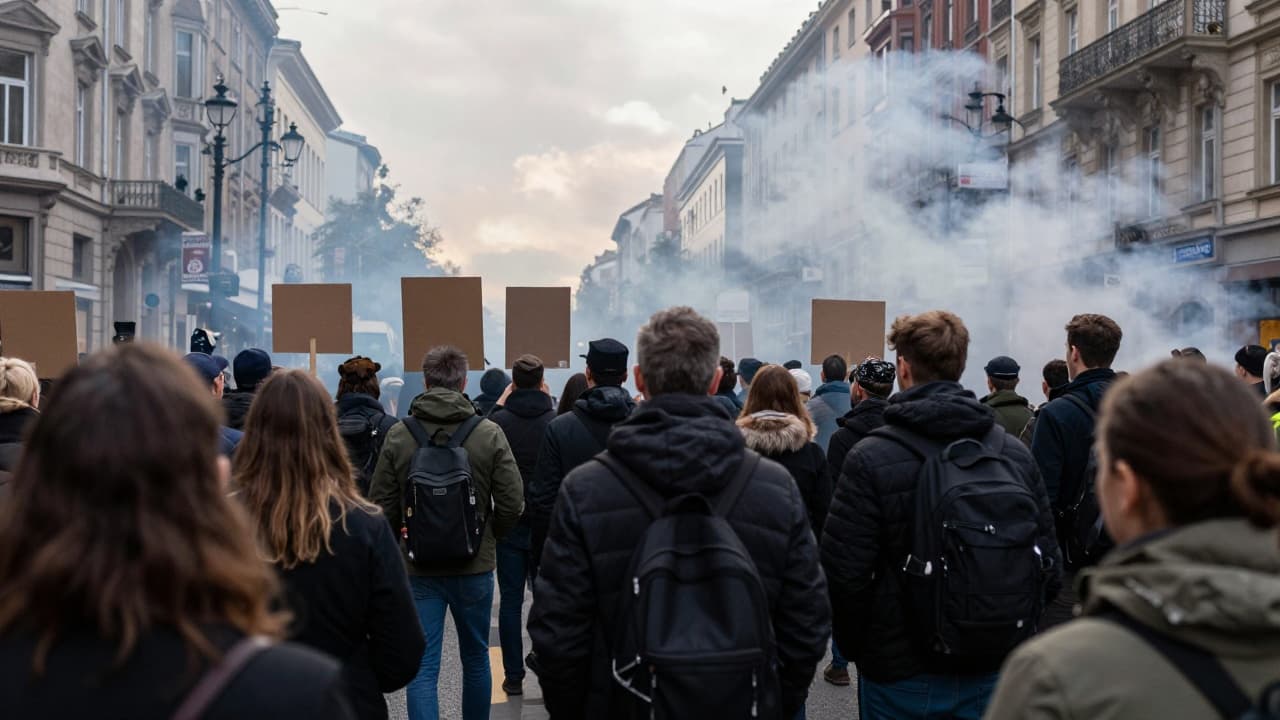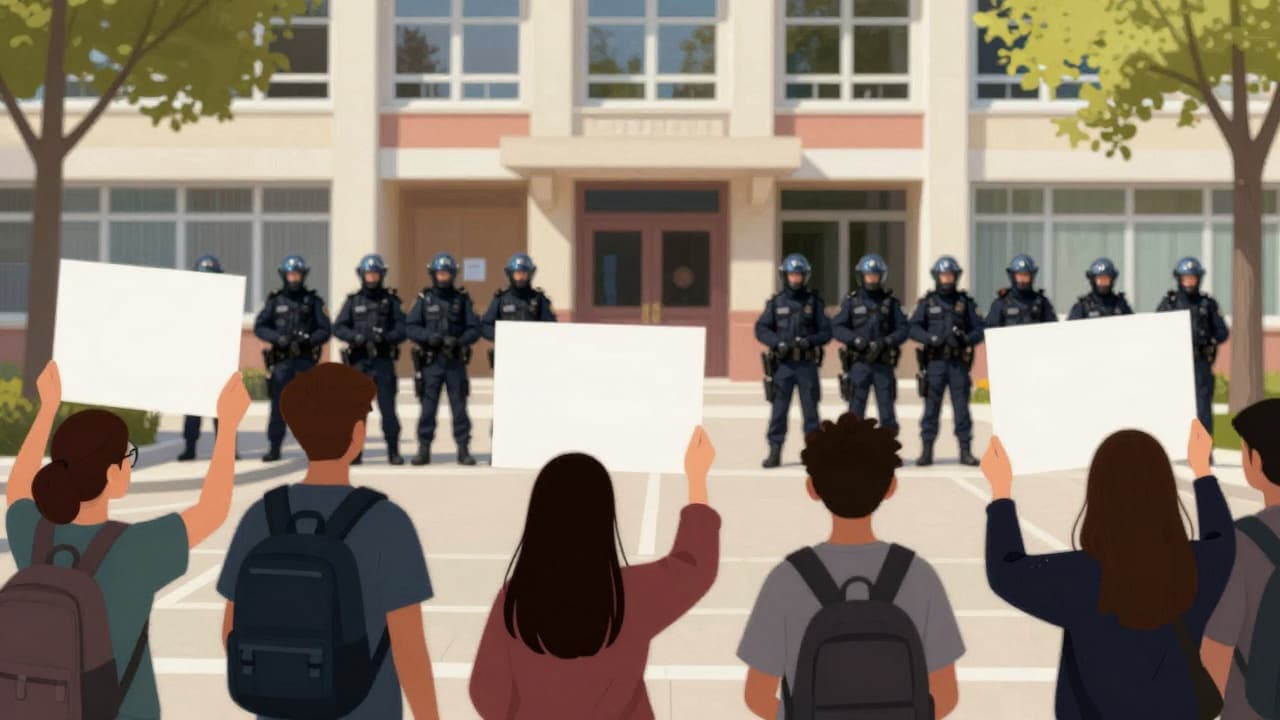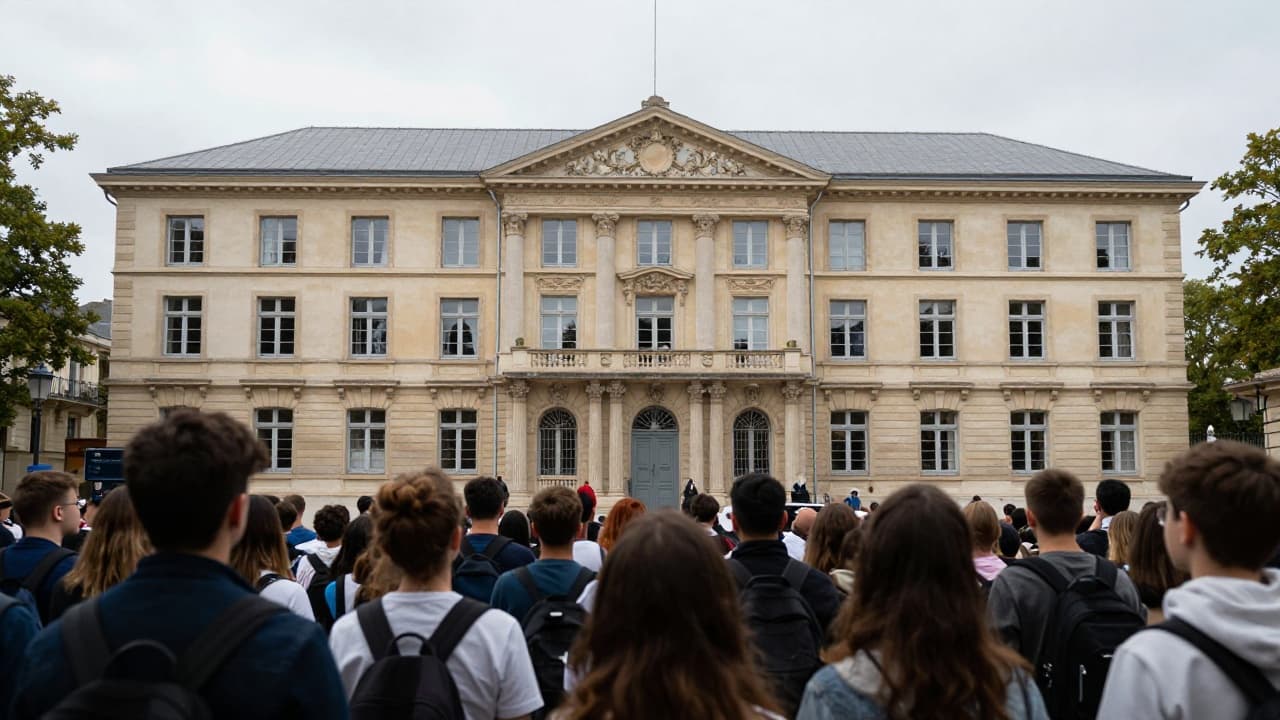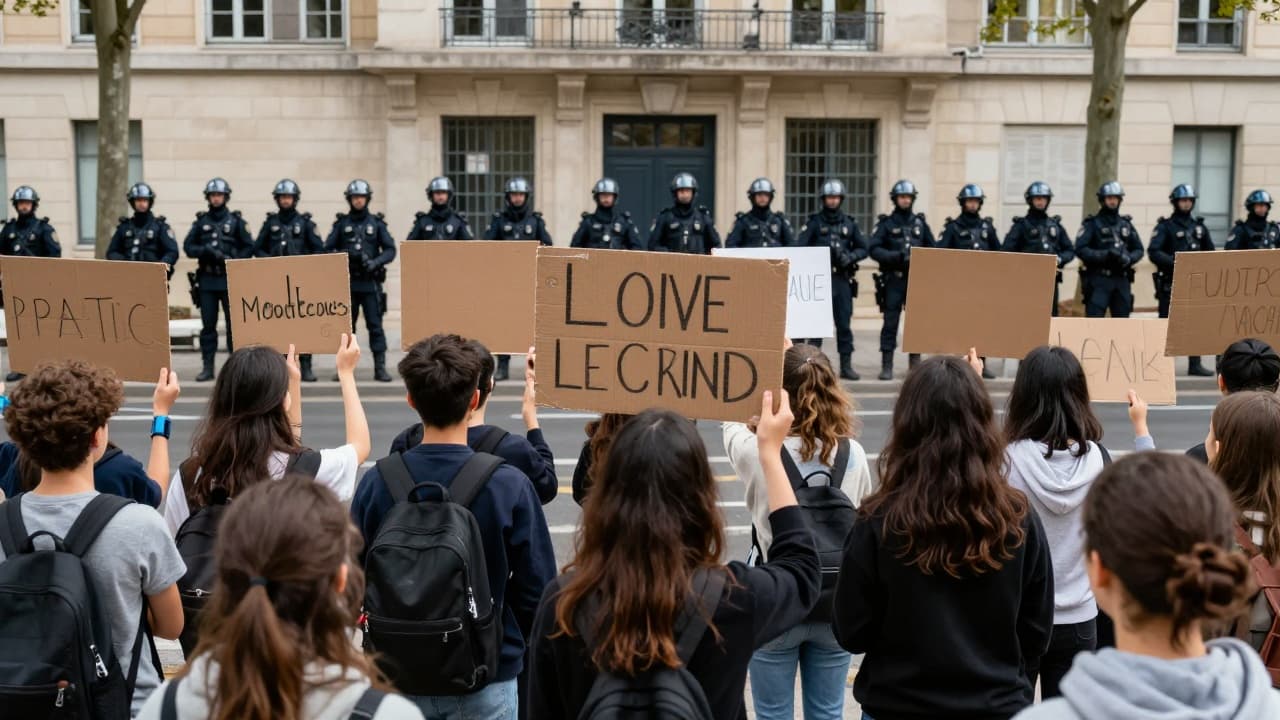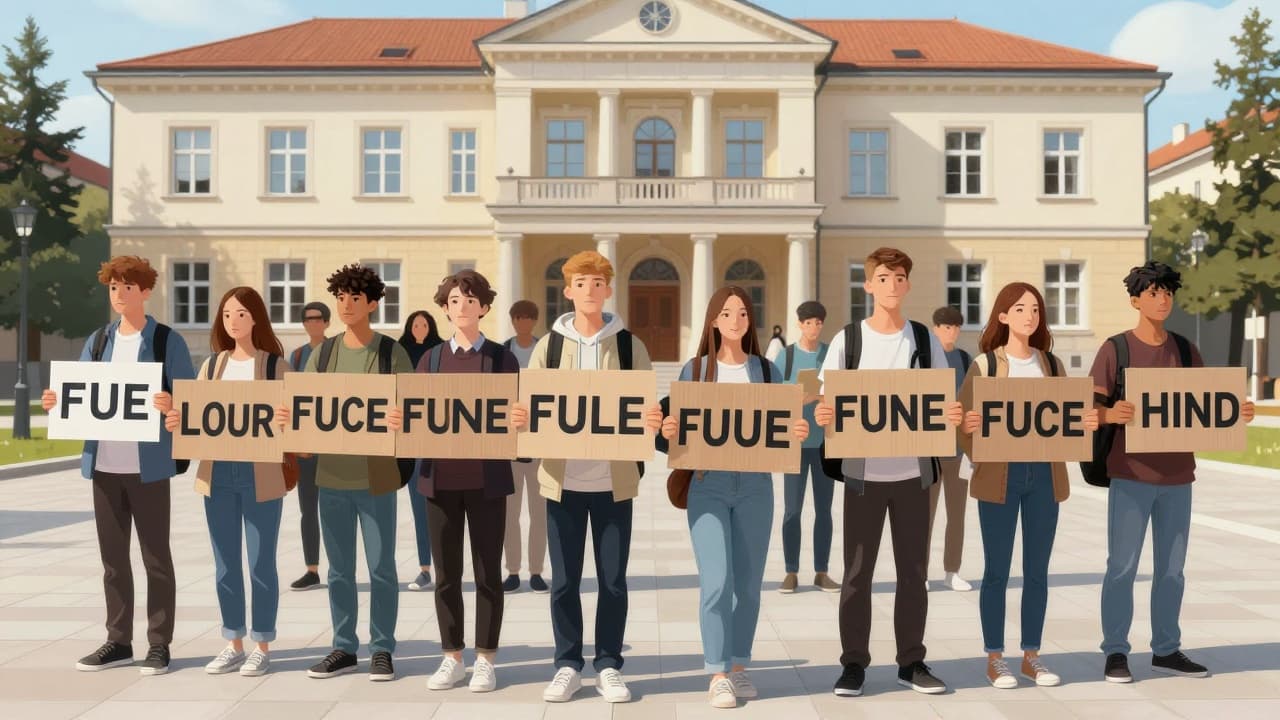
The class boycott by secondary school pupils and students under the Young Strike Croatia initiative began in around ten cities across the country, with organisers responding in an open letter to Education Minister Radovan Fuchs regarding criticism directed at today's strike participants. The protest activities are being held under the slogan "For our future, not their wars", and the Croatian initiative is part of the International Youth Strike movement, which is organising similar actions in more than 25 European countries today.
In the letter, the organisers stated they want a Croatia where the government listens to young people rather than accusing them of being manipulated or not knowing what they are doing. "We want to live in a Croatia that listens to its pupils and students and works with them so that the future is better," they noted. They emphasised that their demands are not final and that they will invite interested citizens to propose amendments and additions. They acknowledged that as secondary school pupils and students, they are not experts in all fields, but they want to include everyone who can contribute to change. "This is not a fight of young people only for young people, this is a fight of young people for all of us and for a better future in Croatia," they said. They also responded to those who had questioned the holding of the strike: "It was said that we would not be there, that we are a fake news story, that we are a diversion and that we are not serious enough to organise ourselves, and to that we tell you: see you today in schools, faculties and on the streets."
Protesters are warning about rising costs of living, unaffordable housing, and the state of education and healthcare. Organisers confirmed the participation of pupils and students from a number of secondary schools and faculties in Zagreb, Rijeka, Osijek, Split, Zadar, Pula, Čakovec, Varaždin, Slavonski Brod, Pula, Pazin and Velika Gorica. The programme of the domestic initiative is based on five key points: it calls for the abolition of mandatory military service, the suspension of military promotion within educational institutions, an increase in taxes on capital gains, the promotion of domestic production, and assistance to households with the lowest incomes. The initiative also demands a halt to any form of cooperation with Israel and a condemnation of the genocide in Gaza, while condemning the Russian invasion of Ukraine and all wars. "We are a generation that does not want to die, we want to fight for our future, among other things through open debate and critical thinking," the organisers said, announcing that today's boycott is not the end of their actions.
Rijeka psychology student Lana Božić from the Croatian branch emphasised that the domestic movement independently creates its own programme. "We will soon come out with our own manifesto. The basic demands regarding housing, cost of living, ecology, demilitarisation and investment in healthcare and education will be the same, but we do not demand that Croatia leaves NATO," she stated. She added that no political party, organisation or external financier stands behind them, that all decisions are made by collective voting, without leaders, and that they bear the costs themselves.
Minister of Science, Education and Youth Radovan Fuchs assessed that the strike is not a spontaneous reaction of young people and claimed that pupils and students are being instrumentalised by anarchists from the international movement. He accused the strikers of being anarchists "who participate in politicisation" and announced unexcused hours for those who do not attend class. Tensions were recorded in public space before the start of classes after parliamentary representative Katarina Peović published messages from a closed communication group in which the intimidation of pupils who decide to join the strike is announced.
Third-year student at the Faculty of Political Science Kate Jurišić from the "Young Strike" initiative said that young people had self-organised across Croatia, with a turnout greater than expected. "We did not encourage or persuade anyone to strike, young people organised it on their own initiative, even in places where we did not expect it," she said, adding that support in schools and faculties varies and that participation is a personal choice. In response to the minister's claim that students are doing well, citing the price of student meals, she replied that not all young people are students. "There are secondary school pupils and those who did not go to university. And the measures he talks about are temporary and not broad," she said. She highlighted affordable housing as the main problem, noting that young people with degrees and good salaries cannot afford flats. She said she does not want to leave Croatia, but does not rule out that possibility because the situation for a quality of life is better in some other countries. Decisions on further actions will be made after analysing today's turnout.
Turnout was uneven. Antun Kovačić from the Association of Croatian Secondary School Principals stated that classes in secondary schools are proceeding regularly, with a smaller number of pupils in some schools. "Classes in secondary schools are functioning normally, the regular schedule is being held with a smaller number of pupils in some schools," he said, adding that it is not yet known whether absences are linked to illness or participation in the strike, which class teachers will subsequently determine in conversation with parents. In Osijek, according to his words, there were no gatherings, and classes were also proceeding regularly there.
In northern Croatia, the largest turnout was recorded in Čakovec, where the majority of pupils from the morning shift of Josip Slavenski Gymnasium protested. Some pupils did not come to school, while some gathered in front of the gymnasium and then headed towards other secondary schools and Republic Square; some returned to classes in the meantime. The principal of the gymnasium reported to the County that the gathering was an independent decision by the pupils, and the exact number of participants has not yet been confirmed. Međimurje County education head Nives Kolarić Strah reported that classes are proceeding regularly in other secondary schools where the county is the founder. In Krapina-Zagorje County, there was no class boycott, confirmed by the head of education, culture, sport and technical culture Mirjana Smičić Slovenec, according to principal data. In Varaždin County, a smaller number of secondary school pupils responded to the protest, said the head of the Administrative Department for Education, Culture and Sport Miroslav Huđek to Hina, citing pupils from the First Gymnasium and one class of the Construction, Natural Science and Mining School in Varaždin.
One of the students participating in the strike at the Faculty of Political Science in Zagreb expressed disappointment at the weak turnout of colleagues. "Young political scientists should be the most aware of the state of the country and I don't know how they can so actively ignore it. People say that we are doing well, but the truth is that it could really be better for us and that a lot of resources are not allocated in the way they should be," he said. He added that more students came to lectures today than are participating in the strike, but praised those who decided to boycott classes. "However few of us there are, I am sure that we are fighting for the right thing. I do not feel any guilt. This is just the beginning and I hope that everything will only flare up more, especially at the announced large protests," he concluded.
President of the Student Council of the Faculty of Political Science Bruno Rukavina said that they do not yet have precise data on the number of students who participated, but that many professors announced the postponement of classes and colloquiums. "We received confirmations from many professors that on Friday they will not hold classes, i.e. that they will postpone colloquiums," he said, assessing that posts about the strike and demands on social media received a good response. He singled out the rising cost of living and rent prices in student cities as one of the biggest problems for students, claiming that studying has become almost impossible without one's own salary. "In line with this go our demands towards the faculty administration. The goal is to ease student life, while reducing some unexpected costs and raising the quality of teaching," he said. He announced that the Student Council will collect demands from dissatisfied students at today's plenum, on the basis of which they will determine further action, and that they are open to further organisation if needed. "We hope that the administration will see the dissatisfaction with some aspects of studying and that we will be able to sit down and discuss the demands already after this plenum," he concluded.
The initiative For a Free Croatia also provided support to young people, stating that they have the right to demand accountability from the government and to decide on their own future. They called on the Ministry of Science, Education and Youth to listen to their demands and invite them to a conversation, instead of "threatening" them with unexcused absences or declaring them instruments of political actors. "Young people are no one's instrument. They are citizens who have the right to demand accountability from the government and to decide on their future," they said. They also stated that if the Ministry intends to record unexcused hours for young people due to participation in protests, they will publicly record five unexcused hours for the Ministry, one for each city where a protest is being held, and eight unexcused years due to the lack of response to problems that threaten the future of young people. They concluded that young people do not need to justify themselves to the Ministry because of their demands, but it is the Ministry that owes young people answers, concrete solutions and political responsibility for past failures.